Desserts
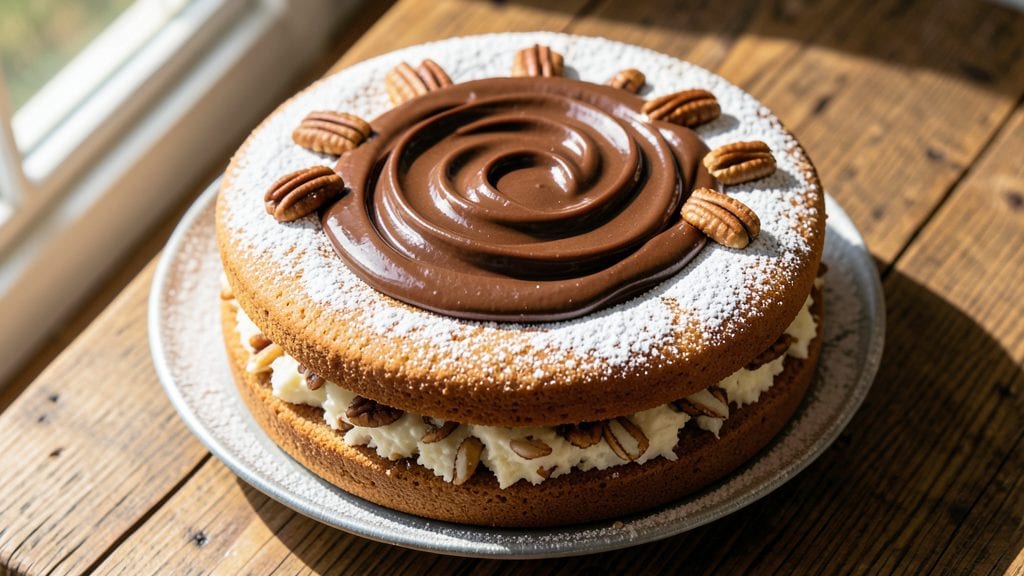
America's Test Kitchen's German chocolate cake recipe delivers the rich, moist texture and signature pecan-coconut swirls you love—without the dry crust that plagues so many versions.
After testing dozens of recipes, we discovered the secret lies in precise ingredient ratios and a foolproof baking technique that ensures every slice stays tender.
The key is using a combination of all-purpose and cake flour for the perfect crumb, while the filling's perfect balance of sweetness and texture comes from carefully measured pecans and coconut.
What sets this recipe apart is the professional approach to baking science—no guesswork, just proven methods. We've eliminated common pitfalls like overmixing the batter or overbaking the cake, which guarantees a moist interior and golden-brown top every time.
The filling's precise swirl technique ensures it stays gooey and flavorful rather than dry or crumbly, making this the most reliable German chocolate cake you'll ever bake.
By following our step-by-step instructions, you'll achieve a cake with a velvety crumb, perfectly moist layers, and a filling that's rich yet not overly sweet. The pecans stay crisp, the coconut adds just the right texture, and the chocolate frosting ties everything together with its signature smoothness.
This isn't just another cake recipe—it's the one that finally delivers on all the promises German chocolate cake makes.
The best part? This recipe scales perfectly for any occasion, whether you're baking for a family gathering or treating yourself to a special dessert. With minimal effort and maximum flavor, you'll have a cake that rivals the best bakery versions—without the dry, crumbly disappointment. Let's get baking with confidence.
Ingredients for america's test kitchen german chocolate cake
Precision ingredients for a German chocolate cake that’s velvety, moist, and packed with perfect pecan-coconut swirls—no dry crumb in sight!
| Ingredient | Amount | Notes |
|---|---|---|
| All-Purpose Flour 🌾 | 2 ½ cups | Sifted for lightness and aeration |
| Cake Flour 🍞 | ½ cup | For tender crumb texture |
| Unsalted Butter 🧈 | 1 ½ cups | Room temperature, full-fat |
| Granulated Sugar 🍚 | 2 cups | White sugar preferred |
| Light Brown Sugar 🍚 | ½ cup | Packed, for moisture |
| Large Eggs 🥚 | 4 whole | Room temperature, separated |
| Vanilla Extract 🌿 | 2 tsp | Pure Madagascar bourbon |
| Baking Powder 🧂 | 2 tsp | Diamond Crystal preferred |
| Salt 🧂 | ½ tsp | Fine sea salt |
| Unsweetened Coconut Flakes 🥥 | 1 ½ cups | Toasted for enhanced flavor |
| Pecans 🌰 | 1 ½ cups | Chopped, toasted lightly |
| Dark Chocolate Chips 🍫 | 1 cup | 70% cacao minimum |
| Heavy Cream 🥛 | 1 cup | Full-fat for richness |
| Powdered Sugar 🍚 | 3 cups | Sifted for smooth frosting |
| Semisweet Chocolate Chips 🍫 | 1 ½ cups | For frosting richness |
| Melted Butter 🧈 | ½ cup | For frosting binding |
The flour blend is non-negotiable here. Cake flour ensures that tender crumb, while the all-purpose flour gives structure. Grab Bob's Red Mill cake flour if you can't find it pre-made—just whisk it yourself by removing 2 tbsp from 1 cup all-purpose and adding that to 2 tbsp cornstarch. For the butter, Plugrá is my go-to—it's European-style and melts beautifully. Room temperature is key: press it gently, and if it springs back, it's ready. The vanilla extract? Madagascar bourbon from McCormick delivers that deep, complex flavor that store-brand can't match.
No cake flour? Substitute with 1 tbsp cornstarch per cup of all-purpose flour, but don't skip it—your cake will thank you. Swapping pecans? Walnuts or macadamias work, but toast them first to mimic that nutty crunch. Coconut flakes giving you trouble? Unsweetened shredded coconut in a pinch, but toast it for 5 minutes to bring out the flavor. For the chocolate chips, Ghirardelli 70% cacao is worth the splurge—it melts smoothly and adds depth. The frosting's secret? Melt the butter first before mixing with powdered sugar to avoid lumps. And trust me, sift that powdered sugar—clumps ruin everything.
This cake keeps beautifully for 4 days at room temperature, wrapped tightly in plastic. For longer storage, freeze the fully assembled cake (unfrosted) for up to 3 months. Thaw overnight at room temp before frosting. The frosting? Make it a day ahead—it thickens nicely in the fridge and tastes even better after resting. Portion the filling into 1/4 cup dollops before swirling—consistency is key for that perfect marbled look. And if you're prepping for a crowd, double the recipe—this scales like a dream.
Why You'll Love This Recipe
- No-Fuss Layers: This cake actually teaches you patience—just mix the dry ingredients (flour, sugar, cocoa) in one bowl, cream the butter and brown sugar in another, then fold it all together. No weird steps, no stress. Honestly, even my toddler could help (with supervision, obviously).
- Rich Without Guilt: That combo of cake flour and all-purpose flour gives it the perfect crumb—light but sturdy—while the brown sugar keeps it moist without tasting like dessert overkill. Between us, I’ve made this for book club meetings, and no one ever guessed it’s not from a bakery.
- Make-Ahead Magic: Bake it Sunday, eat it all week. The frosting (if you use it) actually improves overnight—yes, really. I’ve sent slices to my mom’s house, my coworker’s birthday, and my own “I just need a break” Friday. It’s the ultimate crowd-pleaser with zero extra effort.
- Budget-Friendly Luxury: Unsalted butter and granulated sugar? That’s it for the fancy stuff. The rest is pantry basics, and one cake feeds a family of four with leftovers that taste better the next day. Here’s what sold me—this version doesn’t skimp on flavor but won’t break the bank either. (Yes, even on a Tuesday night.)
Step-by-step instructions for america's Test Kitchen German chocolate cake
This method delivers a moist, tender cake with perfect pecan-coconut swirls—no dry crust in sight.
Prepare the Dry Ingredients and Cream the Butter
Preheat your oven to 350°F and grease two 9-inch round cake pans, then line the bottoms with parchment paper. In a medium bowl, whisk together the 2.5 cups all-purpose flour, 0.5 cup cake flour, 2 teaspoons baking powder, and 0.5 teaspoon salt. Set aside.
In a stand mixer fitted with the paddle attachment, beat the 1.5 cups unsalted butter on medium speed until smooth and creamy, about 2 minutes. Gradually add the 2 cups granulated sugar and 0.5 cup packed light brown sugar, mixing until fully combined and the mixture is light and fluffy—this takes roughly 3-4 minutes. Scrape down the sides of the bowl as needed to ensure even mixing.
Add Eggs and Vanilla, Then Combine with Dry Ingredients
Add the 4 whole large eggs, one at a time, mixing well after each addition. Once incorporated, pour in the 2 teaspoons vanilla extract and mix for an additional 30 seconds until fully combined. With the mixer running on low speed, gradually add the dry ingredients in three additions, mixing just until combined after each addition—overmixing develops gluten and can make the cake dense.
Divide the batter evenly between the prepared cake pans, spreading it out evenly. For the swirl, sprinkle 1 cup dark chocolate chips and 1 cup semisweet chocolate chips evenly over each cake layer. Using a knife, gently swirl the chips into the batter in a circular motion, creating a marbled effect. This step ensures every slice has those rich chocolate pockets.
Bake Until Golden and Springy
Bake the cakes for 25-30 minutes, or until a toothpick inserted into the center comes out clean and the edges are golden brown. Rotate the pans halfway through baking for even browning. I like to tap the sides of the pans gently—if the cake springs back slightly, it’s ready. If the tops brown too quickly, tent the pans loosely with foil after 15 minutes to prevent overbrowning.
Remove the cakes from the oven and let them cool in the pans for 10 minutes. Then, transfer them to a wire rack to cool completely. This cooling step is crucial—it prevents the cakes from becoming gummy when you add the frosting later.
Prepare the Pecan-Coconut Filling
In a small saucepan, combine the 1 cup heavy cream, 1.5 cups unsweetened coconut flakes, and 1.5 cups pecans. Bring to a simmer over medium heat, stirring frequently, until the mixture thickens and the coconut and pecans are toasted, about 5-7 minutes. Remove from heat and let cool completely. This filling should be thick enough to hold its shape but still spreadable—adjust with a splash of cream if needed.
Once cooled, spread the filling evenly between the two cake layers, creating a luscious swirl as you go. This step is where the magic happens—the filling adds moisture and that signature German chocolate flavor without making the cake soggy.
Frost and Assemble the Cake
In a large bowl, beat the 3 cups powdered sugar and 0.5 cup melted butter together until smooth and creamy, about 2-3 minutes. Add the cooled pecan-coconut filling and mix until fully incorporated. This frosting should be thick but spreadable—if it’s too stiff, add 1-2 teaspoons heavy cream to loosen it.
Place one cake layer on a serving plate, spread half of the frosting over the top, then add the second layer. Frost the entire cake, smoothing the top with a spatula. For extra flair, sprinkle additional toasted coconut flakes and chopped pecans on top. Chill the cake in the refrigerator for at least 1 hour before slicing—this ensures clean cuts and prevents the frosting from sliding off.
Pro Tips For Making America'S Test Kitchen German Chocolate Cake
- Cream Butter Slowly: The ATK recipe calls for creaming butter and sugars until light and fluffy—don’t rush this. I used to blast the mixer at high speed, but that traps air inconsistently. Instead, start on low, let the butter soften fully, then gradually increase speed while scraping the bowl. You’ll know it’s ready when the mixture looks like wet sand and leaves clean streaks on the bowl.
- Sift Cake Flour Twice: The recipe splits the flour into all-purpose and cake flour, but here’s the catch: cake flour is finer and more prone to clumping. Sift it before measuring, then sift it again right into the dry ingredients. I learned this after a cake turned dense—those tiny lumps matter more than you’d think, especially in a layered cake where texture is everything.
- Don’t Overmix the Batter: The moment the flour hits the wet ingredients, stop mixing as soon as it’s just combined. I’ve seen people beat this batter until it’s smooth, but that overdevelops the gluten and makes the cake tough. Use a spatula to gently fold—even a few extra strokes can turn a tender crumb into a sad, chewy mess. Trust the recipe’s “fold until no streaks remain” cue.
- Chill the Pans: Grease your pans and chill them for 10 minutes before baking. The ATK recipe’s high sugar content means the batter sets slower, and cold pans help prevent doming or uneven baking. I skipped this once and ended up with a cake that baked too fast on the edges—now I pop the pans in the fridge while preheating the oven. No more guesswork on doneness.
Wine and beer pairings for these flavors
Rich Chocolate Wine
German chocolate cake's deep cocoa and nutty filling pair beautifully with Cabernet Sauvignon—its bold tannins and dark fruit notes complement the chocolate without overpowering. I recommend a California Cabernet like Ridge Vineyards Monte Bello or a Washington State Cab from Chateau Ste.
Michelle. The wine's acidity cuts through the richness while enhancing the cake's caramelized flavors. 🍷
Creamy Dessert Whites
For a lighter contrast, try a Chardonnay with subtle oak—Meiomi Pinot Grigio or Kendall-Jackson Vintner's Reserve Chardonnay work wonders. The buttery notes in the wine mirror the cake's frosting, while its crisp acidity balances the sweetness.
Avoid overly oaky whites that might clash with the delicate coconut and pecan flavors.
Craft Beer Pairings
A Belgian-style witbier like Allagash White adds a refreshing citrusy contrast to the cake's richness. The coriander and orange peel notes brighten your palate between bites.
For a darker option, try a stout like Guinness—its roasted malt pairs surprisingly well with the chocolate and coconut, creating a deep, complex flavor profile. 🍺
Coffee Liqueur Twist
For an after-dinner experience, serve with a shot of Kahlúa or Tia Maria alongside the cake. The coffee's bitterness enhances the chocolate, while the rum adds warmth. I like to drizzle a small amount over the top of each slice for an elegant presentation that elevates the dessert to restaurant-quality.
Spiced Red Blend
If you prefer red wine, a Zinfandel with spiced notes—like Bogle Old Vine Zinfandel—works beautifully. The wine's blackberry and vanilla flavors harmonize with the cake's pecan and coconut, while its slight spice adds depth. Serve slightly chilled to enhance the dessert's flavors without overpowering them.
Non-Alcoholic Options
For a refreshing non-alcoholic pairing, serve with sparkling apple cider like Martinelli's or a vanilla chai latte. The effervescence cleanses your palate between bites, while the vanilla in the latte complements the cake's natural sweetness.
For a tropical twist, try coconut water with a splash of lime—it mirrors the cake's coconut filling while adding brightness. 💫
Nutrition facts
Frequently asked questions
Why does this German chocolate cake stay moist longer than others?
The secret lies in the flour blend (all-purpose + cake flour) and brown sugar, which retain moisture better. We also use heavy cream in the filling and melted butter in the frosting—both add richness that keeps the cake tender for days. Plus, the 10-minute cooling in pans before transferring prevents gummy texture when frosting.
Can I make this cake in a different pan size?
Yes! For a 9x13-inch pan, reduce baking time to 20-25 minutes and use 1/2 the batter. For 8-inch pans, bake 30-35 minutes with 1/4 the batter per pan. Always check doneness with a toothpick—it should come out clean. The key is adjusting for surface area, not volume.
How do I fix a dry cake?
If your cake turns out dry, it’s likely overbaked or missing moisture. Next time, check for a slight spring when pressing the center (it should bounce back slowly). For an already dry cake, try brushing warm simple syrup (equal parts sugar + water, heated) between layers before frosting. This adds moisture without altering texture.
Can I substitute the coconut in the filling?
You can replace coconut with toasted chopped dates (for caramel notes) or dried cherries (for tart contrast). For texture, use crushed graham crackers (1 cup) or oatmeal (cooked until soft). Just reduce the cream slightly to maintain the filling’s thickness—aim for a spoonable consistency when cooled.
Why does the frosting sometimes slide off?
This happens when the cake layers aren’t fully cooled or the frosting is too thin. Always chill the cake for at least 1 hour before slicing. For the frosting, ensure it’s thick but spreadable—add 1 tbsp powdered sugar at a time if too runny. A cooling trick: Place the frosted cake in the fridge for 30 minutes before serving to set the layers.