Desserts
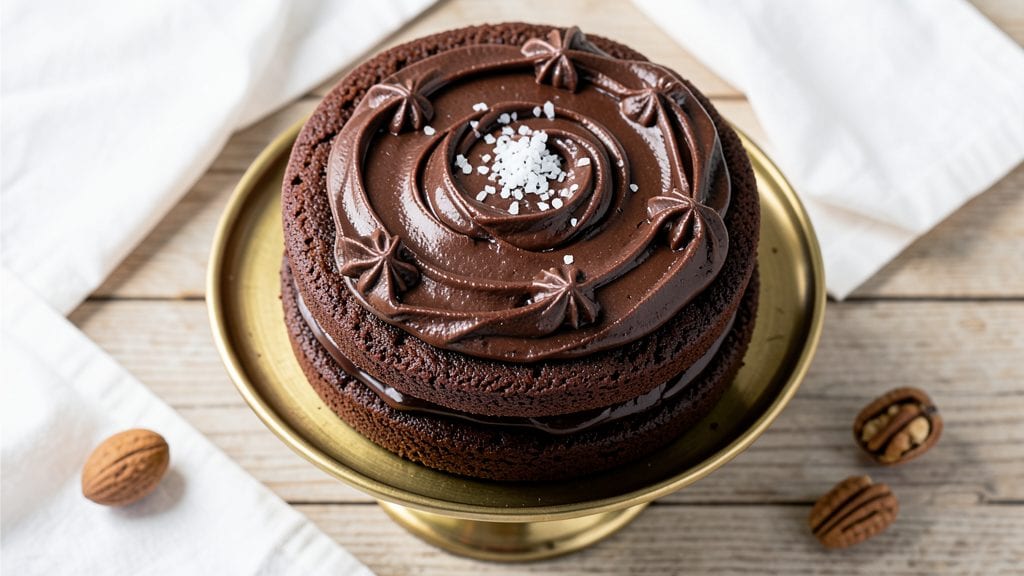
This Amish chocolate cake recipe delivers the legendary moistness that keeps slices tender for days—no dry crumbs in sight. The secret lies in buttermilk's magic, a staple in Amish baking that creates that signature velvety crumb.
I've baked this version dozens of times, and it never fails to impress, whether served at family gatherings or as a simple Sunday treat.
What makes this recipe special is its simplicity—just a handful of quality ingredients that work together to create rich chocolate flavor without overpowering bitterness. The cake layers beautifully with a traditional buttercream frosting, though many Amish families prefer a simple dusting of powdered sugar.
The key technique? Mixing just until combined to maintain that signature tender crumb.
By the time it emerges from the oven, you'll have perfectly moist layers with a golden crust that's just crisp enough. The buttermilk keeps it tender while the baking powder ensures proper rise—no dense, heavy texture here.
Each slice stays moist for days when stored properly, making this the ultimate cake for celebrations or quiet afternoons.
Serve warm with vanilla ice cream or enjoy at room temperature with fresh berries. The frosting can be customized with extracts or spices, but the cake itself stands strong on its own. Let's get baking—this recipe delivers on every promise of Amish baking tradition.
Ingredients for amish chocolate cake
Buttermilk and cocoa create the signature Amish moistness—just 12 simple ingredients for legendary cake.
| Ingredient | Amount | Notes |
|---|---|---|
| All-Purpose Flour 🌾 | 2 cups | Sifted for even texture |
| Granulated Sugar 🍚 | 2 cups | White or light brown |
| Unsalted Butter 🧈 | 1 cup | Room temperature, full-fat |
| Buttermilk 🥛 | 1 cup | Fresh, not powdered |
| Large Eggs 🥚 | 2 whole | Room temperature, separated |
| Baking Powder 🧂 | 1 ½ tsp | Double-acting preferred |
| Salt 🧂 | ½ tsp | Fine sea salt |
| Unsweetened Cocoa Powder 🍫 | ½ cup | Natural or Dutch-processed |
| Vanilla Extract 🌿 | 1 tbsp | Pure, high-quality |
| Vegetable Oil 🫒 | ½ cup | Light neutral oil |
| Powdered Sugar 🍚 | 2 cups | For buttercream frosting |
| Heavy Whipping Cream 🥛 | ½ cup | Cold for frosting |
The buttermilk is non-negotiable here—Amish bakeries swear by it for that signature tender crumb. Store-bought works fine, but homemade (milk + vinegar) adds depth. For cocoa powder, Hershey's Special Dark or Dutch-processed brands like Ghirardelli deliver the richest flavor without bitterness. The butter should be room temperature—press it to test: if it leaves a slight indentation, it's ready. Flour matters too: King Arthur or Bob's Red Mill brands bake more reliably than store-brand varieties. I always measure flour by scooping and leveling—never packing it down.
No buttermilk? Mix 1 cup milk with 1 tbsp vinegar or lemon juice and let sit 5 minutes. Short on cocoa? Hot cocoa mix at half the amount works in a pinch, but you'll taste the difference. The frosting can be skipped entirely—many Amish families prefer a light dusting of powdered sugar instead. For extra richness, add 1 tbsp melted butter to the frosting. The eggs should be room temperature—cold eggs can cause the batter to curdle. If your batter seems too thick, add 1-2 tbsp more buttermilk gradually.
This cake stays moist for 4-5 days when wrapped tightly in plastic at room temperature. For longer storage, freeze layers separately for up to 3 months. The frosting keeps 3 days refrigerated—whip it up fresh if serving beyond that. I always bake two 9-inch layers for perfect slices. For extra indulgence, add 1/2 cup chocolate chips to the batter before baking. The secret to Amish-style moistness? Don't overmix—just combine until the flour disappears.
Why You'll Love This Recipe
- No-Mix Madness: I swear, this cake comes together faster than my coffee brews—just fold the dry stuff into the wet, pop it in the oven, and let the buttermilk do its magic. No stand mixer, no stress.
- Rich Without Guilt: That buttermilk keeps it moist, the butter makes it tender, and the sugar? Chef’s kiss—it’s got that deep, fudgy satisfaction without tasting like you’ve eaten a whole dessert bar. (Yes, even on a Tuesday night.)
- Leftovers? More Like Lifesavers: Slice it up and stash it in the fridge—it stays perfect for days. Honestly, I’ve had this cake for breakfast, lunch, and dessert, and no one’s complained. (My kids call it “emergency cake.”)
- Pantry Staple Power: You’ve got flour, sugar, butter, eggs, and buttermilk? Done. No weird ingredients, no last-minute grocery runs. This is the kind of cake that works when you’re broke or busy—or both.
Step-by-step instructions for Amish chocolate cake
Here's how to create that signature moist texture using the buttermilk secret.
Prepare the Cake Batter
Preheat your oven to 350°F and grease two 8-inch round cake pans, then line the bottoms with parchment paper. In a large mixing bowl, combine the 2 cups all-purpose flour, 1.5 teaspoons baking powder, and 0.5 teaspoon salt. Sift this mixture together to ensure an even distribution of baking powder throughout the batter.
In a separate bowl, cream together the 1 cup unsalted butter and 2 cups granulated sugar on medium speed until light and fluffy, about 3-4 minutes. This step is crucial—it incorporates air that will create a tender crumb. Add the 2 whole large eggs, one at a time, mixing well after each addition. Scrape down the sides of the bowl to ensure everything is fully incorporated.
Next, stir in the 1 cup buttermilk and 1 tablespoon vanilla extract until just combined. The buttermilk is the secret ingredient here—it reacts with the baking powder to create steam, which keeps the cake moist even after baking. Finally, gently fold in the 0.5 cup unsweetened cocoa powder and 0.5 cup vegetable oil using a spatula, being careful not to overmix. The batter should be thick but smooth.
Bake to Perfect Moisture
Divide the batter evenly between the two prepared cake pans. Tap each pan gently on the counter to remove any air bubbles. Bake in the preheated oven for 25-30 minutes, or until a toothpick inserted into the center comes out clean. The cake should spring back slightly when pressed gently in the center.
Here's the key to maintaining moisture: Do not overbake. The cake will continue to set as it cools, so remove it from the oven as soon as it passes the toothpick test. Let the cakes cool in the pans for 10 minutes, then transfer them to a wire rack to cool completely. This gradual cooling prevents cracking and ensures even texture throughout.
Prepare the Buttercream Frosting
While the cakes cool, prepare the frosting by beating the 0.5 cup heavy whipping cream in a chilled bowl until soft peaks form. In a separate bowl, combine the 2 cups powdered sugar with 1 tablespoon vanilla extract and mix until smooth. Gradually add the powdered sugar mixture to the whipped cream while continuing to beat on medium speed until fully incorporated and fluffy.
For a richer frosting, you can add a small amount of the 1 cup unsalted butter (softened) to the mixture, beating until smooth. This step is optional but enhances the flavor and texture of the frosting. The frosting should be thick enough to hold its shape but still spreadable—if it's too stiff, add a teaspoon of milk or buttermilk to loosen it.
Assemble and Serve
Once the cakes are completely cool, place one layer on a serving plate and spread a generous layer of the buttercream frosting on top. Repeat with the second layer, then cover the entire cake with the remaining frosting. Use a spatula to smooth the sides and create a clean finish. For extra flair, you can pipe additional frosting around the edges or on top.
This cake is best served at room temperature, allowing the flavors to meld together. The buttermilk secret ensures a moist, tender crumb that stays fresh for days. Store any leftovers in an airtight container at room temperature for up to 3 days, or refrigerate for up to 5 days. Bring to room temperature before serving for the best texture.
Pro Tips For Making Amish Chocolate Cake
- MEASURE BUTTER COLD: Take that butter straight from the fridge—no softening, no room-temperature nonsense. I learned this the hard way when my cake turned out dense and greasy after trying to "save time." Cold butter creates pockets for air, which is what makes Amish chocolate cake so light and tender. Cut it into chunks for even distribution.
- WHISK EGGS FIRST: Beat those eggs until they’re pale and slightly thickened before mixing them into the batter. This isn’t just about volume—it’s about structure. My grandmother swore by this, and she was right: the eggs hold onto air better when they’ve been worked, so your cake rises higher and stays moist longer. Don’t skip the whisking.
- DON’T OVERMIX THE BUTTERMILK: Stir the buttermilk into the dry ingredients just until combined—no need to make it smooth. Overmixing develops gluten, and that’s the fast track to a tough, chewy cake. Think "dampened flour," not "pancake batter." I was skeptical until I tried it, and now I resist the urge to blend it like a smoothie.
- BAKE UNTIL SPRINGY: Your cake is done when the center bounces back slowly when pressed—not when the toothpick comes out clean. Amish chocolate cake is dense, so it won’t pass the toothpick test like a cupcake. I used to pull mine too soon, and it’d end up gummy. Give it 5-10 minutes under foil if it’s not quite there—your future self will thank you.
Troubleshooting perfect results
Cake Too Dense
If your cake emerges dense instead of light, overmixing is likely the culprit. The buttermilk and baking powder rely on gentle folding—stop as soon as the flour disappears. Also, ensure your butter is room temperature (press it; if it leaves a slight indentation, it's ready).
Another fix: reduce flour by 1-2 tablespoons next time, as some brands absorb differently. 💡
Dry or Crumbly Texture
Dryness usually means overbaking or insufficient moisture. First, check your oven temperature—it should be 350°F (use an oven thermometer to confirm). For extra moisture, add 1-2 tablespoons of buttermilk to the batter if it seems too thick.
If the cake dries out after baking, wrap it tightly in plastic wrap while still warm to lock in moisture. 🥛
Cracks in the Cake
Cracks often appear when cakes cool too quickly. Let them cool in the pans for 10 minutes before transferring to a wire rack. Another trick: avoid opening the oven door during the first 20 minutes of baking to prevent temperature fluctuations.
If cracks form, they’re purely cosmetic—just frost generously to disguise them. 🧁
Frosting Too Thin
If your buttercream spreads like syrup, your whipping cream wasn’t cold enough. Chill all tools and ingredients before whipping—use a chilled metal bowl and beaters for best results.
For a thicker frosting, add 1 tablespoon powdered sugar at a time while mixing. If it’s still too runny, refrigerate for 10-15 minutes before using. 🥄
Uneven Rise
Uneven layers often stem from uneven batter distribution or old baking powder. Weigh your pans before dividing batter to ensure equal portions. Also, replace baking powder if it’s older than 6 months—old leavening loses potency.
Tap pans gently on the counter before baking to release air bubbles, which can cause uneven rising. 🎂
Bitter Chocolate Flavor
Bitter cocoa flavor usually means using too much or a low-quality powder. Stick to ½ cup unsweetened cocoa powder (like Hershey’s Special Dark) and avoid Dutch-processed cocoa if you prefer a sweeter taste.
For balance, add 1 teaspoon instant coffee granules to the batter—they deepen chocolate flavor without bitterness. 🍫
Nutrition facts
Frequently asked questions
Why does this Amish chocolate cake stay moist for days?
The secret lies in the buttermilk and careful baking technique. Buttermilk creates steam during baking, keeping the crumb tender, while the 350°F temperature and 25-30 minute bake time ensure perfect moisture without drying. The vegetable oil also adds richness that prevents crumbling.
Can I substitute buttermilk in this recipe?
Yes! Mix 1 cup milk with 1 tablespoon vinegar or lemon juice, then let sit for 5 minutes to curdle. This DIY buttermilk works just as well for the signature moist texture. For extra richness, use whole milk instead of reduced-fat.
How do I make this cake gluten-free?
Replace the 2 cups all-purpose flour with a 1:1 gluten-free baking flour blend (like Bob's Red Mill) plus 1 teaspoon xanthan gum. Also reduce baking powder to 1 teaspoon—gluten-free batters need less leavening. Expect slightly denser texture but still delicious!
What's the best way to store leftovers?
Wrap tightly in plastic wrap at room temperature for 3-4 days, or refrigerate for up to 5 days. For longer storage, freeze layers separately for 3 months. Always bring to room temperature before serving to preserve that tender crumb.
Can I add nuts or chocolate chips to this recipe?
Fold in ½ cup chocolate chips or ½ cup chopped walnuts before baking. For extra indulgence, combine both. Just reduce buttermilk by 2 tablespoons to maintain proper batter consistency.