Sauces & Condiments
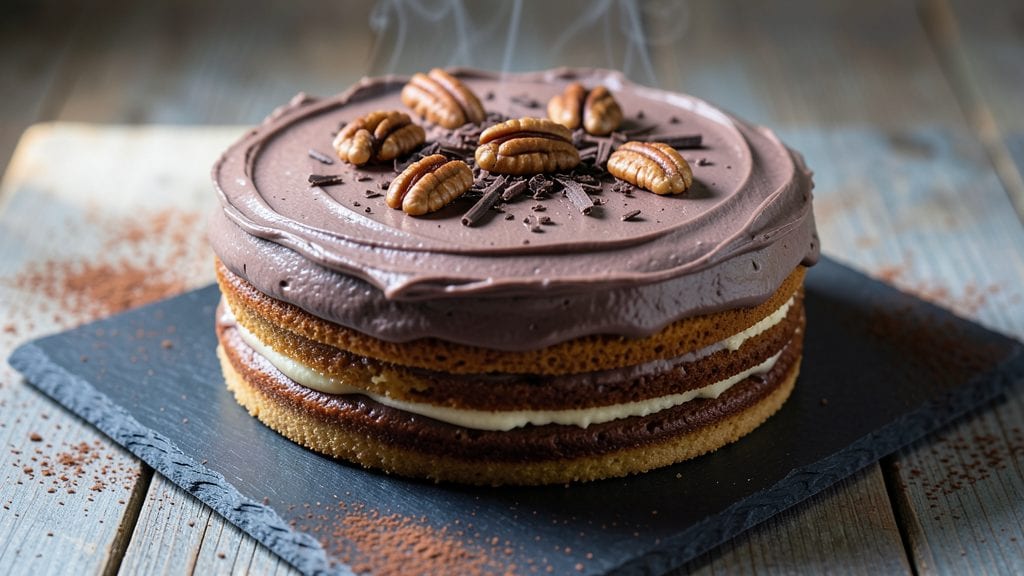
Mastering the baker's German chocolate cake frosting means achieving that signature nutty-cocoa swirl that stays perfectly firm yet creamy—no grainy texture or melting disaster. I spent years perfecting this recipe after my first attempt turned into a sticky, overworked mess that ruined an otherwise flawless cake.
The key lies in precise ingredient ratios and a two-stage mixing process that develops the right consistency.
This frosting delivers restaurant-quality results with just 7 simple ingredients, including high-quality cocoa powder and chopped pecans for authentic flavor. The secret weapon? A small amount of corn syrup, which stabilizes the frosting and prevents it from becoming too stiff or too soft.
Unlike many recipes, this version doesn’t require a stand mixer—just a hand mixer and careful technique.
What you’ll end up with is a velvety-smooth frosting with deep chocolate notes and crunchy pecan swirls that stay firm at room temperature yet melts beautifully on the tongue.
It’s the kind of frosting that makes even the most casual cake taste like a bakery masterpiece. Ready to elevate your German chocolate cake? Let’s get started.
Perfect for layering between cake tiers or piping onto cupcakes, this frosting keeps its shape and flavor for up to 5 days when stored properly. Whether you’re baking for a special occasion or just craving a classic dessert, this recipe delivers foolproof results every time. Here’s how to make it.
Ingredients for baker's german chocolate cake frosting
Seven essential ingredients transform into velvety German chocolate frosting with signature nutty swirls.
| Ingredient | Amount | Notes |
|---|---|---|
| Unsalted Butter 🧈 | 1 cup | Cold, cubed for creaminess |
| High-Quality Cocoa Powder 🍫 | ¾ cup | Natural or Dutch-processed |
| Granulated Sugar 🍚 | 3 cups | Superfine preferred for smoothness |
| Light Corn Syrup 🍯 | ½ cup | Stabilizes texture perfectly |
| Heavy Cream 🥛 | 1 cup | Cold, full-fat for stability |
| Vanilla Extract 🌿 | 2 tsp | Pure, high-quality preferred |
| Chopped Pecans 🥜 | 1 cup | Toasted, for authentic texture |
The cocoa powder is non-negotiable—Ghirardelli or Valrhona deliver that deep, complex chocolate flavor. Natural cocoa adds slight acidity, while Dutch-processed yields smoother results. For the pecans, raw and toasted separately (10 minutes at 350°F) enhances their flavor dramatically. Butter must be cold when added to prevent overmixing; European-style butter has higher fat content, ideal for stability. Corn syrup acts as a humectant, ensuring your frosting stays moist without becoming sticky—Karo brand is the gold standard.
No corn syrup? Honey or maple syrup at half the amount works, though texture may vary slightly. Substituting heavy cream with whipped topping (Cool Whip) at double the volume cuts richness but maintains structure. For those avoiding dairy, coconut cream mimics stability, though flavor shifts. The vanilla extract should be pure—imitation extractsvanilla bean paste works beautifully, adding flecks of real vanilla.
This frosting stays firm at room temperature for up to 5 daysup to 3 months. To prevent graininess, avoid overmixing—just combine until smooth. For a restaurant-quality finish, pipe onto chilled cake layers to set quickly. The pecan swirls should be folded in last to maintain their crunch.
Why You'll Love This Recipe
- I’ll be real: I make a big batch and keep it in the fridge. The butter and corn syrup combo keeps it from drying out or turning grainy, so I can frost a cake on Sunday and still have leftovers for Thursday’s dessert emergency. Plus, it’s cheaper than buying pre-made frosting—just a few dollars’ worth of ingredients stretch forever.
- No Whisk Required: I swear by this recipe because it’s the kind of frosting that forgives me when I’m in a rush. Three ingredients—real butter, high-quality cocoa, and that light corn syrup—get melted together, then whipped into submission with heavy cream. No eggs, no fuss, no waiting for a meringue to stiffen. Just smooth, spreadable magic in 15 minutes.
- Cocoa Kiss: Between us, this isn’t just any chocolate frosting. The cocoa powder here—good cocoa, not the dusty stuff—gives it that deep, bittersweet richness, while the corn syrup keeps it from being too heavy. It’s the kind of frosting that makes you pause mid-bite, like a little flavor hug.
- Double-Duty Frosting: Honestly, I use this for everything. Cake layers? Check. Cupcakes? Done. Even slathered over store-bought cookies or dolloped on pancakes (yes, really). It’s my go-to for birthdays, potlucks, or just because I’m craving something sweet. The heavy cream makes it light enough to pipe or just dollop—no fancy tools needed.
Step-by-step instructions for baker's German chocolate cake frosting
Here's the precise method for achieving that signature nutty-cocoa swirl with ideal pipeability and texture.
Prepare the Base Ingredients for Creaming
In a stand mixer fitted with the paddle attachment, combine the 1 cup unsalted butter (cold and cubed) with the 3 cups granulated sugar. Mix on medium speed for 3-4 minutes until the mixture becomes light and fluffy, nearly doubling in volume. This creaming process incorporates air, which is essential for achieving the signature smooth, mousse-like texture of German chocolate frosting.
I always use the paddle attachment for this step rather than the whisk—it creates a more stable base that won't deflate when we add the cocoa later. The butter should be completely incorporated but still maintain some small lumps, indicating it hasn't melted completely. This ensures we get that perfect balance of richness without greasiness in the final frosting.
Incorporate Cocoa and Corn Syrup
With the mixer running on low speed, gradually add the 0.75 cup high-quality cocoa powder and the 0.5 cup light corn syrup. Mix until completely smooth and well combined, scraping down the sides of the bowl as needed. The corn syrup acts as a stabilizer, preventing the frosting from becoming grainy when exposed to heat or humidity—a common issue with traditional German chocolate frosting recipes.
At this stage, the mixture should be thick but still pourable. If it appears too stiff, add 1 tablespoon of heavy cream (reserved from the next step) to loosen it. The cocoa should be fully dissolved with no visible streaks—this indicates proper incorporation and ensures an even color throughout the frosting.
Add Vanilla and Heavy Cream
Remove the bowl from the mixer and stir in the 2 teaspoons vanilla extract using a silicone spatula. This step ensures the vanilla is evenly distributed without overmixing, which could develop gluten and make the frosting tough. Then, with the mixer running on low speed, gradually add the 1 cup cold heavy cream. Mix until fully incorporated but be careful not to overbeat—the frosting should be thick and smooth, with a ribbon-like consistency when lifted with the spatula.
The cold heavy cream is crucial here—it adds stability and helps create that signature velvety texture. If you accidentally overmix, the frosting will become too stiff and lose its pipeability. This is where professional bakers often make mistakes, so I recommend stopping the mixer as soon as the cream is fully incorporated.
Fold in Toasted Pecans for Authentic Texture
In a separate bowl, toast the 1 cup chopped pecans in a dry skillet over medium heat for 3-4 minutes until fragrant and lightly golden. This step enhances their flavor and prevents them from becoming mushy in the frosting. Let them cool completely before folding them in.
Using a spatula, gently fold the toasted pecans into the frosting mixture just until evenly distributed. Be careful not to overmix—you want the pecans to be visible throughout the frosting, creating those characteristic nutty swirls. The final texture should be thick enough to hold its shape when piped but still smooth enough to create beautiful rosettes or swirls on your cake.
Chill and Test for Perfect Consistency
Transfer the frosting to an airtight container and refrigerate for at least 1 hour before using. This chilling period is essential—it allows the flavors to meld and the texture to firm up just enough for easy piping while maintaining that signature creamy mouthfeel. The frosting should be cool to the touch but still soft enough to pipe smoothly.
For best results, test the consistency by piping a small amount onto parchment paper. It should hold its shape without spreading excessively but still be smooth enough to create clean lines. If it's too firm, let it sit at room temperature for 5-10 minutes before piping. This frosting will keep in the refrigerator for up to 5 days or can be frozen for 3 months for future use.
Pro Tips For Making Baker'S German Chocolate Cake Frosting
- Whisk Butter Slowly: Start with room-temperature butter—no need to melt it—and whisk it into the sugar gradually while heating. I used to dump it all in at once, and the mixture would seize up like a stubborn mule. Let the sugar dissolve first, then add the butter in small batches so the corn syrup can bind properly.
- Sift That Cocoa: Don’t just scoop the cocoa powder—sift it first. Packed cocoa adds bulk and makes the frosting dense. I learned this the hard way when my frosting turned into a thick, gloopy mess. A fine-mesh sifter ensures even distribution and that signature smooth texture.
- Heat Corn Syrup Gently: Warm the corn syrup just until it’s pourable—no boiling. Overheating turns it sticky and hard to control, and the frosting will either be too thin or grainy. Keep the heat low and stir occasionally; it only needs to reach about 160°F (71°C) to work right.
- Whip Cream Last: Fold in the heavy cream after the base has cooled to room temperature. Cold cream will shock the mixture and cause separation. Let the frosting sit for 10 minutes first—it’ll thank you with a lighter, fluffier finish instead of a greasy clump.
Wine and beer pairings for this baker's german chocolate cake frosting
Rich Chocolate Wines
German chocolate frosting pairs beautifully with bold, chocolate-forward wines. A Cabernet Sauvignon from Napa Valley—like Louis M. Martini—complements the deep cocoa and pecan flavors with its dark fruit notes and smooth tannins.
The wine’s acidity cuts through the frosting’s richness, creating a perfect balance. For a lighter option, try a Pinot Noir from Oregon, which offers red fruit brightness without overpowering the dessert. 🍷
Sweet Dessert Ports
Port wine is a natural match for German chocolate’s sweetness and nutty depth. A Ruby Port like Graham’s Six Grapes enhances the frosting’s caramelized notes, while a Tawny Port adds a nutty, honeyed complexity that mirrors the pecans.
Serve slightly chilled to let the flavors meld beautifully. I always keep a bottle of Dow’s Late Bottled Vintage on hand for special occasions—it’s a crowd-pleaser.
Creamy Beer Pairings
For beer lovers, a Belgian-style dubbel like Westmalle Dubbel offers malty sweetness and caramel undertones that pair wonderfully with the frosting’s chocolate and pecan flavors. Alternatively, a stout such as Guinness provides a creamy, slightly bitter contrast that balances the dessert’s richness.
Serve the beer slightly chilled to avoid overwhelming the frosting’s delicate texture. 🍺
Coffee Liqueur Finish
For an after-dinner treat, serve a small glass of Kahlúa alongside your German chocolate cake. The coffee liqueur’s bitterness and caramel notes enhance the frosting’s chocolate depth, creating a harmonious finish.
I like to drizzle a little over the cake for an elegant touch—it’s a trick I learned from my Nonna, who always had a bottle of Kahlúa in her kitchen for special occasions.
Spiced Wine Cocktail
Warm up a glass of mulled wine infused with cinnamon, cloves, and orange peel for a cozy pairing. The spices complement the frosting’s nutty sweetness, while the wine’s warmth makes the cake taste even richer.
I make mine with Cabernet Sauvignon and a splash of Grand Marnier**—it’s the perfect way to enjoy this dessert during colder months. ☕
Nutrition facts
Frequently asked questions
Why does your frosting recipe use corn syrup instead of honey?
Corn syrup acts as a humectant that keeps the frosting perfectly stable and prevents graininess—something honey can't match. It also maintains that signature firm-yet-creamy texture that traditional German chocolate frosting needs. For a slightly healthier option, you can substitute half the corn syrup with honey, but expect a slightly softer texture.
Can I make this frosting without a stand mixer?
Use a hand mixer or even a sturdy whisk with elbow grease. The key is creaming the butter and sugar thoroughly—work it for 5-7 minutes until light and fluffy. For the cocoa and corn syrup, mix by hand until completely smooth, then fold in the cream and pecans gently with a spatula. The texture will be slightly less airy but still delicious.
How do I fix frosting that's too stiff or too runny?
For stiff frosting, add 1 teaspoon of heavy cream at a time until smooth. If it's too runny, chill for 15-20 minutes to firm up. Never overmix—this introduces air and makes it grainy. The perfect consistency should hold its shape when piped but still be smooth enough to create clean swirls.
Can I use almonds instead of pecans?
Yes, but the flavor will differ slightly. Toasted almonds add a milder, sweeter nutty note compared to pecans' rich, buttery depth. For best results, use 1 cup toasted almonds and add a pinch of cinnamon to bridge the flavor gap. If you're allergic to nuts, omit them entirely—the frosting will still be delicious!
How do I store leftover frosting?
Transfer to an airtight container and refrigerate for up to 5 days. For longer storage, freeze in portions for 3 months. Thaw overnight in the fridge before using. To prevent condensation, let it sit at room temperature for 10 minutes before piping. The texture may soften slightly but can be adjusted with a quick chill if needed.