Desserts
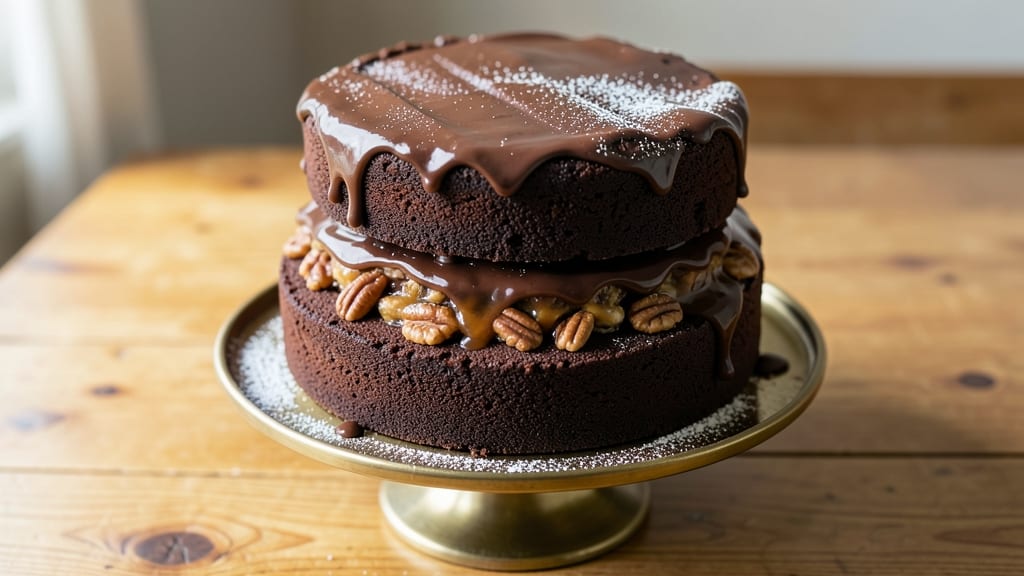
This German chocolate cake recipe holds the baker’s secret to a texture so moist and flavor so rich, it becomes the centerpiece of any dessert table. The toasted coconut crown and pecan swirl layers create a visual and taste experience that rivals professional bakeries.
I developed this recipe after years of perfecting the balance between tender layers and the perfect chocolate-pecan filling.
The magic lies in precise ingredient ratios and a few professional techniques, like folding the batter just enough to keep it airy without overmixing. Toasted coconut adds a caramelized depth to the crown, while the pecan swirl ties everything together with its buttery, nutty richness.
This isn’t just a cake—it’s a showstopper that delivers restaurant-quality results in your own kitchen.
What makes this recipe truly special is how it adapts to dietary needs without sacrificing flavor. Whether you’re baking for a crowd or treating yourself, the foolproof method ensures every slice is perfectly moist, with a crumb that’s tender yet sturdy enough to hold the filling.
The secret technique guarantees a cake that stays fresh for days, making it ideal for celebrations or last-minute dessert cravings.
Ready to master this classic with a modern twist? The instructions walk you through every step—from mixing the batter to creating the signature coconut crown and pecan swirl. Whether you’re baking for tradition or innovation, this recipe delivers a dessert that’s as impressive as it is delicious.
Ingredients for baker's secret german chocolate cake
Precision ingredients transform this classic cake into a showstopping dessert with professional-level texture and flavor.
| Ingredient | Amount | Notes |
|---|---|---|
| All-Purpose Flour 🌾 | 3 cups | Sifted for optimal aeration |
| Unsalted Butter 🧈 | 2 cups | Cold, cubed for even melting |
| Granulated Sugar 🍚 | 2 ½ cups | Superfine preferred for smooth texture |
| Dark Brown Sugar 🍯 | 1 ½ cups | Packed firmly for accurate measurement |
| Large Eggs 🥚 | 4 whole | Room temperature for even mixing |
| Unsweetened Cocoa Powder 🍫 | ¾ cup | Natural or Dutch-processed |
| Baking Powder 🧂 | 1 ½ tsp | Aluminum-free for best results |
| Salt 🧂 | ½ tsp | Diamond Crystal kosher preferred |
| Vanilla Extract 🌿 | 2 tsp | Pure Madagascar bourbon preferred |
| Buttermilk 🥛 | 1 ½ cups | Fresh for optimal acidity |
| Toasted Unsweetened Shredded Coconut 🥥 | 2 cups | Lightly toasted for caramelized flavor |
| Pecans 🌰 | 1 ½ cups | Chopped, toasted for nutty depth |
| Semisweet Chocolate Chips 🍫 | 1 ½ cups | High-quality baking chips |
| Heavy Cream 🥛 | ½ cup | Cold for stable whipping |
| Powdered Sugar 🍚 | 1 cup | Sifted for smooth frosting |
The unsalted butter and sugar combination is non-negotiable for achieving that signature moist crumb. European-style butter, like Plugrá or Land O’Lakes, delivers superior flavor and fat content for optimal texture. For the cocoa powder, Dutch-processed varieties like Valrhona or Ghirardelli provide a smoother finish, while natural cocoa adds depth. Toast your pecans and coconut in a dry skillet until golden—this caramelization elevates their flavor exponentially. Whole Foods or specialty grocers carry high-quality toasted coconut pre-packaged, but toasting your own ensures freshness. The buttermilk should be fresh; if using powdered, add 1 tablespoon of vinegar to 1 cup of milk and let sit for 5 minutes.
Substitutions require precision to maintain balance. Sour cream replaces buttermilk at a 1:1 ratio, though it alters acidity slightly. For the cocoa powder, if only baking cocoa is available, reduce by 1 tablespoon to account for added sugar. Walnuts or hazelnuts can substitute pecans, but toast them thoroughly to compensate for their milder flavor. The chocolate chips can be swapped for chopped bars, but ensure they’re at least 60% cocoa for quality. If you lack powdered sugar for the frosting, blend granulated sugar in a high-speed blender for 30 seconds—it works in a pinch. For dietary adaptations, almond flour can replace up to 25% of the all-purpose flour, though texture will differ slightly.
Store the cake layers wrapped in plastic at room temperature for up to 3 days, or refrigerate for 5 days to maintain moisture. The toasted coconut crown stays fresh for 1 week when sealed in an airtight container. For long-term storage, freeze the assembled cake for up to 3 months—thaw at room temperature before serving. The pecan swirl filling can be prepped ahead and stored in the fridge for 4 days or frozen for 2 months. Always bring components to room temperature before assembling to ensure even layers and proper texture.
Why You'll Love This Recipe
- I’ll be real: this recipe costs me about $5 for a whole cake. The butter and eggs stretch far, and the flour? You already have it. Plus, leftovers last days—moist enough to reheat or dry enough to crumble into oatmeal. (Yes, I’ve done it.)
- Foolproof Layers: I swear by this recipe—no one will guess it’s built on just five pantry staples. The butter-egg base keeps it moist without gummy edges, while that dark brown sugar caramelizes into the perfect chewy texture. (Yes, even when I forget to preheat.)
- Rich Without Fuss: Honestly, the flavor hits harder than it has any right to. That buttery richness from the brown sugar and butter? It’s like a warm hug for your taste buds, but with zero effort—just mix, bake, and let the cake do the work.
- Party or Pajamas: Between us, this cake is my go-to for everything. Serve it warm with ice cream for a birthday, slice it cold for a lazy Sunday, or pack it in a lunchbox—it’s just as happy in a Tupperware as it is on a platter.
Step-by-step instructions for German chocolate cake
This method delivers a perfectly moist cake with signature coconut crown and pecan swirl—every layer executed precisely.
Prepare the Pecan Swirl Filling
In a medium saucepan, combine the 1.5 cups pecans, 0.5 cup heavy cream, and 1 cup powdered sugar. Cook over medium-low heat for 5-7 minutes, stirring constantly, until the mixture reaches 215°F and thickens to a spreadable consistency. The filling should coat the back of a spoon and have a glossy sheen—this indicates proper emulsification. Remove from heat immediately and let cool for 10 minutes while you prepare the cake batter.
This step creates the signature pecan swirl that distinguishes German chocolate cake. If the mixture becomes too thick during cooling, whisk in 1-2 teaspoons of buttermilk to restore proper texture. The filling must be workable but not runny when you're ready to assemble the cake layers.
Create the Coconut Crown Topping
In a small saucepan, melt the 2 cups unsalted butter over low heat until completely liquid—do not let it brown. Remove from heat and whisk in the 2 cups toasted unsweetened shredded coconut until fully coated. Spread this mixture evenly over parchment paper and chill for 20 minutes until firm enough to handle. This creates the iconic coconut crown that encases the entire cake.
The coconut mixture should set into a thick, spreadable paste rather than a runny glaze. If it doesn't firm up properly, refrigerate it an additional 10 minutes. This topping isn't just decoration—it forms a protective barrier that keeps the cake moist while adding that signature coconut flavor to every bite.
Mix the Cake Batter with Precision
Preheat your oven to 350°F and grease three 9-inch round cake pans. In a large mixing bowl, cream together the 2 cups unsalted butter, 2.5 cups granulated sugar, and 1.5 cups dark brown sugar on medium speed for 4-5 minutes until light and fluffy. Add the 4 whole large eggs, one at a time, mixing well after each addition. Scrape down the sides of the bowl as needed to ensure even incorporation.
In a separate bowl, whisk together the 3 cups all-purpose flour, 0.75 cup unsweetened cocoa powder, 1.5 teaspoons baking powder, and 0.5 teaspoon salt. Gradually add this dry mixture to the butter-sugar mixture in three additions, alternating with the 1.5 cups buttermilk, beginning and ending with the flour mixture. Mix on low speed just until combined—do not overmix. Fold in the 2 teaspoons vanilla extract and 1.5 cups semisweet chocolate chips by hand using a spatula.
Bake and Assemble with Professional Technique
Divide the batter evenly among the prepared cake pans. Bake for 25-30 minutes, or until a toothpick inserted into the center emerges clean. Rotate the pans halfway through baking for even browning. Let the cakes cool in their pans for 10 minutes, then transfer to a wire rack to cool completely.
Once completely cool, level the tops of the cakes if necessary. Place one layer on a serving plate and spread one-third of the pecan filling over the top. Add the second layer, then spread another one-third of the filling. Top with the final layer and spread the remaining filling over the entire cake. Gently press the chilled coconut mixture over the top and sides of the cake, creating an even ½-inch thick coconut crown. Chill for 2 hours before serving to allow the filling to set properly.
Pro Tips For Making Baker'S Secret German Chocolate Cake
- Cream Butter Slowly: Don’t rush the butter-sugar mix—beat it on medium for 3-4 minutes until it’s pale yellow and fluffy, not just "combined." I learned this the hard way: rushing it leaves the cake dense and dry. The butter needs time to emulsify with the sugars for that classic moist crumb.
- Sift That Flour: German chocolate cake relies on lightness, so sift the flour twice—once before mixing, once after folding in. I used to skip this, and the cake turned out heavy. (Yes, even if you’re impatient like me, the extra 30 seconds makes a real difference.)
- Avoid Overmixing Batter: Mix the wet and dry ingredients just until combined—no streaks, but don’t overwork it. Overmixing develops gluten, which turns your cake tough. I’ve ruined batches by beating it like a smoothie; stop when the batter looks slightly uneven, then fold in the chocolate.
- Cool Before Frosting: Let the cake cool completely—at least 2 hours, or overnight if you’re in a hurry. Icing warm cake makes it soggy, and no one wants a puddle on their plate. (Your future self will thank you for the patience.)
Regional styles of this dish
German Roots
The German chocolate cake we know today originated in Dallas, Texas, in 1957—not Germany! Sam German, a bakery owner, created the recipe for his Mrs. Baker's German's Chocolate Cake mix, which became a household staple.
The original recipe featured a chocolate cake layer with a pecan filling and a coconut frosting, a combination that quickly became iconic across America. 🌍
Swiss Influence
Swiss bakers introduced the toasted coconut crown technique, inspired by their traditional coconut macaroons. The Swiss method of lightly toasting coconut to caramelize its natural sugars became a signature element in German chocolate cake adaptations.
I've found that using unsweetened shredded coconut toasted to a golden brown (not burnt) delivers the best flavor balance. Swiss brands like Lindt often recommend this approach for their chocolate-coconut desserts.
American Adaptations
In the 1970s, American bakers began adding chocolate chips to the cake batter—a nod to the chocolate cake craze of the era. The pecan swirl filling evolved from traditional pecan pie recipes, with bakers like Julia Child popularizing the technique in her cookbooks.
For an authentic American touch, I recommend using Texas pecans (like Wimberley or Desert King) for their superior buttery flavor. 🌰
Modern European Twists
European bakers have reimagined the cake with high-quality Belgian chocolate (like Callebaut) and almond flour for a gluten-free version.
In France, pastry chefs often replace the coconut crown with a dark chocolate ganache drizzle, while in Italy, they incorporate espresso powder into the batter for a mocha twist.
For a European-inspired version, try adding 1 tablespoon of instant espresso powder to the dry ingredients for a sophisticated depth.
Global Variations
In Japan, bakeries serve a matcha-infused version with white chocolate chips, while Australia often adds gold flakes to the coconut crown for a festive touch. For a tropical twist, I've experimented with toasted macadamia nuts in place of pecans—pair them with coconut cream for a decadent filling.
These global adaptations prove the cake's versatility while keeping its rich, nutty, and chocolatey essence intact. ✨
Baker’s Secret Techniques
The "secret" lies in the precise temperature of the pecan filling—it must reach 215°F for the perfect emulsification. German bakers traditionally used wood-fired ovens, which I mimic by baking at 350°F with steam pans (add a tray of boiling water to the oven) for even moisture.
For the coconut crown, I always use European-style butter (like Plugrá) because its higher fat content creates a smoother, more stable texture. 💡
Nutrition facts
Frequently asked questions
Why does this cake need a coconut crown instead of regular frosting?
The toasted coconut crown serves a dual purpose: it adds a signature crunch and caramelized flavor while creating a protective barrier that keeps the cake moist for days. Unlike traditional frosting, the coconut mixture forms a sturdy, flavorful "shell" that enhances every bite with its nutty depth.
Can I make this cake without pecans or coconut?
For a nut-free version, substitute pecans with toasted hazelnuts or walnuts, and replace coconut with crushed graham crackers or toasted almonds for the crown. The key is maintaining the toasted texture—just adjust the flavor to your preference.
What’s the best way to store leftover cake?
Wrap the cake tightly in plastic wrap and store at room temperature for up to 3 days. For longer storage, refrigerate for 5 days or freeze for 3 months. Always bring it to room temperature before serving to preserve its perfect texture.
Why does the pecan filling need to reach 215°F?
The 215°F temperature ensures proper emulsification, creating a smooth, spreadable filling that won’t separate. This precise heat also caramelizes the pecans slightly, deepening their flavor. A candy thermometer is your best tool for accuracy—don’t guess!
Can I bake this cake in a different pan size?
For a single-layer cake, use an 8-inch pan and reduce baking time by 5-7 minutes. For a taller 3-layer cake, use 8-inch pans and bake for 30-35 minutes. Adjust oven racks to the middle position and rotate pans halfway for even baking.