Desserts
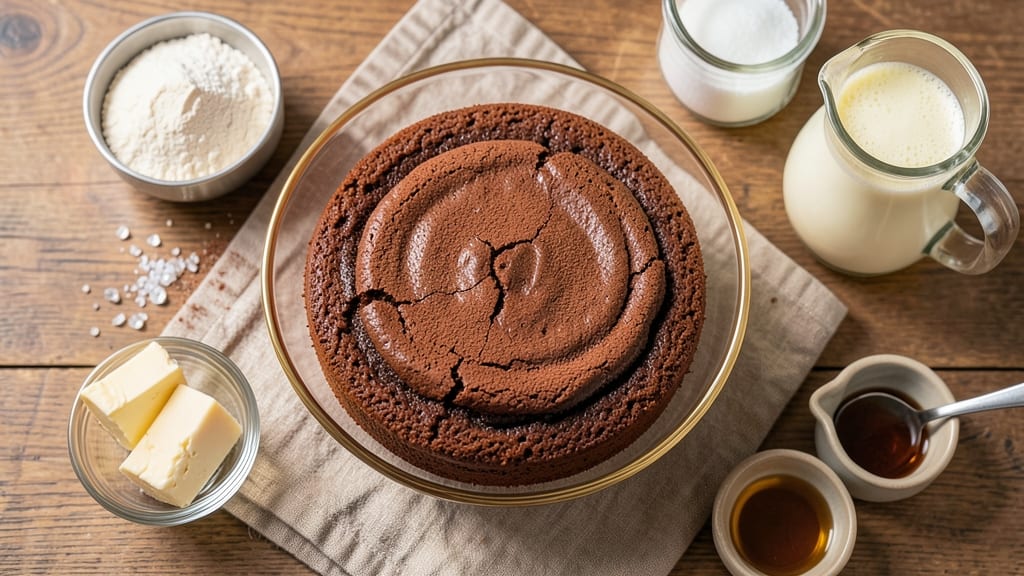
This basic chocolate cake recipe with cocoa powder delivers a moist, ultra-tender crumb that beginners can master in a single bowl—no fuss, no layers. After years of perfecting my grandmother's Sunday roast chicken, I finally cracked the code for foolproof baking, and this cake is the result.
The secret lies in precise ingredient ratios and gentle folding, ensuring every slice stays rich and velvety.
What makes this recipe truly special is its simplicity: just five core ingredients and one bowl to mix, yet it achieves restaurant-quality texture. The cocoa powder provides deep chocolate flavor without overpowering, while a touch of buttermilk keeps the crumb tender.
Most importantly, it bakes evenly every time—no dry edges or dense centers here.
By the time you pull it from the oven, you'll have a cake with a fudgy yet moist interior and a perfectly golden crust. The aroma alone will have everyone gathering in the kitchen, and each slice delivers that perfect balance of rich chocolate and subtle sweetness.
This is the kind of dessert that feels like a hug for your taste buds.
Serve it warm with vanilla ice cream or dusted with powdered sugar for a classic touch. The beauty of this recipe is its versatility—it works as a birthday centerpiece or a simple weeknight treat. Let's get baking!
Ingredients for basic chocolate cake recipe with cocoa powder
Five simple ingredients for a rich, velvety chocolate cake that bakes perfectly every time.
| Ingredient | Amount | Notes |
|---|---|---|
| All-Purpose Flour 🌾 | 2 cups | Sifted for even texture |
| Unsalted Butter 🧈 | 1 cup | Softened to room temperature |
| Granulated Sugar 🍚 | 1 ½ cups | Light brown sugar for depth |
| Cocoa Powder 🍫 | ½ cup | Natural, unsweetened preferred |
| Buttermilk 🥛 | 1 cup | Room temperature for best mix |
| Vanilla Extract 🌸 | 1 tsp | Pure extract, not imitation |
| Baking Powder 🍞 | 1 ½ tsp | Freshly opened for lift |
| Salt 🧂 | ½ tsp | Fine sea salt preferred |
| Vanilla Ice Cream 🍦 | 1 ½ cups | For serving, optional |
| Powdered Sugar 🍚 | ¼ cup | For dusting, optional |
The cocoa powder is where the magic happens. Natural, unsweetened cocoa gives that deep, authentic chocolate flavor without overpowering. Hershey's Special Dark or Dutch-processed cocoa both work—just avoid the sweetened kind. For the butter, room temperature is key—it should be soft but not melted. I grab Land O'Lakes or Plugrá from the grocery store, but any good-quality unsalted works. The buttermilk adds that tender crumb, so don't skip it—if you're fresh out, mix 1 tablespoon of lemon juice or vinegar with 1 cup of milk and let it sit for 5 minutes.
No buttermilk? Plain yogurt or sour cream works in a pinch—just thin it with a splash of milk to match the consistency. Short on cocoa powder? Melted dark chocolate (about 3 oz) can replace it, but you'll need to reduce the sugar slightly. The vanilla extract? Pure, not imitation—it makes a difference. For the sugar, I usually use light brown sugar for that subtle caramel note, but granulated works fine too. The baking powder needs to be fresh—if it's older than 6 months, your cake might not rise as much. And if you're feeling fancy, a pinch of espresso powder (1/2 teaspoon) deepens the chocolate flavor without changing the recipe.
This cake keeps well for 4 days in an airtight container at room temperature, but honestly, it's best eaten fresh. If you want to prep ahead, bake it a day early and store it wrapped tightly. The frosting? None needed—just dust with powdered sugar or serve with a scoop of vanilla ice cream. Leftovers reheat beautifully in the microwave for 10-15 seconds. And if you're making this for a crowd, double the recipe—it bakes in the same pan, just add 5-10 minutes to the time.
Why You'll Love This Recipe
- Pantry Staples Only: I swear by this recipe because it only asks for what’s already lurking in my cabinets. Butter, sugar, flour—check. Buttermilk? Just milk and vinegar. No fancy substitutions or last-minute grocery runs.
- Rich Without Fuss: That deep cocoa powder punch delivers real chocolate flavor, not the dusty aftertaste of some box mixes. Creamy layers? The buttermilk keeps it moist while the butter makes it tender—no dry crumbs here.
- Birthday to Boredom: Serve it warm with vanilla ice cream for a birthday celebration, or slice it cold for a lazy Sunday snack. Honestly, I’ve even packed it in lunches—trust me, it’s just as good the next day.
- Budget-Friendly Magic: A single cake feeds six, and leftovers? They’re even better. I’ve reheated slices for breakfast (yes, really) and still had people begging for seconds. Five bucks’ worth of ingredients, zero regrets.
Step-by-step instructions for ultra moist chocolate cake
Here's how to bake a single-bowl chocolate cake with a tender, fudgy crumb that stays moist for days.
Cream Butter and Sugars Together
In a large mixing bowl, combine the 1 cup unsalted butter and 1.5 cups granulated sugar. Using an electric mixer on medium speed, beat for 3-4 minutes until the mixture is light and fluffy, nearly doubling in volume. This step incorporates air which creates that signature tender crumb.
I like to press down on the butter-sugar mixture with a spatula every now and then to make sure everything comes together smoothly. You'll see it go from grainy to completely smooth and pale in color. This is your signal that the butter is properly emulsified with the sugar.
Add Wet Ingredients and Mix Thoroughly
Reduce the mixer speed to low and add the 1 cup buttermilk, 1 tsp vanilla extract, and 0.5 cup cocoa powder. Mix for 1-2 minutes until all the cocoa powder is fully incorporated and the batter is smooth. The cocoa powder has a tendency to clump, so be patient and let the mixer do the work.
Here's the thing - don't worry if the batter looks slightly thin at this point. The dry ingredients will thicken it up nicely. Give everything a quick scrape down of the bowl sides with a rubber spatula to make sure all the cocoa powder is fully dissolved in the mixture.
Combine Dry Ingredients Gently
In a separate bowl, whisk together the 2 cups all-purpose flour, 1.5 tsp baking powder, and 0.5 tsp salt. Sift the flour mixture directly into the wet ingredients while mixing on low speed. This prevents gluten development which keeps the cake tender rather than tough.
Mix just until the dry ingredients are completely incorporated - about 30-45 seconds. You should still see some small flour streaks in the batter. Overmixing develops gluten which makes cakes tough. Stop mixing as soon as you can no longer see any flour spots.
Bake Until Golden and Springy
Pour the batter into two greased and floured 8-inch round cake pans. Bake in a preheated 350°F oven for 30-35 minutes. The cakes are done when a toothpick inserted in the center comes out clean and the edges are just starting to pull away from the pan.
I always recommend checking for doneness at the 25-minute mark because ovens vary. The top should be golden brown but not too dark. If you see the edges pulling away from the pan sides, that's your perfect signal to remove them from the oven immediately.
Cool and Serve with Ice Cream
Let the cakes cool in the pans for 10 minutes, then transfer to a wire rack to cool completely. For the ultimate presentation, dust the tops with 0.25 cup powdered sugar and serve with 1.5 cups vanilla ice cream on the side.
This cake stays moist for days when stored properly in an airtight container. The secret to its ultra-moist texture lies in the buttermilk and proper mixing technique. Serve warm or at room temperature for the best experience!
Pro Tips For Making Basic Chocolate Cake Recipe With Cocoa Powder
- Sift the Cocoa: Mixing cocoa powder directly into dry ingredients creates clumps that never fully dissolve—your cake will have streaks no matter how much you stir. Sift it with the flour first, then whisk the combo through a fine-mesh sieve again before adding wet ingredients. Yes, it’s extra work, but the payoff is a velvety texture, not a gritty one.
- Melt Butter Slowly: I learned this the hard way—dumping cold butter into a hot pan or microwave makes it separate into grease and solids, and your cake will turn out dense. Melt it in the microwave in 20-second bursts, stirring between each, until it’s just liquid but not steaming. The goal is smooth, not hot.
- Don’t Overmix the Batter: After adding the buttermilk, stop stirring the second everything’s just combined. Overmixing develops gluten in the flour, and your cake will turn out tough instead of tender. Two turns of a spatula is all you need—this isn’t pancake batter.
- Use Room-Temp Butter: Cold butter creates pockets of air that won’t incorporate properly, leading to a cake with uneven texture. Let it sit out for 30–45 minutes until it’s soft enough to press a thumbprint into it but still holds shape. No one wants a cake that’s dense in some spots and airy in others.
Troubleshooting this dish
Batter Too Thin?
If your batter looks thinner than expected after mixing, don’t panic—this is normal! The cocoa powder and buttermilk create a lighter texture, and the dry ingredients will thicken it up. For extra insurance, let the batter rest for 5-10 minutes before baking.
This allows the flour to fully hydrate, preventing a dense crumb. If it’s still too thin, add 1-2 tablespoons of flour and mix gently. 🔥
Cake Stuck to Pans
Grease your 8-inch round pans thoroughly with butter or baking spray, then dust with flour. Tap the pans gently to remove any excess flour—this prevents sticking.
If your cake still sticks, run a thin knife around the edges while the cake is still warm, then invert the pans onto a cooling rack. For stubborn cases, a light dusting of cocoa powder on the pan bottoms helps too.
Dry or Dense Crumb
Overmixing develops gluten, leading to a tough cake. Mix the dry ingredients just until combined—about 30-45 seconds. Also, ensure your buttermilk is room temperature (cold buttermilk can make the cake dense).
If your cake turns out dry, try adding 1-2 tablespoons of sour cream or yogurt to the batter next time for extra moisture.
Uneven Baking
Rotate your cake pans halfway through baking (around 15-17 minutes) to ensure even heat distribution. If one side browns faster, cover it loosely with aluminum foil.
Avoid opening the oven door early—temperature fluctuations cause uneven baking. Preheat your oven for at least 15 minutes before baking to maintain a steady 350°F environment.
Cocoa Powder Clumps
Sift the ½ cup cocoa powder before adding it to the wet ingredients to prevent clumps. If you forget, whisk it vigorously with the buttermilk first to dissolve any lumps.
For extra smoothness, I like to mix the cocoa powder with the flour before sifting—this ensures even distribution in the batter. 💫
Cracked Top
A cracked top usually means the batter was too thin or the oven was too hot. To fix this, reduce your oven temperature to 325°F and bake for 5-10 minutes longer. Also, ensure your buttermilk is properly measured—too much liquid can cause cracks.
For a smoother finish, dust the batter with 1 tablespoon of powdered sugar before baking to create a protective crust.
Nutrition facts
Frequently asked questions
Can I substitute cocoa powder for melted chocolate in this recipe?
Yes, but you'll need to adjust the sugar slightly. Replace ½ cup cocoa powder with 3 ounces (about ½ cup) melted dark chocolate and reduce the granulated sugar by 1 tablespoon. The melted chocolate will add richness, but the texture might be slightly denser. For best results, use high-quality dark chocolate with at least 60% cocoa content.
Why does your recipe use buttermilk instead of regular milk?
Buttermilk adds acidity that tenderizes the crumb and enhances the chocolate flavor. Regular milk won't give the same moist, velvety texture. If you're fresh out, mix 1 tablespoon lemon juice or vinegar with 1 cup milk and let it sit for 5 minutes to mimic buttermilk. Never skip this ingredient—it's what makes this cake ultra-moist!
How do I know when the cake is fully baked?
The cake is done when a toothpick inserted in the center comes out clean and the edges pull slightly away from the pan. Check at 25 minutes since ovens vary. The top should be golden brown, not too dark. If you see cracks, it's still baking—just don't overbake or the cake will dry out.
Can I make this cake in a different pan size?
For an 8-inch round pan, this recipe makes two perfect layers. If using a 9-inch pan, reduce baking time by 5 minutes (check at 25 minutes). For a 9x13-inch pan, bake for 30-35 minutes at 325°F—the larger surface area needs slightly lower heat. Always adjust for your specific oven!
What's the secret to keeping this cake moist for days?
The buttermilk and proper mixing technique are key! Store the cake in an airtight container at room temperature for up to 4 days. For extra moisture, brush warm slices with a simple syrup made from ¼ cup sugar + ¼ cup water. The cake also reheats beautifully in the microwave for 10-15 seconds to restore freshness.