Tips
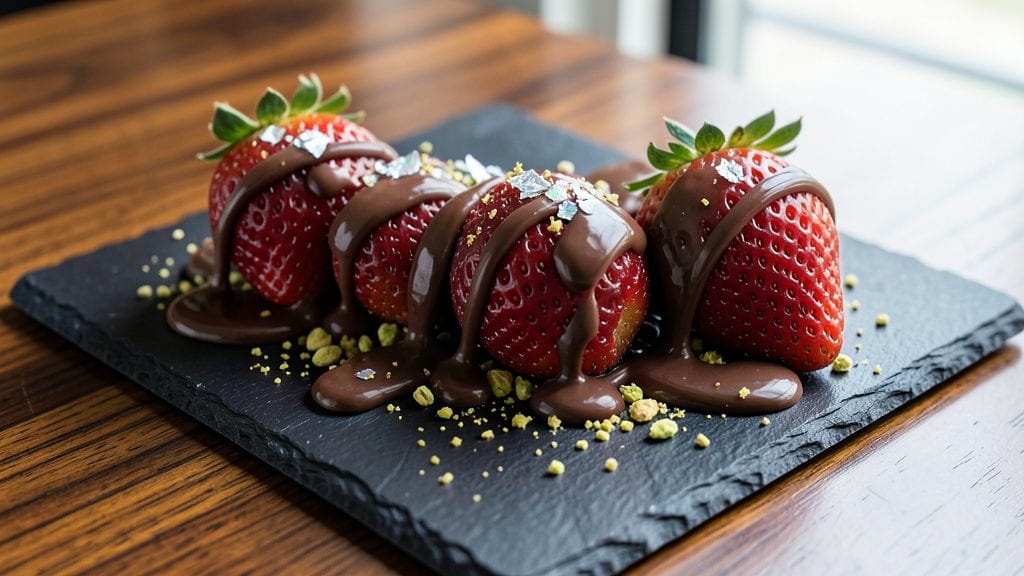
The best chocolate for chocolate-covered strawberries recipes uses high-quality dark chocolate (60-70% cacao) for its smooth melting point and rich flavor, like Valrhona Ganache or Ghirardelli Premium. Semi-sweet or milk chocolate works for sweeter preferences, but avoid overly sweet or waxy varieties that crack during dipping.
The right chocolate transforms your chocolate-covered strawberries from ordinary to extraordinary. Dark chocolate's 60-70% cacao content delivers a perfect balance of bitterness and sweetness that complements strawberries' natural tartness. 🔥 For a luxurious touch, try adding a pinch of sea salt or espresso powder to enhance depth.
I've found that pre-dipping strawberries in a light corn syrup glaze prevents sogginess and creates a glossy finish, while also helping the chocolate adhere smoothly.
When selecting chocolate, always check the melting point—88-90°F is ideal for a glossy, crack-free coating. Milk chocolate melts more easily but can feel heavier on the palate, making it better suited for sweeter strawberry varieties.
Pro tip: Store your finished treats in an airtight container in the fridge for up to 5 days to preserve freshness.
💡 In This Article
- Chocolate Melting Points and Texture Secrets
- Flavor Pairing Guide for Chocolate-Covered Strawberries
Chocolate melting points and texture secrets
Temperature is the secret weapon for achieving that perfect glossy finish on chocolate-covered strawberries. The ideal melting range for chocolate is 88-90°F, where cocoa butter crystals form a stable, shiny surface.
Below 88°F, chocolate becomes dull and prone to streaking, while above 90°F, it risks seizing or developing a grainy texture. Dark chocolate with 60-70% cacao typically hits this sweet spot naturally, thanks to its balanced cocoa butter content—about 30-35% of its composition.
Here's what's actually happening: Cocoa butter contains six different crystal forms, but only Forms V and VI create that coveted snap and shine.
When you heat chocolate to 113°F (the "seeding temperature"), you break down existing crystals, then cool it to 80°F while stirring to encourage Form V crystals to form.
Milk chocolate, with its higher sugar and milk fat content (25-30% total), requires slightly more precise control—it often needs a second heating to 90°F to stabilize.
White chocolate, with no cocoa solids, is the trickiest because its fat content comes solely from cocoa butter (30-35%) and milk fat (20-25%), making it prone to fat bloom if not tempered perfectly.
The texture transformation happens at the molecular level. As chocolate cools from 88-90°F, the cocoa butter solidifies into tiny crystals that reflect light, creating that mirror-like finish. This is why a double boiler (or microwave in 20-second bursts) works best—it maintains even heat distribution.
What most people don't realize is that the strawberries themselves act as tiny heat sinks. Dipping them too quickly can cause the chocolate to cool unevenly, leading to cracks. The solution? Let your chocolate sit at 88-90°F for 5-10 minutes before dipping to equalize the temperature.
Common mistakes happen when chocolate isn't properly tempered. Seizing occurs when moisture from strawberries or the air causes sugar crystals to form on the surface, creating a dull, grainy texture.
Waxy chocolates (often found in budget brands) have a lower melting point (84-86°F) and lack the fat content needed for proper crystal formation, leading to that dreaded "orange peel" texture.
For a foolproof method, try the tache method: Spread melted chocolate thinly on a silicone mat, let it set slightly, then scrape and re-melt just until smooth—this naturally selects for stable crystals.
Pro tip: Use a candy thermometer to monitor temperatures precisely. Dark chocolate's ideal working temperature is 88-90°F, while milk chocolate should be 86-88°F—the slight difference accounts for its higher sugar content. For extra shine, add 1 teaspoon of light corn syrup per pound of chocolate before melting.
The syrup lowers the surface tension, helping the chocolate cling smoothly to strawberries while adding subtle sweetness that balances tart berries.
Storage also affects texture. If your finished strawberries develop a white, powdery coating within 24 hours, it's fat bloom—caused by improper tempering or temperature fluctuations.
To prevent this, store treats in an airtight container at 60-65°F (room temperature is fine for short-term storage, but fridge storage for longer than 3 days can cause condensation, leading to sogginess). The key is consistency: maintain stable temperatures throughout the entire process, from melting to storage.