Main Courses
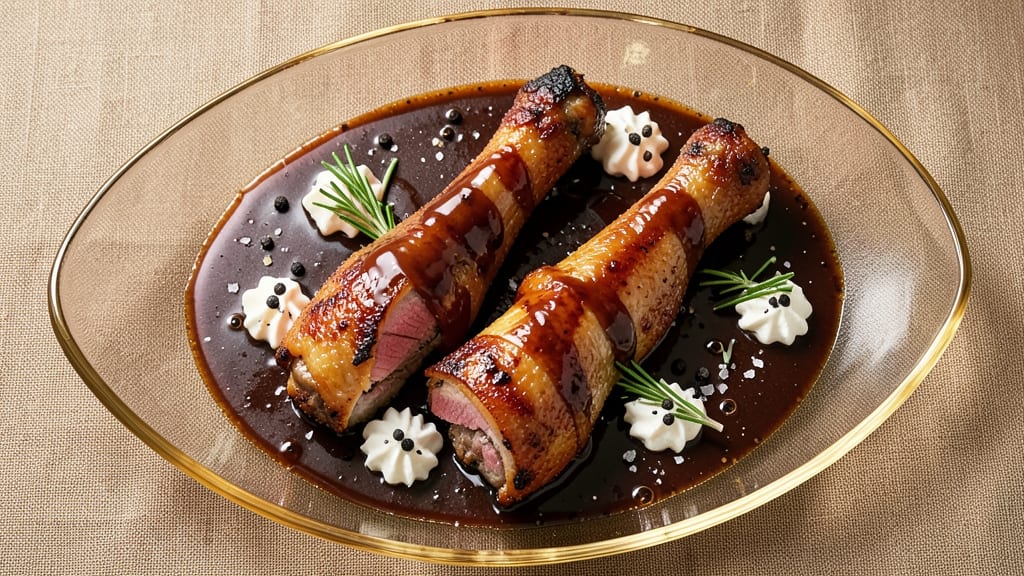
This chocolate caramel turkey legs recipe transforms a classic holiday centerpiece into a decadent, sweet-savory showstopper that balances rich chocolate and velvety caramel with perfectly roasted turkey.
The secret lies in basting the legs with a homemade glaze that caramelizes into a glossy, crackly finish while keeping the meat tender and juicy. I developed this method after years of experimenting with holiday turkey techniques, and it delivers restaurant-quality results with minimal effort.
The process begins with a simple dry brine and seasoning that enhances the turkey's natural flavor, followed by roasting at a precise temperature to ensure even cooking.
What sets this recipe apart is the chocolate caramel glaze—a blend of dark chocolate, butter, and brown sugar that creates a complex, slightly bitter-sweet contrast against the turkey's savory depth. The glaze isn't just for show; it adds a luxurious richness that pairs beautifully with the meat's inherent savoriness.
By the time you're done, you'll have turkey legs with crispy, caramelized edges and tender, golden-brown meat inside, all coated in a glossy, crackly chocolate glaze that's irresistibly sweet yet balanced.
This dish is elegant enough for a holiday feast but simple enough for a weeknight dinner that feels special. The contrast of textures and flavors makes every bite unforgettable.
Serve with classic sides like mashed potatoes or roasted vegetables to let the turkey legs take center stage. The glaze adds a touch of indulgence that elevates the dish beyond ordinary roasted turkey, making it a standout for any occasion. Let's get started on this decadent recipe!
Ingredients for chocolate caramel turkey legs
Four key components elevate this dish: rich turkey legs, velvety caramel, dark chocolate depth, and aromatic herbs.
| Ingredient | Amount | Notes |
|---|---|---|
| Turkey Legs 🦃 | 2 whole | Bone-in, skin-on, roughly 2-3 lbs each |
| Dark Chocolate Bars 🍫 | 8 oz | 70% cocoa or higher, chopped |
| Unsalted Butter 🧈 | ½ cup | Cold, cut into chunks |
| Light Brown Sugar 🍚 | ½ cup | Packed, light brown preferred |
| Heavy Cream 🥛 | ¼ cup | Full-fat for richness |
| Granulated Sugar 🍚 | 2 tbsp | For final glaze crisp |
| Kosher Salt 🧂 | 1 ½ tsp | Coarse for dry brine |
| Black Peppercorns 🌶️ | 1 tsp | Freshly cracked |
| Garlic Cloves 🧄 | 3 cloves | Minced for dry rub |
| Fresh Rosemary 🌿 | ¼ cup | Chopped, stems removed |
| Fresh Thyme 🌿 | ¼ cup | Leaves only, chopped |
| Orange Zest 🍊 | 1 tbsp | Freshly grated |
| Vanilla Extract 🥄 | ½ tsp | Pure, high-quality |
The turkey legs are the foundation—bone-in, skin-on ensures maximum flavor and juiciness. For best results, source them from a reputable butcher or Costco, where they're often sold pre-portioned. Look for legs with intact skin and minimal bruising. The dark chocolate should be at least 70% cocoa for the right balance of richness and bitterness; Ghirardelli or Lindt bars work exceptionally well. Fresh herbs like rosemary and thyme are non-negotiable here—they add an aromatic depth that complements the sweet-savory glaze. If you can't find fresh, dried herbs at one-third the amount will suffice, though the flavor won't be as vibrant.
No dark chocolate? Semisweet chocolate chips can be substituted, though the flavor will be slightly sweeter. Running low on heavy cream? Whole milk plus an extra tablespoon of butter mimics the richness. The brown sugar can be swapped for white sugar plus a pinch of cinnamon for a different depth of flavor. For the dry brine, Diamond Crystal kosher salt is preferred over table salt due to its coarse texture, which adheres better to the skin. If you're short on time, the glaze can be made ahead and reheated gently before basting—just add a splash of cream to loosen it. The orange zest and vanilla extract can be omitted if you prefer a more neutral sweetness, but they add a bright, complex layer that pairs beautifully with the chocolate.
The glaze components can be prepped up to 3 days in advance and stored in the fridge; reheat gently before using. The turkey legs should be refrigerated uncovered for 12-24 hours before roasting to dry-brine properly. Once roasted and glazed, they're best served immediately, though leftovers can be reheated in a 350°F oven for 10-15 minutes to restore crispness. For a make-ahead option, roast the turkey legs without the glaze, then reheat and baste with the warmed glaze just before serving. The glaze itself keeps in the fridge for up to 1 week, though it's best used fresh for optimal texture.
Why You'll Love This Recipe
- Foolproof Glaze: The chocolate and caramel combo melts right into a glossy, sticky finish with just 10 minutes of basting. No fancy techniques—just brush, flip, repeat. That rich, buttery-sweet coating turns plain turkey legs into something ridiculously indulgent.
- Sweet-Savory Magic: Between us, the contrast of smoky turkey with dark chocolate and brown sugar is next-level. The butter and cream make it velvety, while the turkey’s natural juices keep it from tasting cloying. It’s the kind of flavor that makes you pause mid-bite.
- Party Crowd-Pleaser: I’ve served these at holiday dinners and casual game nights—everyone goes back for seconds. They’re hearty enough for a main but fancy enough to impress guests. Plus, the leftovers? Even better the next day, sliced thin on sandwiches.
- Budget Luxury: Turkey legs are cheap, and the chocolate/caramel glaze feels like a splurge without breaking the bank. Honestly, it’s the kind of recipe where you get restaurant-quality taste for a fraction of the cost. My wallet thanks me every time.
Step-by-step instructions for chocolate caramel turkey legs
Master this technique for perfectly balanced sweet-savory turkey legs with a glossy chocolate glaze.
Prepare the Dry Rub and Brine the Turkey Legs
In a small bowl, combine the 0.5 cup light brown sugar, 1.5 teaspoons kosher salt, 1 teaspoon freshly cracked black peppercorns, 3 minced garlic cloves, 0.25 cup chopped fresh rosemary, 0.25 cup chopped fresh thyme, 1 tablespoon orange zest, and 0.5 teaspoon vanilla extract. Mix thoroughly until the sugar and herbs form an even paste.
Pat the 2 whole turkey legs completely dry with paper towels, removing any excess moisture from the skin. This step is crucial—dry skin crisps better and prevents steam from interfering with the glaze. Generously coat each turkey leg with the dry rub mixture, pressing it into the skin and into the cavity. Place the legs on a rack set over a baking sheet and refrigerate uncovered for at least 4 hours or overnight. This dry brine enhances flavor and ensures the skin develops a perfect crisp.
Roast the Turkey Legs to Develop Flavor
Preheat your oven to 325°F. Remove the turkey legs from the refrigerator and let them sit at room temperature for 30 minutes before roasting. This ensures even cooking. Place the legs on the rack in the baking sheet and roast for 90 minutes, basting with any accumulated juices in the pan every 30 minutes. The skin should begin to turn golden brown, and the internal temperature should reach 160°F at the thickest part of the thigh.
Here's the thing—don't rush this step. The slow roast allows the dry rub to fully penetrate the meat and the skin to render its fat, creating a flavorful foundation for the chocolate glaze. If the skin starts to darken too quickly, tent the turkey legs loosely with foil to prevent over-browning while continuing to cook.
Prepare the Chocolate Caramel Glaze
While the turkey legs roast, melt the 0.5 cup unsalted butter in a saucepan over medium heat. Once the butter has fully melted, reduce the heat to low and whisk in the 8 ounces chopped dark chocolate bars until completely smooth. The mixture should thicken slightly as the chocolate melts into the butter.
Remove the saucepan from heat and stir in the 0.25 cup heavy cream and 2 tablespoons granulated sugar. The glaze should be thick but pourable—if it's too thick, add 1 teaspoon hot water at a time until it reaches the right consistency. This glaze is the star of the dish, so take your time to ensure it's perfectly balanced between rich chocolate and smooth caramel.
Glaze and Finish the Turkey Legs
Once the turkey legs reach 160°F internally, remove them from the oven and increase the oven temperature to 400°F. Brush each turkey leg generously with the chocolate caramel glaze, coating the skin evenly. Return the legs to the oven and bake for an additional 10-15 minutes until the glaze is set and the skin is deep golden brown and glossy.
Watch the glaze carefully during this final step—it should develop a slight crackle and become firm to the touch. If it starts to darken too quickly, tent the turkey legs with foil to prevent burning. The contrast between the crispy, caramelized skin and the rich chocolate glaze is what makes this dish extraordinary.
Rest and Serve
Transfer the turkey legs to a cutting board and let them rest for 10 minutes before serving. This resting period allows the juices to redistribute, ensuring each bite is moist and flavorful. The glaze will firm up slightly as it cools, creating a beautiful crackly texture that pairs perfectly with the savory turkey.
Slice the turkey legs into ½-inch thick portions and serve immediately. The combination of the crispy, caramelized skin, the rich chocolate glaze, and the tender, herb-infused turkey creates a dish that's both decadent and balanced. Pair with a simple arugula salad or roasted root vegetables to complement the sweet and savory flavors.
Pro Tips For Making Chocolate Caramel Turkey Legs
- Render First, Glaze Later: Don’t rush the turkey legs into the chocolate caramel bath right away. First, roast them uncovered at 325°F (165°C) until the skin is crisp and golden—about 1.5 hours. The rendered fat from the skin is what makes the caramel sauce stick and deepen in flavor. I used to skip this step, and the glaze always ended up clinging like syrup on a slippery plate.
- Chop Chocolate Coarse: Skip the food processor for the dark chocolate—it turns it into a paste that doesn’t melt smoothly. Instead, break it into rough ½-inch chunks. This ensures even melting and prevents lumps in the caramel sauce. I learned this after three batches where the chocolate clumped like gravel in my sauce.
- Simmer Caramel Slowly: After combining butter, brown sugar, and cream, reduce the heat to low and let it bubble gently for 10 minutes. Rushing this step burns the sugar and turns the caramel bitter. I’ve seen people crank the heat, and the result is a sad, acrid glaze instead of rich, buttery sweetness.
- Brush in Layers: Don’t dump the caramel over the turkey legs all at once—it’ll steam off instead of sticking. Brush on half the glaze, let it set for 5 minutes, then brush on the rest. This guarantees a glossy, crackly finish. My first attempt looked like a science experiment gone wrong because I poured it on like icing.
Flavor customization for these flavors
Spice-Forward Twist
Add 1 teaspoon ground cinnamon and ½ teaspoon cayenne pepper to the dry rub for warmth that complements the chocolate. For extra heat, include 2 tablespoons chipotle powder—this creates a smoky-sweet contrast that balances the richness beautifully.
I find this works especially well with 72% cocoa chocolate for a more pronounced bitterness that stands up to the spices. 🌶️
Citrus-Infused Glaze
Increase the orange zest to 2 tablespoons and add 1 teaspoon lemon juice to the glaze for a bright, tangy cut through the sweetness. The acidity helps prevent the chocolate from tasting overly heavy, and the citrus notes shine when paired with the turkey's savory depth.
For a visual pop, zest strips can be arranged artistically on top before the final bake.
Espresso Enhancement
Add 1 tablespoon instant espresso powder to the glaze mixture while melting the chocolate and butter. This deepens the chocolate flavor without adding bitterness, creating a sophisticated coffee-chocolate pairing that elevates the dish to dessert-like decadence.
I recommend using Starbucks Via for consistent results. Pair with a dark roast coffee for a complete flavor experience. ☕
Boozy Glaze Variations
For an adult-friendly twist, stir 1 ounce bourbon or rum into the warm glaze before brushing on the turkey. The alcohol burns off during baking, leaving behind aromatic depth that enhances the caramel and chocolate notes.
I prefer Maker's Mark bourbon for its vanilla undertones that complement the vanilla extract in the dry rub. For a lighter option, substitute with ½ cup orange liqueur like Cointreau.
Nutty Crunch Addition
After glazing, sprinkle the turkey legs with ¼ cup chopped toasted pecans or walnuts before the final bake. The nuts add a satisfying crunch that contrasts with the glossy glaze and tender meat.
For extra flavor, toast the nuts with ½ teaspoon cinnamon and a pinch of salt before sprinkling. This works particularly well when serving as a dessert-style main course. 🌰
Salted Caramel Fusion
Divide the glaze into two portions—one plain and one with 1 teaspoon flaky sea salt (like Maldon) mixed in. Brush alternating sections of each turkey leg with the two glazes, then sprinkle additional flaky salt on top before baking.
The salt enhances the caramel sweetness while balancing the chocolate's richness, creating a sophisticated flavor profile that feels restaurant-worthy. 💫
Nutrition facts
Frequently asked questions
Can I use this recipe for a holiday dinner with kids?
The rich chocolate caramel glaze makes this dish feel indulgent, but the savory turkey base keeps it balanced for family-friendly meals. Serve smaller portions with classic sides like roasted sweet potatoes or green beans to let the kids enjoy the turkey without overdoing the sweetness. The glaze can be adjusted by reducing the chocolate to 6 oz if you prefer a milder flavor.
How do I store leftovers without making the glaze soggy?
Store the turkey legs in an airtight container with parchment paper between layers to prevent moisture buildup. Reheat in a 350°F oven for 10-15 minutes, then brush with a little extra glaze (warmed in 10-second bursts in the microwave) to restore crispness. Avoid microwaving directly, as it can make the glaze rubbery.
What's the best way to adjust the recipe for a crowd?
Double the recipe by using 4 turkey legs and scaling all ingredients proportionally. For large gatherings, prepare the glaze in batches—keep one portion warm while using the other immediately. Roast the turkey legs in batches if needed, and use two baking sheets spaced with racks to ensure even airflow. The dry rub can be tripled and stored in the fridge for up to 1 week.
Why did my glaze turn grainy instead of smooth?
Graininess usually means the chocolate didn't melt completely or the mixture cooled too quickly. To fix it, whisk in 1 teaspoon heavy cream or water while gently reheating over low heat—stir constantly until silky. For future attempts, melt the chocolate and butter together over slightly lower heat (medium-low) and keep the mixture warm until ready to use.
Can I make this ahead of time for a dinner party?
Roast the turkey legs 2 days ahead without glazing, then refrigerate uncovered. On serving day, reheat to 160°F, brush with warmed glaze, and finish in the oven for 10 minutes. The glaze can also be made 3 days ahead and reheated gently. This method ensures the turkey stays juicy and the glaze remains glossy without overcooking.