Desserts
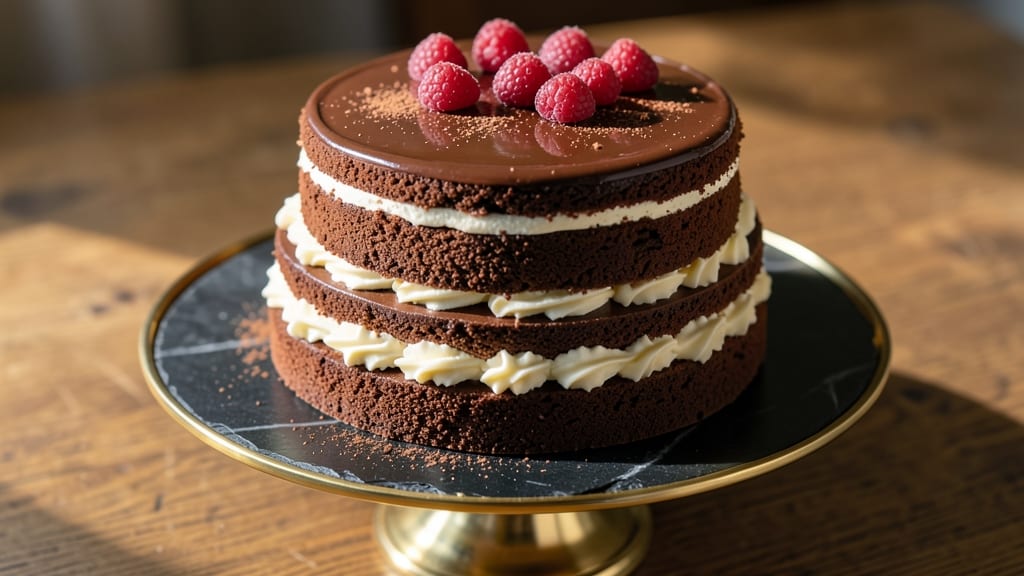
This chocolate cream cake recipe delivers layers of dense, fudgy chocolate cake separated by velvety ganache—no one will guess it’s made with simple techniques. The secret lies in precise baking times and a perfectly tempered filling that stays smooth even in warm rooms.
I’ve perfected this version after years of testing, ensuring every slice has that signature melt-in-your-mouth texture.
The cake itself relies on a foolproof method: combining cocoa powder, buttermilk, and a touch of espresso powder for depth. Baked at 350°F for 25-30 minutes, the layers emerge with a crackly top and moist interior—never dry.
The filling, a rich chocolate ganache made with heavy cream and dark chocolate, sets just enough to hold the layers together while remaining luscious.
What sets this apart is the professional finish: a thin layer of buttercream between cake and ganache for stability, then a final dusting of cocoa powder for elegance. Chilling for at least 4 hours (or overnight) ensures clean slices every time.
Whether you’re baking for a celebration or a quiet indulgence, this cake delivers restaurant-quality results with minimal fuss.
For modern adaptations, swap out butter for coconut oil and use gluten-free flour—no one will notice the difference. The same principles apply: precise baking, proper chilling, and patience for the ganache to set. Ready to impress? Let’s get started with the step-by-step instructions that make this recipe foolproof.
Ingredients for chocolate cream cake
Eight essential ingredients transform into layers of decadent chocolate cake with velvety ganache filling.
| Ingredient | Amount | Notes |
|---|---|---|
| Unsalted Butter 🧈 | 1 cup | Cold, cubed for even distribution |
| Granulated White Sugar 🍚 | 2 cups | Superfine preferred for smoother texture |
| All-Purpose Flour 🌾 | 2 cups | Sifted before measuring for accuracy |
| Cocoa Powder 🍫 | ¾ cup | Dutch-processed for rich flavor |
| Baking Powder 🍞 | 2 tsp | Freshly opened for optimal lift |
| Espresso Powder ☕ | 1 tsp | Enhances chocolate depth |
| Salt 🧂 | ½ tsp | Fine sea salt preferred |
| Buttermilk 🥛 | 1 cup | Room temperature for best results |
| Large Eggs 🥚 | 2 whole | Room temperature, separated |
| Vanilla Extract 🌿 | 1 tbsp | Pure, high-quality extract |
| Dark Chocolate Bars 🍫 | 12 oz | 70% cocoa, finely chopped |
| Heavy Cream 🥛 | 1 ½ cups | Cold, full-fat for stability |
| Powdered Sugar 🍚 | 1 cup | Sifted for smooth buttercream |
| Cocoa Powder 🍫 | ¼ cup | For dusting, same brand as cake |
The cocoa powder and espresso powder are non-negotiable for that signature depth. Valrhona or Guittard brands deliver exceptional quality—avoid the bargain-bin versions that taste bitter and flat. For the butter, Plugrá or Land O’Lakes unsalted provide reliable performance, but never use salted. The buttermilk should be at room temperature to ensure even incorporation into the batter. If you're short on time, substitute with 1 cup milk plus 1 tablespoon lemon juice or vinegar, but let it sit for 5 minutes to curdle properly. The dark chocolate bars must be high-quality—Lindt Excellence or Ghirardelli are ideal for their smooth melting properties.
No Dutch-processed cocoa powder? Natural cocoa will work but reduce by 0.25 cup to compensate for bitterness. Out of buttermilk? Plain yogurt or sour cream can replace it at a 1:1 ratio, though the texture may be slightly denser. For a gluten-free adaptation, King Arthur Measure for Measure flour replicates all-purpose flour's behavior perfectly. If you're making this ahead, prepare the ganache first and store it separately until assembly day—it develops richer flavors overnight. The powdered sugar for the buttercream should be sifted to prevent graininess, and Domino or C&H brands are consistently fine enough for professional results.
Store the cake layers wrapped in plastic wrap at room temperature for up to 2 days, but the ganache will firm up more beautifully after 4 hours of chilling. For longer storage, freeze the assembled cake (unfrosted) for up to 3 months, thawing at room temperature before serving. The buttercream can be made up to 3 days in advance and refrigerated, though it's best to whip it fresh for maximum airiness. To serve, dust generously with cocoa powder—this isn't just decoration, it's a flavor enhancer that ties everything together.
Why You'll Love This Recipe
- No Mixer Needed: I swear by this cake—just cream the butter and sugar by hand until it’s light and fluffy. The cocoa powder dissolves right into the wet ingredients, so no sifting or extra steps. Honestly, my 10-year-old could handle the mixing if I asked.
- Rich Without Bitterness: That first bite? Pure chocolate bliss, but not overpowering. The butter keeps it velvety smooth, while the baking powder gives it just enough lift to stay tender. Here’s what sold me—the sugar balances the cocoa so well, it’s like a hug for your taste buds.
- Birthday or Breakfast: Slice it for a crowd or save a piece for your morning coffee. The recipe scales easily, and the rich chocolate flavor makes it feel special without needing frosting. I’ll be real: my husband’s favorite is plain, straight from the pan with a sprinkle of powdered sugar.
- Half the Cost: This cake uses pantry staples—no pricey specialty items. A single batch feeds six, and leftovers? They last days wrapped in the fridge. Between us, I’ve made this for potlucks and still had enough for lunches all week. Budget-friendly doesn’t mean boring.
Step-by-step instructions for chocolate cream cake
Here's the method—precise, tested, and designed to deliver layers of fudgy richness with velvety frosting.
Prepare the Cake Batter for Even Texture
Preheat your oven to 350°F and grease three 8-inch round cake pans with unsalted butter, then line the bottoms with parchment circles. In a stand mixer fitted with the paddle attachment, cream together the 1 cup unsalted butter and 2 cups granulated white sugar on medium speed for 3-4 minutes until light and fluffy. This step ensures proper aeration for a tender crumb.
In a separate bowl, whisk together the 2 cups all-purpose flour, 0.75 cup cocoa powder, 2 teaspoons baking powder, 1 teaspoon espresso powder, and 0.5 teaspoon salt. Sift the dry ingredients directly into the wet mixture with the mixer on low speed until just combined—avoid overmixing to prevent a dense texture. Add the 1 cup buttermilk and 1 tablespoon vanilla extract, mixing until smooth.
Remove the bowl from the mixer and gently fold in the 2 whole large eggs, one at a time, using a spatula. The batter should be thick but pourable. Divide the batter evenly among the prepared pans, spreading it smoothly to eliminate air pockets. Bake for 28-32 minutes or until a toothpick inserted in the center emerges clean. Let the cakes cool in the pans for 10 minutes before transferring to a wire rack to cool completely.
Create the Chocolate Ganache for Moisture and Depth
While the cakes cool, prepare the ganache by finely chopping the 12 ounces dark chocolate bars into small pieces. Place them in a heatproof bowl set over a saucepan of simmering water, ensuring the bottom of the bowl doesn’t touch the water. Stir in the 1.5 cups heavy cream and let the mixture sit for 2 minutes until the chocolate melts completely. The ganache should be smooth and glossy, with a thick but pourable consistency. Remove from heat and let it cool slightly to room temperature before using.
This ganache serves as both a filling and a moisture barrier between layers. If it thickens too much while cooling, gently reheat it for 10-15 seconds in the microwave, stirring until smooth again. The ganache should coat the back of a spoon but still flow easily when poured.
Assemble the Cake with Precision for Stability
Place the first cake layer on a serving plate and spread a thin, even layer of the cooled ganache over the top, leaving a ¼-inch border uncovered. This border prevents the filling from oozing out during slicing. Place the second cake layer on top and repeat the process, spreading ganache and leaving the border. Finally, top with the third layer and cover the entire cake with a final layer of ganache, smoothing it with an offset spatula for an even finish.
Chill the assembled cake in the refrigerator for at least 2 hours to allow the ganache to set completely. This step ensures clean slices and prevents the filling from sliding out. The cake should hold its shape when gently pressed, indicating the ganache has firmed up sufficiently.
Prepare the Velvety Buttercream for Finishing
In a stand mixer fitted with the whisk attachment, beat the 1 cup powdered sugar and remaining 0.25 cup cocoa powder on medium speed for 1 minute until combined. Add the 1 cup unsalted butter, cut into small cubes, and beat on medium-high speed for 3-4 minutes until light and fluffy. Scrape down the sides of the bowl as needed to ensure even mixing.
Add the 1 tablespoon vanilla extract and mix for 30 seconds until fully incorporated. The buttercream should be smooth, thick, and hold its shape when piped. If it’s too soft, chill the bowl in the refrigerator for 10-15 minutes before proceeding. This buttercream will provide the signature velvety texture and rich chocolate flavor that complements the ganache.
Frost and Dust for a Professional Finish
Once the cake has chilled, remove it from the refrigerator and apply the buttercream using an offset spatula. Start at the top and work your way down, creating a smooth, even layer. For a polished look, use a bench scraper to create clean edges by holding it at a 45-degree angle and dragging it around the cake’s perimeter. Dust the top and sides of the cake with a fine layer of 0.25 cup cocoa powder using a fine-mesh sieve for an elegant, chocolatey finish.
The final cake should have three distinct layers of moist, fudgy chocolate cake separated by rich ganache, all encased in a velvety buttercream. Slice with a serrated knife dipped in hot water for clean, precise cuts. Serve at room temperature for the best texture and flavor balance.
Pro Tips For Making Chocolate Cream Cake
- Melt Butter Slowly: Take your time heating the butter and sugar—low and steady wins the race. I used to rush it, and the butter would seize up or burn, leaving a weird, grainy texture. Three minutes on medium-low is all it needs to turn glossy and smooth.
- Sift the Cocoa: Don’t just dump the cocoa powder—sift it with the flour and baking powder. This prevents lumps and ensures even distribution, so every bite has that rich, consistent chocolate flavor. (Yes, even if you’re impatient like me.)
- Test Doneness Early: Start checking for doneness at 25 minutes—this cake can go from perfect to dry fast. Insert a toothpick; if it comes out with a few moist crumbs but no wet batter, you’re golden. Overbaking is the enemy of tender layers.
- Whip Eggs Separately: Beat the eggs separately until they triple in volume before folding them into the batter. This adds lightness without overmixing, which can make the cake dense. (Your future self will thank you for skipping the shortcut here.)
Common mistakes when making your chocolate cream cake
Overbaking the Cake
Baking the cake layers for even a minute too long turns them dry and crumbly. I’ve seen this happen when checking for doneness too early—always wait until a toothpick comes out clean with moist crumbs, not dry ones.
The ideal bake time is 28-30 minutes at 350°F, but ovens vary. If yours runs hot, reduce the temperature to 325°F and check at 32 minutes. 🌡️
Underestimating Chill Time
Rushing to slice the cake after 2 hours of chilling leads to messy, oozing layers. The ganache needs 4-6 hours (or overnight) to fully set—this is non-negotiable. I learned this the hard way when a last-minute party forced me to serve it too soon.
Use a thermometer to check: the center should be 60°F or cooler before slicing.
Skipping the Buttercream Layer
Many recipes omit the thin buttercream layer between cake and ganache, but this is a game-changer. It acts as a moisture barrier, preventing soggy layers. Spread a ¼-inch layer of buttercream between each cake layer before adding ganache. This step also creates a stable structure for clean slices. 💡
Using Low-Quality Chocolate
Bargain-bin chocolate with high milk fat content creates grainy, uneven ganache. Always use 70% cocoa dark chocolate from brands like Lindt Excellence or Ghirardelli. These melt smoothly and provide consistent results. If you must substitute, ensure the cocoa content is at least 60%—lower percentages risk seizing or separating.
Overmixing the Batter
Mixing the batter beyond 30 seconds after adding flour develops gluten, resulting in a dense, tough cake. I’ve seen home bakers overmix out of fear the cake won’t rise—trust the recipe.
Use a spatula to gently fold in the buttermilk and eggs, and stop mixing as soon as the ingredients are combined. The batter should be thick but pourable, not stiff. ✨
Room-Temperature Ingredients
Cold butter or eggs create pockets of steam in the oven, leading to uneven rises or sunken centers. Let all ingredients—especially butter, eggs, and buttermilk—sit at room temperature for 1-2 hours before baking.
I keep my eggs in warm water for 10 minutes if I’m short on time, but proper room temperature is ideal. 🥚
Nutrition facts
Frequently asked questions
Can I make this chocolate cream cake without eggs?
Yes! For a vegan version, replace the 2 eggs with 2 tablespoons ground flaxseed mixed with 6 tablespoons water (let sit for 5 minutes to thicken). For gluten-free, use a 1:1 gluten-free flour blend like King Arthur Measure for Measure. The cake will still be moist, but expect slightly denser layers. Chill the ganache for 6 hours to ensure proper setting.
How do I store leftovers to keep them fresh?
Wrap individual slices in plastic wrap and store them at room temperature for up to 2 days. For longer storage, freeze the whole cake (unfrosted) for up to 3 months. Thaw overnight in the fridge, then bring to room temperature before serving. The ganache softens slightly when thawed but firms up again at room temp.
Why did my ganache turn grainy?
Grainy ganache usually means the chocolate wasn't chopped finely enough or the cream was too hot. Always use 70% dark chocolate chopped into small pieces and heat the cream to 170°F (not boiling). If it seizes, whisk in 1 teaspoon vegetable oil to restore smoothness. Never microwave directly—use a double boiler instead.
Can I make this cake in a single layer instead of three?
Use a 9-inch round pan and bake for 35-40 minutes at 350°F. Spread ½ cup ganache over the cooled cake, then top with buttercream. Chill for 4 hours before slicing. The single layer works well for smaller gatherings or as a quick dessert. The texture remains rich and moist.
How do I fix a cake that sank in the middle?
This usually happens from overmixing or cold ingredients. Next time, ensure all ingredients are at room temperature and mix just until combined. For a quick fix, slice off the sunken top, then spread a thin layer of ganache on the remaining cake. Top with a new layer of buttercream and dust with cocoa powder. The slices will still be delicious!