Desserts
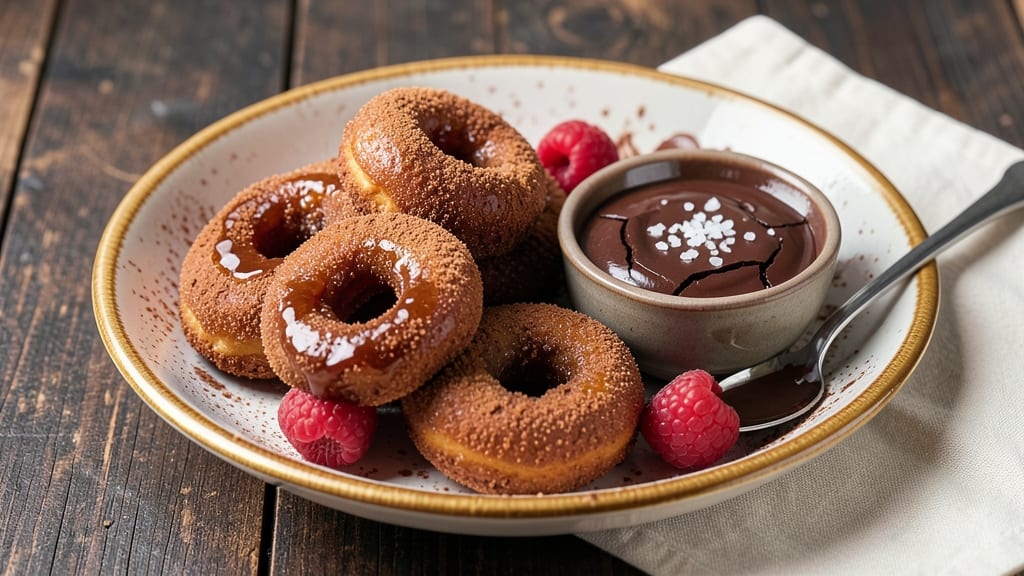
This chocolate donut holes recipe delivers the perfect balance of cakey texture and rich cocoa flavor that makes them irresistible. 💛 The secret lies in the dough's precise ratio of ingredients and the warm chocolate glaze that creates that signature velvety coating.
I've perfected this technique over years of testing, ensuring every batch turns out golden-brown and tender inside.
The process starts with a simple dough that requires just a few basic ingredients—flour, sugar, eggs, and cocoa powder—mixed to a thick batter. The key is frying the small dough balls at the right temperature for exactly 2-3 minutes, which gives them that signature cakey texture without being too dense.
This method ensures they stay light and fluffy while developing a crisp exterior.
Once fried, the donut holes are immediately coated in a warm cocoa glaze made from powdered sugar, cocoa, and milk. This glaze sets just enough to hold the donut holes together but remains soft and slightly sticky, making each bite rich and satisfying.
The combination of the cakey donut holes and the smooth glaze creates a dessert that's both indulgent and foolproof to make at home.
These donut holes are perfect for parties, potlucks, or satisfying a late-night sweet tooth. You can also experiment with variations like adding vanilla extract to the dough or using a different glaze flavor. Let's get started on making these decadent treats!
Ingredients for chocolate donut holes
Simple dough and velvety glaze—just 13 ingredients for restaurant-quality chocolate donut holes.
| Ingredient | Amount | Notes |
|---|---|---|
| All-Purpose Flour 🌾 | 2 cups | Sifted for light texture |
| Granulated Sugar 🍚 | ¾ cup | White or light brown |
| Unsalted Butter 🧈 | ½ cup | Cold, cubed for dough |
| Large Eggs 🥚 | 2 whole | Room temperature |
| Unsweetened Cocoa Powder 🍫 | ⅓ cup | Natural or Dutch-processed |
| Baking Powder 🧂 | 1 tsp | For lift and fluffiness |
| Salt 🧂 | ½ tsp | Fine sea salt |
| Vanilla Extract 💧 | 1 tsp | Pure vanilla preferred |
| Milk 🥛 | ½ cup | Whole milk for richness |
| Vegetable Oil 🫒 | 3 cups | For deep frying (350°F) |
| Powdered Sugar 🍚 | 2 cups | For glaze (sifted) |
| Heavy Cream 🥛 | ¼ cup | Full-fat for glaze |
| Unsweetened Cocoa Powder 🍫 | ¼ cup | For glaze (same brand) |
The cocoa powder is non-negotiable for that deep chocolate flavor. Hershey's Special Dark or Dutch-processed brands work best—they dissolve smoothly without graininess. The butter must be cold when creaming it with sugar, or the dough will turn greasy. Land O'Lakes or Plugrá are reliable choices. For the glaze, powdered sugar quality matters—Domino or Culinary Art brands are finely ground and dissolve perfectly. If you're using Dutch-processed cocoa in the dough, balance it with a pinch of baking soda in the glaze to neutralize acidity.
No vanilla extract? Vanilla bean paste works too, or even a pinch of vanilla sugar. Running low on heavy cream? Whole milk plus 1 tbsp melted butter mimics the fat content. The dough can handle a substitution of melted white chocolate for half the cocoa powder if you want extra richness. For the glaze, if you don't have heavy cream, evaporated milk thinned with a splash of water works in a pinch. The vegetable oil for frying? Any neutral oil (sunflower, canola) works—just keep it between 340°F and 360°F for perfect donut holes.
The dough keeps for 3 days in the fridge wrapped tightly in plastic. For longer storage, freeze it in a sealed container for up to 3 months. The glaze ingredients mix best when combined just before using—it thickens quickly. If you make extras, store them in an airtight container with parchment paper between layers. Reheat in a 350°F oven for 5-10 minutes to restore that fresh-from-the-fryer texture.
Why You'll Love This Recipe
- No-Fuss Mixing: I swear by this dough—just flour, sugar, butter, eggs, and cocoa. No fancy gadgets, no waiting for yeast to rise. Five minutes of stirring, and you’re golden.
- Rich, Deep Chocolate: That cocoa powder? It’s the star. The donut holes have this perfect balance—sweet enough to satisfy, but with that bittersweet cocoa punch that makes them irresistible. Honestly, I’ve tried store-bought, and these beat them every time.
- Party in a Pinch: Need a last-minute dessert for a gathering? These are your secret weapon. Fry them fresh, roll them in powdered sugar, and boom—crowd-pleaser. My in-laws think I’m a genius, and my kids just think they’re magic.
- Budget-Friendly Leftovers: A box of cocoa powder and a stick of butter go a long way. Make a double batch, freeze extras, and reheat them in the oven—still crispy, still delicious. (Yes, even on a Tuesday night.)
Step-by-step instructions for chocolate donut holes
Here's how to make perfectly cakey donut holes with a rich cocoa glaze—every bite will be golden and moist.
👨🍳 Step 1: Mix Dry Ingredients for Light Texture
In a medium bowl, whisk together the 2 cups all-purpose flour, 0.75 cup granulated sugar, 0.33 cup unsweetened cocoa powder, 1 teaspoon baking powder, and 0.5 teaspoon salt. Sift the mixture through a fine-mesh sieve into a separate bowl to aerate the flour and remove any lumps. This step ensures your donut holes will be light and tender rather than dense.
I like to press the sifted mixture through my fingers to break up any remaining clumps. The goal here is to create a fine, uniform powder that will blend seamlessly with the wet ingredients. Set this mixture aside while you prepare the wet components—this prevents the flour from absorbing moisture prematurely.
🍳 Step 2: Combine Wet Ingredients for Smooth Batter
In a separate large bowl, melt the 0.5 cup unsalted butter in a microwave-safe bowl in 30-second intervals, stirring between each, until fully melted but not hot to the touch. Let it cool for 2 minutes—this prevents scrambling the eggs later.
Add the 2 whole large eggs, 1 teaspoon vanilla extract, and 0.5 cup milk to the melted butter. Whisk vigorously for 1 minute until the mixture is smooth and fully combined. The batter should be slightly thick but pourable. This is your foundation, so don't rush the mixing—uneven blending can lead to dense donut holes.
🥘 Step 3: Fold Wet and Dry Ingredients Gently
Gradually add the dry ingredients to the wet mixture, folding with a spatula in a gentle "J" motion. Start slow and stop mixing as soon as the flour is fully incorporated—overmixing develops gluten, which makes donut holes tough. The ideal batter should be thick but still pipeable, like a very stiff cake batter.
Here's the thing—this batter should hold its shape when you pipe it. If it's too runny, add 1 tablespoon more flour at a time until it reaches the right consistency. The donut holes need structure to maintain their shape during frying, so don't skip this consistency check. Once perfect, cover the bowl and refrigerate for 30 minutes to firm up slightly.
🔥 Step 4: Fry Donut Holes at Precise Temperature
Fill a deep pot or Dutch oven with 3 cups vegetable oil and heat to 350°F using a candy or deep-fry thermometer. The oil is ready when it maintains a steady temperature and small bubbles form around the thermometer. Too hot, and the outside burns before the inside cooks; too cool, and they absorb oil instead of frying properly.
Using a piping bag fitted with a ½-inch round tip, pipe 1-inch balls of batter into the hot oil, leaving space between them. Fry 2-3 donut holes at a time to avoid overcrowding, which lowers the oil temperature. Cook for 2-3 minutes per side until they're golden brown—they should float to the surface when done. Remove with a slotted spoon and drain on a wire rack lined with paper towels.
🍽️ Step 5: Glaze and Serve Warm
While the donut holes are still warm, whisk together the 2 cups powdered sugar, 0.25 cup heavy cream, and 0.25 cup unsweetened cocoa powder in a bowl until smooth. The glaze should be thick enough to coat the back of a spoon but still drizzle easily. If it's too thick, add 1 teaspoon milk at a time until it reaches the right consistency.
Dip each donut hole halfway into the glaze, letting any excess drip off back into the bowl. Arrange them on a wire rack and let the glaze set for 5-10 minutes—this prevents a sticky mess. Serve immediately while the glaze is still warm and gooey. The contrast of warm, cakey donut holes with the cool, rich cocoa glaze is what makes these irresistible.
Pro Tips For Making Chocolate Donut Holes
- Melt Butter Slowly: DESCRIPTION: Heat the butter low and steady—not too fast, or it’ll scorch before the cocoa powder blends in. I learned this the hard way when my first batch smelled like burnt caramel instead of chocolate. A gentle simmer (just until tiny bubbles form) keeps the flavor pure.
- Sift the Cocoa: DESCRIPTION: Skip the sifting, and you’ll end up with lumpy donut holes. Dutch-process cocoa powder must be sifted with the flour—it’s heavier and clumps like glue. Use a fine-mesh strainer if you’re lazy, but don’t skip this step. Trust me, your texture will thank you.
- Test Oil Temp: DESCRIPTION: Drop a tiny bit of batter into the oil—if it sizzles immediately and floats, it’s ready. Too cool? The donut holes will absorb oil like a sponge and turn greasy. Too hot? They’ll burn before they’re done. Aim for a steady, lively bubble, not a frenzy.
- Chill the Dough: DESCRIPTION: Let the dough rest in the fridge for at least 30 minutes—yes, even if you’re eager. Cold dough = cleaner cuts and less spreading in the oil. I used to rush this, and my donut holes ended up looking like sad, flat pancakes. Patience here makes all the difference.
Storing and reheating this recipe
Refrigerator Storage
Store leftover donut holes in an airtight container with parchment paper between layers to prevent sticking. They’ll keep fresh for 3-4 days in the fridge, though the glaze may harden slightly. To restore that velvety texture, reheat in a 350°F oven for 5-7 minutes—just until warmed through.
I like to sprinkle a tiny bit of milk on top before reheating to revive the glaze’s sheen. 💫
Freezer Preservation
For longer storage, freeze unglazed donut holes on a tray lined with parchment paper for 1 hour to prevent clumping. Transfer to a freezer-safe bag or container, sealing out air. They’ll stay fresh for up to 3 months.
When ready to eat, thaw in the fridge overnight, then reheat in the oven as above. Pro tip: Glaze them fresh after reheating for the best flavor and texture. ❄️
Glaze Refresh Tips
If your glazed donut holes lose their shine, revive them by brushing with a thin milk glaze (mix 1 tbsp powdered sugar + 1 tsp milk). For extra decadence, drizzle with melted white chocolate or a sprinkle of crushed peppermint before serving.
The key is warmth—the glaze softens best when the donut holes are just out of the oven or reheated. 🍫
Oven Reheating Method
Preheat your oven to 350°F and place donut holes on a baking sheet lined with parchment. Bake for 5-7 minutes until warmed through—this restores their cakey texture without drying them out.
For extra crispiness, broil for 30 seconds at the end. Avoid microwaving; it makes the glaze rubbery and the donut holes soggy. 🔥
Frying Leftover Dough
Didn’t fry all your dough? No problem! Roll the chilled dough into 1-inch balls, then fry as directed. Store unused dough in the fridge for up to 3 days or freeze for 3 months.
Let it sit at room temperature for 10 minutes before frying to ensure even cooking. This works especially well for batch prep—just fry fresh as needed. 🍳
Glaze Make-Ahead Hack
Prepare the glaze ingredients in advance and store them in a sealed container in the fridge for up to 5 days. When ready to use, whisk with 1 tbsp milk to thin.
This saves time and keeps the glaze fresh. For a quicker fix, use store-bought chocolate syrup (like Hershey’s) thinned with milk—it’s a great shortcut for parties. 💡
Nutrition facts
Frequently asked questions
Can I make these without frying?
Yes! For a baked version, preheat your oven to 400°F and bake the 1-inch dough balls on a parchment-lined sheet for 10-12 minutes until golden. They'll be slightly denser but still delicious. The key is to bake them just until set—they won't be as light as fried, but the glaze will still adhere perfectly.
Why did my donut holes turn out dense?
Overmixing the batter develops gluten, making them tough. Also, check your oil temperature—if it's too low (340°F or below), they'll absorb oil instead of cooking through. For extra lightness, make sure your butter is cold when creaming and sift all dry ingredients. The dough should be thick but pipeable, not runny.
How do I store leftover glazed donut holes?
Keep them in an airtight container with parchment paper between layers for up to 3 days at room temperature. For longer storage, freeze unglazed donut holes for 3 months. Reheat in a 350°F oven for 5-7 minutes—never microwave, or the glaze will turn rubbery.
Can I use this dough for other desserts?
The same batter works for mini cake pops or chocolate truffles. Roll the chilled dough into balls, then either bake at 375°F for 8-10 minutes (for cake pops) or freeze for 1 hour before rolling in cocoa powder (for truffles). The texture stays cakey in both cases.
What's the best way to make them vegan?
Replace the eggs with 2 tbsp flaxseed meal + 6 tbsp water (let sit for 5 minutes to thicken), use vegetable oil instead of butter, and swap heavy cream for coconut cream in the glaze. For extra richness, add 1 tbsp melted coconut oil to the dough. The texture will be slightly different but still delicious!