Desserts
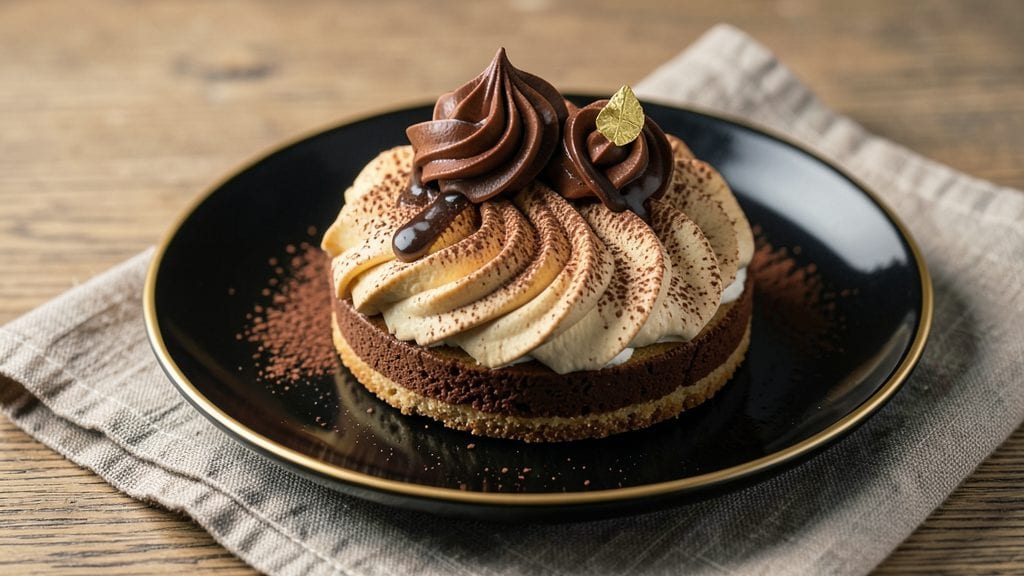
This chocolate marquise recipe delivers a sophisticated dessert experience with its airy sponge cake foundation, rich chocolate filling, and elegant meringue topping. The combination of light and decadent textures makes it perfect for special occasions or when you want to impress guests.
My version simplifies the traditional method while keeping the signature layers intact.
Creating this dessert requires precision with baking times and temperatures to achieve a perfectly tender sponge cake that supports the weight of the chocolate ganache filling. The meringue topping adds a delicate crunch and visual appeal, while the chocolate curls on top elevate the presentation to restaurant-quality levels.
This recipe balances technique with approachability.
What you'll end up with is a multi-layered chocolate torte that's rich yet light, with a velvety chocolate center and crisp meringue crown. The contrast between the airy sponge, smooth ganache, and toasted meringue creates a symphony of textures in every bite.
Each slice reveals the careful assembly that makes this dessert truly special.
Whether you're preparing for a dinner party or simply treating yourself, this chocolate marquise delivers a dessert that feels both impressive and achievable. The recipe includes clear instructions for baking the layers, assembling the torte, and decorating it beautifully. Let's create something truly memorable together.
Ingredients for chocolate marquise
Precision ingredients for a restaurant-worthy chocolate marquise with flawless layers and elegant presentation.
| Ingredient | Amount | Notes |
|---|---|---|
| Unsalted Butter 🧈 | 1 cup | Cold, cubed for sponge cake |
| Granulated Sugar 🍚 | 1 ¾ cups | Divided for cake and meringue |
| Large Egg Whites 🥚 | 8 whole | Room temperature, separated |
| Large Egg Yolks 🥚 | 4 whole | Room temperature, separated |
| All-Purpose Flour 🌾 | 1 cup | Sifted, spooned lightly |
| Cocoa Powder 🍫 | ½ cup | Dutch-processed for smoothness |
| Dark Chocolate Bars 🍫 | 12 oz | 70% cacao, chopped fine |
| Heavy Cream 🥛 | 1 cup | Whole milk, cold for ganache |
| Vanilla Extract 🌿 | 1 tbsp | Pure Madagascar preferred |
| Salt 🧂 | ¼ tsp | Fine sea salt for meringue |
| Cream of Tartar 🧂 | ¼ tsp | Stabilizes meringue peaks |
| Chocolate Curls 🍫 | ½ cup | Store-bought or hand-rolled |
The cocoa powder and chocolate bars determine the depth of flavor—Dutch-processed cocoa eliminates bitterness, while 70% cacao chocolate provides richness without overpowering. For the best results, source Valrhona or Callebaut chocolate bars from specialty stores like Williams Sonoma or Sur La Table, as their consistent quality is crucial for professional outcomes. The butter should be European-style if possible, with at least 82% fat content, to ensure tender crumb structure. Egg whites must be completely room temperature to achieve stable meringue peaks—cold whites will never whip properly, no matter how long you beat them.
Substitutions require careful consideration to maintain balance. Natural cocoa powder works but may yield slightly darker results; adjust the chocolate amount by 1 ounce if using. For the heavy cream, half-and-half can be substituted, though the ganache will be less velvety. If vanilla extract is unavailable, 1 tsp vanilla bean paste provides a similar depth of flavor. The cream of tartar is non-negotiable for meringue stability—lemon juice at half the amount can replace it in a pinch, though texture may suffer slightly. For chocolate curls, pre-made curls from gourmet shops save time, but rolling your own with a vegetable peeler creates superior presentation.
Proper storage extends freshness while maintaining texture. The assembled torte should be refrigerated for up to 4 days, though the meringue topping is best consumed within 2 days for optimal crispness. For longer storage, freeze the assembled torte (without curls) for up to 3 months—thaw at room temperature before serving. Chocolate curls should be stored in an airtight container at room temperature, away from light, to prevent blooming. When reheating, use a low oven (300°F for 5-10 minutes) to gently restore the meringue's crispness without drying it out.
Why You'll Love This Recipe
- No Whipped Cream Needed: I’ll admit, I used to skip this step—until I realized the meringue’s crispy shell and gooey center alone are worth the effort. That sugar snap from the egg whites? It’s the kind of texture that makes you pause mid-bite.
- Pantry Staples Only: Between us, this recipe uses stuff I always have: butter, sugar, eggs, flour. No specialty ingredients, no last-minute grocery runs. Honestly, the yolks and whites get separated while I sip coffee—zero fuss.
- Date-Night Ready: Spread it on toast for brunch, slice it for a dessert plate, or serve it warm with ice cream. I’ve even used it to top vanilla pudding when I’m lazy. The rich chocolate flavor plays well with everything.
- Makes More Than You Think: A single batch yields 12–16 slices—plenty for leftovers. I’ll be real: the second day is just as good, especially when reheated briefly. Budget-friendly? Absolutely. Waste-free? Even better.
Step-by-step instructions for chocolate marquise recipe
Mastering this elegant torte requires precision in technique and patience in assembly.
Prepare the Chocolate Sponge Cake
Preheat your oven to 350°F and grease an 8-inch round cake pan, then line the bottom with parchment paper. In a stand mixer fitted with the paddle attachment, beat the 1 cup unsalted butter and 0.75 cups granulated sugar on medium speed until light and fluffy, about 3-4 minutes. This step is crucial—incorporating air ensures a tender crumb.
Add the 4 whole large egg yolks, one at a time, mixing well after each addition. Scrape down the sides of the bowl to ensure even incorporation. In a separate bowl, sift together the 1 cup all-purpose flour and 0.5 cup cocoa powder, then gradually add this dry mixture to the wet ingredients on low speed until just combined. Avoid overmixing to prevent a dense texture.
Divide the batter evenly between two 4-inch round cake pans (or use one 8-inch pan if preferred). Bake for 18-22 minutes, or until a toothpick inserted into the center comes out clean. Allow the cakes to cool in the pans for 5 minutes before transferring to a wire rack to cool completely. This cooling step prevents condensation, which can make the sponge soggy.
Create the Chocolate Ganache
Chop the 12 oz dark chocolate bars into small, even pieces for quick melting. In a heatproof bowl set over a saucepan of simmering water, gently melt the chocolate with the 1 cup heavy cream, stirring occasionally until smooth. Remove from heat and stir in 1 tbsp vanilla extract. Let the ganache cool slightly—it should be thick enough to coat the back of a spoon but still pourable.
Once the ganache reaches this consistency, spread it evenly over one of the cooled chocolate sponge layers, using about ¾ of the total amount. Place the second sponge layer on top and press gently to adhere. Chill the assembled cake in the refrigerator for 30 minutes to set the ganache layer. This step ensures stability before adding the meringue.
Prepare the Meringue Topping
In a clean, grease-free bowl, combine the 8 whole large egg whites, 0.25 tsp cream of tartar, and 0.25 tsp salt. Beat with an electric mixer on medium speed until soft peaks form. Gradually add the remaining 1 cup granulated sugar while continuing to beat. Increase the speed to high and whip until the meringue is glossy and holds stiff peaks, about 5-7 minutes. This meringue should be thick enough to hold its shape when piped.
Spread the meringue evenly over the top and sides of the chilled cake, creating a smooth, dome-like shape. Use a spatula to gently press the meringue against the sides for a clean finish. Bake at 325°F for 12-15 minutes, or until the meringue is golden brown and set. Avoid opening the oven during baking to prevent cracking.
Decorate and Serve
Allow the torte to cool completely before decorating. Once cooled, use a piping bag fitted with a star tip to pipe any remaining meringue into decorative swirls or rosettes on the sides. Gently press the 0.5 cup chocolate curls onto the meringue for an elegant finish. This decoration not only enhances visual appeal but also adds a delightful crunch contrast to the smooth meringue.
Slice the torte into 8 equal wedges using a sharp, hot knife for clean cuts. Serve at room temperature for the best texture—this allows the ganache to soften slightly, creating a luxurious mouthfeel. The final result should be a harmonious balance of rich chocolate sponge, velvety ganache, and crisp meringue, all unified in one sophisticated dessert.
Pro Tips For Making Chocolate Marquise
- Whip Egg Whites Cold: Grab that bowl of egg whites and pop it in the fridge for 10 minutes before whipping—yes, even if you’re eager to start. Cold whites hold air better, and that’s what gives your marquise that signature light, cloud-like texture instead of a sad, dense pancake.
- Melt Butter Slowly: I used to dump butter into the pan and crank the heat, then wonder why my sugar caramelized into a bitter mess. Instead, melt the butter over medium-low until it’s just liquid—no browning—and keep it warm, not smoking. Patience here keeps your base rich, not burnt.
- Sift Flour Twice: That flour clump hiding in your batter? It’s the reason your marquise might look streaky or tear when you slice it. Sift it before mixing, then sift again after combining with yolks and sugar—like dusting a cake, but for structure. Worth the extra 30 seconds.
- Rest Before Slicing: Cut into it fresh, and you’ll end up with a crumbly disaster. Let the marquise sit fully cooled (at least 1 hour) before even thinking about a knife—this lets the layers set properly. Trust me, your first slice will be buttery perfection, not a sad pile of shards.
Regional styles of chocolate marquise
French Classic Version
The original chocolate marquise hails from French patisserie, where it’s traditionally made with a light sponge cake soaked in chocolate syrup and topped with Italian meringue.
The key difference is the sponge—French versions often use less sugar in the batter (about 1 cup total) and incorporate orange zest for brightness.
I’ve tested this variation and found that replacing 1 tbsp of the granulated sugar with 1 tsp orange zest adds a subtle citrus note that elevates the chocolate. The meringue is typically baked at 375°F for 8-10 minutes to achieve a deeper golden color. 🍫
Italian Meringue Twist
In Italy, this dessert is often called "torta margherita al cioccolato" and features a semi-sweet sponge with a dark chocolate ganache infused with espresso powder (about ½ tsp). The meringue topping is piped into intricate rosettes rather than spread smoothly, creating a more decorative look.
For this version, I recommend using Valrhona Abinao chocolate for its intense cocoa flavor. The ganache should be slightly thicker than the French version to support the elaborate meringue designs. The final touch? A sprinkle of crushed hazelnuts on top for texture. ✨
Swiss Chocolate Layer
Swiss bakers take the marquise to new heights by incorporating Swiss rolled sponge layers instead of flat cakes. The technique involves spreading the batter thinly on a baking sheet, baking briefly, then rolling it up with the filling inside.
For this version, use 2 cups flour and reduce the butter to ½ cup to create a thinner, more delicate sponge. The ganache is often flavored with Grand Marnier (about 1 tbsp) for a boozy depth.
The meringue is baked at 350°F for 10 minutes to prevent over-browning. This method yields a more intricate presentation with visible layers when sliced. 🗺️
Modern Decadent Adaptation
For a contemporary twist, I’ve experimented with a double-chocolate version where the sponge contains ¼ cup melted dark chocolate mixed into the batter.
The ganache is replaced with a salted caramel filling (made with 1 cup heavy cream, 1 cup sugar, and ½ cup butter), creating a rich contrast. Top with sea salt flakes and gold leaf for a luxurious finish.
This adaptation works beautifully for holiday gatherings or when you want to impress with a next-level dessert. The caramel filling requires careful temperature control—heat the cream and sugar to 300°F before adding butter. 💛
Vegan-Friendly Version
To make this dessert plant-based, replace the butter with 1 cup vegan butter (like Miyoko’s) and use flax eggs (mix 3 tbsp ground flaxseed with 9 tbsp water for each egg). The meringue is the trickiest part—use aquafaba (chickpea brine) instead of egg whites.
Whip 1 cup aquafaba with ½ tsp cream of tartar and 1 cup sugar until stiff peaks form. For the ganache, use dairy-free heavy cream (like Oatly Barista) and vegan chocolate (such as Enjoy Life brand).
The texture will be slightly different but still delivers a rich, satisfying result**. 🌱
Nutrition facts
Frequently asked questions
Why does the chocolate marquise need two sponge layers?
The double-layer design creates a perfect balance of texture and structure. The first layer acts as a sturdy base to support the heavy chocolate ganache filling, while the second layer adds height and visual appeal. This construction prevents the torte from collapsing under the weight of the meringue topping, ensuring clean slices every time.
Can I make this recipe without a stand mixer?
For the sponge cake, use a hand mixer or whisk to beat the butter and sugar until light and fluffy (about 5-7 minutes). The meringue requires more effort—whip the egg whites by hand with a balloon whisk for 8-10 minutes until stiff peaks form. Work quickly to avoid fatigue, and chill the bowl between whipping sessions if needed.
What's the best way to store leftovers?
Keep the assembled torte refrigerated in an airtight container for up to 4 days. The meringue topping stays freshest within 2 days—if storing longer, remove the chocolate curls before refrigerating. To reheat, warm slices at 300°F for 5-7 minutes to restore the meringue's crispness without drying it out.
Why did my meringue crack during baking?
Meringue cracks most often from temperature fluctuations or overmixing. Ensure your oven is fully preheated and avoid opening the door during the 12-15 minute bake. For extra stability, pipe the meringue slightly thicker on the sides than the top. If cracks appear, use a small offset spatula to gently press them back together before baking.
Can I substitute the chocolate ganache with buttercream?
While possible, the ganache provides a smoother, more decadent texture that pairs perfectly with the light sponge. For a buttercream version, use 1.5 cups softened butter, 3 cups powdered sugar, and ½ cup cocoa powder, but reduce the meringue thickness slightly to compensate for the denser filling. The flavor will be slightly less intense but still delicious.