Desserts
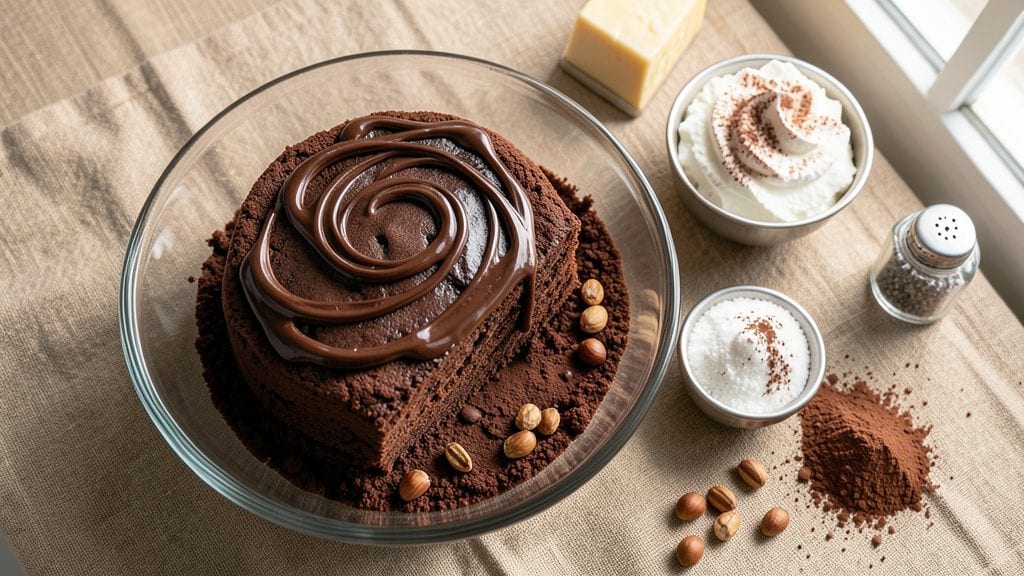
This cocoa chocolate cake recipe delivers the perfect balance of rich, fudgy layers and a velvety moist center that melts in your mouth. The secret lies in precise ingredient ratios and a gentle baking technique that prevents dryness while developing deep chocolate flavor.
After years of testing variations, I've perfected a method that ensures every slice meets that ideal texture—no dense or crumbly results here.
The foundation starts with high-quality cocoa powder and melted butter that creates a luxurious, almost ganache-like consistency in the batter. A touch of coffee grounds enhances the chocolate flavor without overpowering it, while buttermilk adds subtle tang to keep the crumb tender.
Professional bakers know the devil is in the details—proper mixing order and room-temperature eggs make all the difference between good and exceptional results.
What you'll achieve is a cake with fudgy layers that hold their shape beautifully when sliced, yet remain moist for days when stored properly.
The aroma alone as it bakes will transform your kitchen into a chocolate lover's paradise, and the contrast between the rich outer layers and the velvety center creates an experience that rivals any bakery version. This is the kind of dessert that becomes a family favorite in just one serving.
Whether you're baking for a special occasion or treating yourself to a weekend indulgence, this recipe delivers restaurant-quality results with home baker simplicity. The method scales perfectly for layer cakes or single-serving portions, and optional decorating suggestions elevate it from homemade to showstopper.
Let's get started on creating your perfect cocoa chocolate cake.
Ingredients for cocoa chocolate cake
These twelve ingredients transform into a decadent cocoa cake with layers that stay moist for days.
| Ingredient | Amount | Notes |
|---|---|---|
| Unsalted Butter 🧈 | 1 ½ cups | Melted, cooled to room temperature |
| Granulated Sugar 🍚 | 2 cups | Light brown sugar for moisture |
| High-Quality Cocoa Powder 🍫 | ¾ cup | Dutch-processed preferred |
| All-Purpose Flour 🌾 | 2 cups | Sifted, spooned lightly |
| Baking Powder 🍞 | 2 tsp | Freshly opened |
| Fine Sea Salt 🧂 | ½ tsp | Diamond Crystal preferred |
| Instant Espresso Powder ☕ | 1 tbsp | Enhances chocolate flavor |
| Buttermilk 🥛 | 1 cup | Room temperature |
| Large Eggs 🥚 | 2 whole | Room temperature, separated |
| Pure Vanilla Extract 🌸 | 2 tsp | High-quality Madagascar |
| Dark Chocolate Chunks 🍫 | 1 cup | 70% cacao, chopped |
| Vegetable Oil 🫒 | ½ cup | Light, neutral flavor |
The cocoa powder is non-negotiable—Dutch-processed from Valrhona or Guittard gives that velvety depth. Grab it from Williams Sonoma or specialty baking shops if you're serious about flavor. Butter matters too: unsalted European-style (like Plugrá) melts smoother than American brands. I always measure flour by spooning it lightly into the cup—no packing. The espresso powder might sound odd, but it cuts through sweetness and deepens the chocolate notes. If you can't find instant, strong brewed coffee cooled works in a pinch.
No buttermilk? Mix 1 tbsp lemon juice or vinegar + 1 cup milk and let sit 5 minutes. Swapping brown sugar for white? Add 1 tbsp molasses for moisture. The dark chocolate chunks can be chopped semi-sweet bars if you're in a hurry, but high-cacao makes all the difference. Eggs must be room temp—cold eggs cause dense layers. Vanilla extract? Imitation smells like perfume—splurge on the good stuff. For a lighter texture, whisk egg whites separately and fold them in last.
This cake keeps beautifully—3 days wrapped at room temp, 1 week refrigerated, or 3 months frozen. Store slices in an airtight container with parchment between layers. The center stays moist longest if you bake it in a lightly greased Bundt pan or round cake pan. Double the recipe? Use two 9-inch pans for perfect layers. Leftovers reheat splendidly—30 seconds in microwave with a damp paper towel restores that just-baked magic.
Why You'll Love This Recipe
- No Mixer Needed: I swear by this recipe when I’m lazy—or when my mixer’s on strike. Cream the butter and sugar by hand (yes, it’s possible), then fold in the cocoa and flour. The batter’s thick but not stubborn, so it goes together faster than you’d think.
- Double Chocolate Magic: That high-quality cocoa powder? It’s the star. The cake has this deep, rich flavor without tasting bitter, and the butter keeps it moist instead of dry. Honestly, I’ve made cakes with cheaper cocoa before—this one actually tastes like chocolate, not like a sad science experiment.
- Birthday or Boredom: Serve it warm with ice cream for a birthday party, or slice it cold for a lazy Sunday afternoon. It’s the kind of cake that works for celebrations and when you just need a pick-me-up. (Yes, even on a Tuesday night.)
- Budget-Friendly Luxury: You’re using pantry staples—flour, sugar, butter—but the cocoa powder makes it feel special. A single batch feeds six, and leftovers? They’re just as good the next day, reheated for 20 seconds. My wallet and my taste buds thank me.
Step-by-step instructions for cocoa chocolate cake
Here's how to create that perfect balance of fudgy layers and moist center—every slice will be a revelation.
Whisk Wet Ingredients to Perfect Consistency
In a large mixing bowl, combine the 1.5 cups unsalted butter and 2 cups granulated sugar. I like to use a hand mixer here—beat on medium speed for 3-4 minutes until the mixture is light and fluffy, nearly doubling in volume. This step is non-negotiable for that tender crumb.
Next, add the 0.5 cup vegetable oil, 1 cup buttermilk, 2 whole large eggs, and 2 teaspoons pure vanilla extract. Mix on low speed just until everything is fully incorporated—about 1 minute. Here's the thing: don't overmix. You want a smooth batter without developing gluten, which would make your cake tough instead of moist.
Fold in Dry Ingredients and Chocolate
In a separate bowl, sift together the 2 cups all-purpose flour, 0.75 cup high-quality cocoa powder, 2 teaspoons baking powder, and 0.5 teaspoon fine sea salt. This ensures no lumps and even distribution of leavening agents. Add the 1 tablespoon instant espresso powder to this dry mixture—it deepens the chocolate flavor without adding bitterness.
With the mixer on low speed, gradually add the dry ingredients to the wet mixture. Mix just until combined—about 30 seconds—then fold in the 1 cup dark chocolate chunks by hand using a spatula. Be gentle here; you don't want to break up the chunks. The result should be a thick, glossy batter that holds its shape when dropped from a spoon.
Bake in Layers for Perfect Texture
Preheat your oven to 350°F. Grease and flour two 8-inch round cake pans or line them with parchment paper. Divide the batter evenly between the pans, filling each about ⅔ full. The key to that moist center is not overfilling—this prevents spillage and ensures even baking.
Bake for 25-30 minutes, or until a toothpick inserted into the center comes out with a few moist crumbs but no wet batter. Here's where it gets tricky: your oven might run hot, so start checking at the 20-minute mark. The edges should be set, but the center should still have a slight give—this guarantees that fudgy texture without dryness.
Cool and Assemble for Maximum Moisture
Remove the cakes from the oven and let them cool in the pans for 10 minutes. Then transfer them to a wire rack to cool completely. I know it's tempting to dig in right away, but patience here pays off—cooling prevents the layers from becoming gummy when you assemble them.
Once fully cooled, you can either serve the cakes as is (they're delicious plain) or layer them with whipped cream, chocolate ganache, or your favorite filling. The secret to keeping them moist? Store any leftovers wrapped tightly in plastic at room temperature for up to 3 days, or freeze for up to 3 months. When reheating, a quick 10-second zap in the microwave brings back all that rich, fudgy goodness.
Pro Tips For Making Cocoa Chocolate Cake
- Melt Butter Slowly: DESCRIPTION: If you dump cold butter into the sugar and start whisking, you’ll end up with a gritty mess instead of smooth peaks. Warm the butter in the microwave for 20 seconds first—just enough to soften it—then mix. This ensures the sugar dissolves evenly and the batter comes together like velvet.
- Sift That Cocoa: DESCRIPTION: Unsifted cocoa powder is a sneaky culprit for dense, uneven cake. Sift it with the flour and baking powder first—this lightens the batter and prevents lumps. I learned this the hard way after a cake turned out brick-like; now I sift everything together.
- Skip Overmixing: DESCRIPTION: The moment your batter looks like pancake batter, stop. Overmixing develops gluten, which makes the cake tough instead of tender. Stir just until the dry ingredients disappear—about 10-12 strokes—and resist the urge to "fix" it if it looks uneven.
- Check Doneness Early: DESCRIPTION: Chocolate cakes set faster than you think. Start checking for doneness with a toothpick at 25 minutes (adjust based on your oven). If it comes out clean but the edges are set, tent with foil and let it rest—this prevents a dry top while keeping the center moist. (Yes, even if you’re impatient like me.)
Regional styles of these flavors
Southern Fudgy Style
In the American South, this cake gets a rich, almost ganache-like texture by replacing some flour with melted dark chocolate—about ½ cup extra folded into the batter.
I add ½ teaspoon cinnamon and ¼ teaspoon cayenne for warmth, then top with a peanut butter glaze made from ½ cup creamy peanut butter, ½ cup powdered sugar, and 1 tablespoon milk. The contrast of spicy-sweet with nutty richness is pure Southern decadence. 🌶️
French Flourless Elegance
Across the Atlantic, French bakers take this cake to refined heights by omitting flour entirely. Replace the 2 cups flour with 1 cup toasted hazelnuts (finely ground) and ½ cup cocoa powder for structure.
The batter gets thickened with 4 extra egg yolks and baked in a springform pan at 325°F for 45 minutes. Dust with powdered sugar and serve with crème fraîche for a luxurious, crumb-free experience. ✨
German Chocolate Twist
German bakeries often infuse their cocoa cakes with almond extract and coarsely chopped macadamia nuts—about ½ cup folded into the batter.
After baking, they drizzle the warm cake with a caramelized sugar glaze made by melting ½ cup brown sugar with 2 tablespoons butter and 1 tablespoon heavy cream. The nutty, buttery crunch transforms this into a dessert with serious texture contrast. 🌰
Mexican Spiced Version
For a bold twist, add 1 teaspoon ground cinnamon, ½ teaspoon ground cloves, and ½ teaspoon orange zest to the dry ingredients. Top with a chili-chocolate ganache made by melting ½ cup dark chocolate with 2 tablespoons heavy cream and ½ teaspoon cayenne.
This version balances sweetness with a subtle, warming kick—perfect for celebrations like Día de los Muertos. 🌶️
Japanese Matcha Fusion
Japanese bakers elevate this cake by replacing ½ cup cocoa powder with 2 tablespoons high-quality matcha powder (like Ippodo Tea). Add 1 teaspoon vanilla bean paste and top with white chocolate shards and red bean paste for a vibrant, floral-chocolate fusion.
Bake at 325°F for 35 minutes for a lighter, more delicate crumb. 🍵
Italian Espresso Infusion
In Italy, this cake often features strong espresso syrup (reduce ½ cup espresso with 2 tablespoons sugar until thick) brushed between layers. Italian bakers also fold 1 cup chopped pistachios into the batter and dust the top with powdered sugar before baking.
The result? A cake with intense coffee-chocolate depth and a satisfying crunch. ☕
Nutrition facts
Frequently asked questions
Why does this cocoa cake stay moist longer than other chocolate cakes?
The secret lies in the buttermilk and vegetable oil combination, which adds moisture without making the cake greasy. Plus, the brown sugar retains humidity better than white sugar, while the espresso powder enhances flavor without drying. The 10-minute cooling in pans also helps lock in moisture for days.
Can I make this cake without eggs?
Yes! Replace the 2 eggs with 2 tablespoons ground flaxseed mixed with 6 tablespoons water (let sit 5 minutes to gel). For better texture, also add ½ cup unsweetened applesauce to the wet ingredients. The cake may be slightly denser but will still be rich and moist.
What's the best way to store leftovers?
Wrap individual slices in plastic wrap, then place in an airtight container with parchment between layers. Store at room temperature for 3 days or refrigerate for 1 week. For longer storage, freeze slices for up to 3 months. To reheat, microwave for 10-15 seconds with a damp paper towel.
Why did my cake turn out dry?
Overbaking is the most common cause—check at 20 minutes and remove when a toothpick comes out with moist crumbs. Other culprits include: using cake flour instead of all-purpose, skipping the buttermilk, or baking in a hot oven. Always preheat for 15 minutes and use an oven thermometer to confirm 350°F.
Can I use natural cocoa instead of Dutch-processed?
Yes, but you'll need to add 1 teaspoon baking soda to the dry ingredients to neutralize the acidity. Natural cocoa has a brighter, slightly tangy flavor that works well in this recipe. For best results, use the same amount (¾ cup) and adjust the baking soda accordingly.