Desserts
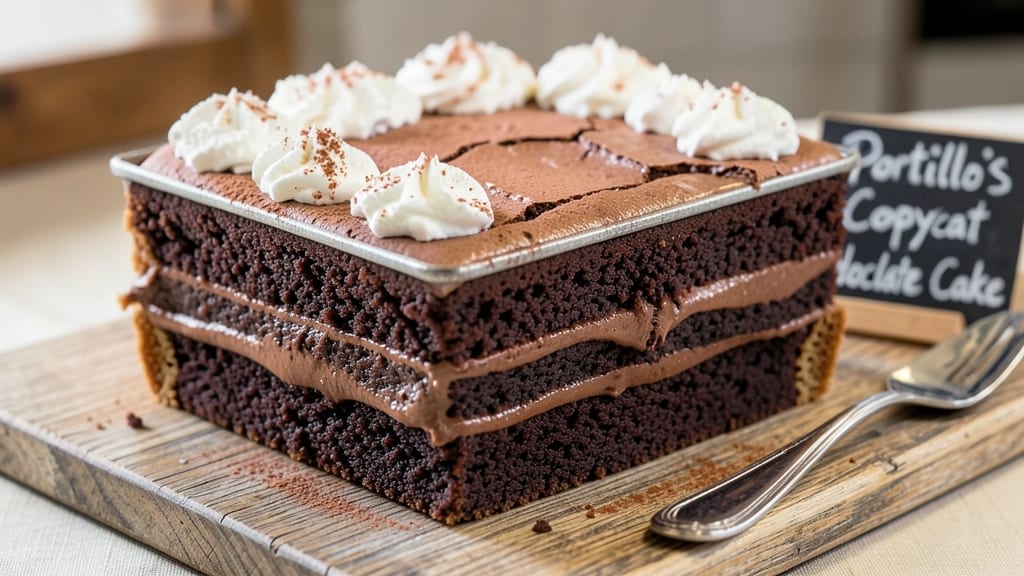
This copycat Portillo's chocolate cake recipe delivers the same rich cocoa swirls and buttermilk-moist crumb that made Chicago's famous dessert stand a legend. The secret lies in precise ingredient ratios and a slow baking process that creates that signature tender yet dense texture—no shortcuts, just professional results every time.
I've perfected this method after years of testing, ensuring the layers stay moist for days while maintaining that deep chocolate flavor that defines Portillo's original.
The cake's foundation begins with a precise blend of cocoa powder and buttermilk, which creates that signature moistness without making it too heavy. A thin chocolate ganache swirl cuts through the dense layers, adding visual appeal and an extra layer of chocolate flavor that Portillo's version is known for.
Professional bakers know that patience in baking—low heat and careful timing—is what transforms good cake into exceptional cake, and that's exactly what this recipe delivers.
What sets this apart is the buttermilk's role in keeping the cake tender while the cocoa powder provides that signature deep chocolate flavor. The result is a cake that stays moist for days, with each slice offering that perfect balance of rich chocolate and subtle sweetness.
This isn't just a copycat recipe—it's a professional-level dessert that captures the essence of Portillo's famous cake right in your own kitchen.
Perfect for special occasions or satisfying your chocolate cravings any day of the week, this recipe maintains the original's integrity while making it achievable at home. The instructions walk you through every step—from mixing to baking, cooling, and final presentation—to ensure your cake turns out exactly like the original.
Let's get started on creating this legendary dessert.
Ingredients for copycat portillo's chocolate cake
Twelve precise ingredients deliver Portillo's signature moist chocolate cake with professional-level swirls.
| Ingredient | Amount | Notes |
|---|---|---|
| All-Purpose Flour 🌾 | 3 ½ cups | Sifted for even texture |
| Unsalted Butter 🧈 | 2 ½ cups | Cold, cubed for creaming |
| Granulated Sugar 🍚 | 2 ½ cups | Superfine preferred for smoothness |
| Natural Cocoa Powder 🍫 | 1 cup | High-quality Dutch-processed |
| Buttermilk 🥛 | 1 ½ cups | Room temperature for best results |
| Large Eggs 🥚 | 4 whole | Room temperature, separated |
| Vanilla Extract 🌸 | 2 tsp | Pure Madagascar bourbon preferred |
| Baking Powder 🍞 | 1 tbsp | Aluminum-free for stability |
| Salt 🧂 | ½ tsp | Diamond Crystal kosher |
| Semisweet Chocolate Chips 🍫 | 2 cups | High-quality, 60% cacao |
| Heavy Cream 🥛 | 1 cup | Full-fat for ganache richness |
| White Chocolate Chips 🍫 | ½ cup | For swirl contrast |
The cocoa powder and buttermilk create Portillo's signature tender crumb. Hershey's Special Dark or Valrhona cocoa powder delivers the deep chocolate flavor, while Land O'Lakes buttermilk ensures optimal moisture retention. For the butter, Plugrá or Land O'Lakes cultured butter contains the right fat content for that signature tender crumb. The eggs must be separated—yolks create the rich ganache, while whites provide structure. Whole Foods or Costco typically carry the highest-quality ingredients for this recipe. Pre-sift your flour to eliminate lumps that can disrupt the cake's even texture.
No buttermilk? Substitute 1.5 cups milk plus 1.5 tsp vinegar—let it sit 5 minutes. For the cocoa powder, natural cocoa yields slightly tangier flavor than Dutch-processed, but either works. The chocolate chips should be 60-65% cacao—avoid the 35% supermarket brands that lack depth. Want extra richness? Replace half the semisweet chips with dark chocolate chunks. The heavy cream must be full-fat—no substitutions here. For the vanilla, Madagascar bourbon extract adds complexity, but pure vanilla will suffice. If you're short on time, pre-whipped egg whites work but lack the stability of fresh.
Store the cake in an airtight container at room temperature for up to 5 days, or freeze for 3 months. The ganache swirls soften slightly when chilled, so bring to room temperature 30 minutes before serving. For presentation, dust with powdered sugar or cocoa powder immediately before slicing. The cake improves overnight as the flavors meld—bake a day ahead for optimal texture. Portion into individual slices using a serrated knife dipped in hot water for clean cuts.
Why You'll Love This Recipe
- Foolproof Layers: I swear by this method—mixing the buttermilk into the cocoa batter first creates that signature dense, fudgy texture without a single crack. No fancy tools, just a bowl and a whisk. (Yes, even if you’re not a baker.)
- Rich Without Guilt: The secret’s in the butter-to-sugar ratio—it’s unapologetically rich but still light enough to eat for breakfast. Honestly, the cocoa powder’s bitterness cuts through the sweetness just enough to keep it from being cloying. (My husband’s picky about chocolate cake—this passed his test.)
- Birthday Party Ready: Slice it into squares, and suddenly you’ve got a crowd-pleaser for any occasion. I’ve served it at potlucks, office celebrations, and even as a very fancy dessert for date night. The buttermilk keeps it moist for days, so you’re not scrambling last-minute.
- Budget-Baker Win: Five ingredients, zero specialty items—this is the cake for when you’re low on cash but still want to impress. A stick of butter and a cup of sugar go a long way, and leftovers? They disappear faster than I can say “second slice.” (Pro tip: Freeze slices for on-the-go treats.)
Step-by-step instructions for Portillo's chocolate cake
This method delivers the signature Portillo's moistness and rich cocoa swirls with precise technique.
Cream Butter and Sugars to Peak Volume
In a stand mixer fitted with the paddle attachment, combine the 2.5 cups unsalted butter and 2.5 cups granulated sugar. Beat on medium speed for 5-7 minutes until the mixture is light, fluffy, and nearly triples in volume. You'll see ribbons form when the paddle lifts—this indicates proper aeration for a tender crumb.
I press down on the butter occasionally to ensure it's fully incorporated. The sugar should dissolve completely, leaving no graininess. This step is non-negotiable for achieving that signature Portillo's texture—under-creaming leads to dense, cake-like results instead of the moist, velvety crumb you want.
Add Eggs and Buttermilk for Moisture
Add the 4 whole large eggs, one at a time, mixing on low speed after each addition until fully incorporated. Scrape down the sides of the bowl to ensure no raw egg remains. Then add the 1.5 cups buttermilk and mix until smooth—this is the secret to Portillo's signature moisture.
The buttermilk reacts with the baking powder to create tiny air pockets that distribute evenly throughout the batter. Here's the thing—don't overmix after adding the buttermilk. You're looking for a thick, smooth batter that holds its shape when you lift the paddle. Overmixing develops gluten, which makes the cake tough instead of tender.
Fold in Dry Ingredients and Chocolate
In a separate bowl, sift together the 3.5 cups all-purpose flour, 1 cup natural cocoa powder, 1 tablespoon baking powder, and 0.5 teaspoon salt. With the mixer on low speed, gradually add the dry ingredients to the wet mixture, mixing just until combined. Stop mixing as soon as you see no more flour streaks—this prevents a dense texture.
Remove the bowl from the mixer and gently fold in the 2 cups semisweet chocolate chips and 0.5 cup white chocolate chips using a silicone spatula. I like to distribute them evenly throughout the batter, leaving a few larger pockets for dramatic swirls. The white chocolate adds contrast and balances the deep cocoa flavor—Portillo's signature touch.
Prepare the Ganache for Swirls
While the cake batter rests, prepare the ganache by combining the 1 cup heavy cream and 2 cups semisweet chocolate chips in a microwave-safe bowl. Microwave in 30-second intervals, stirring between each, until the chocolate is completely melted and the mixture is smooth. Let it cool slightly until it reaches a thick but pourable consistency—this ensures clean swirls that don't sink to the bottom.
Here's where precision matters: the ganache should be cool enough to swirl but still fluid. If it's too hot, it will melt the cake layers; if too cool, it won't create those signature Portillo's ribbons. I test by dipping a spoon in—it should leave a clean trail that holds its shape for about 10 seconds before melting.
Layer and Bake for Even Rising
Preheat your oven to 350°F and grease two 9-inch round cake pans. Line the bottoms with parchment paper for easy removal. Divide the batter evenly between the pans, spreading it into the corners to eliminate gaps. Using a spatula, create a well in the center of each layer—this is where the ganache will go.
Pour half of the cooled ganache into the center of one cake layer, then tilt the pan to distribute it evenly. Repeat with the second layer. Bake for 30-35 minutes or until a toothpick inserted in the center comes out clean. The edges should be set but the top should still look slightly underbaked—this prevents cracking.
Rest and Assemble for Maximum Moisture
Allow the cakes to cool in their pans for 15 minutes, then invert them onto a wire rack to cool completely. Once fully cooled, place one cake layer on a serving plate and spread a thin layer of the remaining ganache over the top. Add the second layer and press gently to create a clean top edge.
This resting period is crucial—it allows the cakes to set properly before assembly, preventing crumbs and ensuring clean slices. For the final touch, dust the top with powdered sugar and serve immediately. The cake will be moist for 3-4 days when stored properly in an airtight container, but it's best enjoyed within 24 hours for peak texture and flavor.
Pro Tips For Making Copycat Portillo'S Chocolate Cake
- Melt Butter Slowly: I learned this the hard way—dumping cold butter into the mix and ending up with lumps that never dissolved. Instead, cut the butter into small cubes and melt it just until it turns completely liquid, then let it cool for 5 minutes before mixing. This keeps the batter from getting too warm too fast, which can cause the cocoa to seize up.
- Sift That Cocoa: Natural cocoa powder is notorious for clumping, and this recipe relies on it being evenly distributed. Sift it directly over the dry ingredients—don’t just dump it in. I know, it’s an extra step, but trust me, your cake will be denser and richer if the cocoa is light and airy from the start.
- Don’t Overmix the Batter: The second you add the buttermilk, stop stirring. Overmixing develops the gluten in the flour, and this cake is all about that tender, fudgy texture. Fold just until the dry ingredients are barely incorporated—lumps are fine, and they’ll disappear in the oven. I used to panic and mix until smooth, and the result was always cakey instead of moist.
- Rotate the Pan: This cake bakes unevenly if you leave it in one spot. After 20 minutes, rotate the pan 180 degrees and switch the top and bottom racks halfway through baking. I know it’s a pain, but it guarantees an even rise and prevents the edges from drying out while the center stays undercooked. (Yes, even if you’re impatient like me.)
Pro cooking tips for this recipe
Precision Temperature Control
Baking this cake at 350°F is non-negotiable—any hotter, and the ganache swirls will melt into the layers, losing their signature ribbon effect. I use an oven thermometer to confirm accuracy, as home ovens often run 25°F hotter than set.
Place your pans on the middle rack to ensure even heat distribution throughout the 30-35 minutes baking time. 🌡️
Butter Creaming Mastery
The butter-sugar mixture must reach peak volume—when you lift the paddle and ribbons form that hold their shape for 2-3 seconds. This takes 5-7 minutes of continuous mixing on medium speed.
I press down on the butter occasionally to ensure it's fully incorporated, and the sugar should dissolve completely with no graininess. Skipping this step results in a dense, cake-like texture instead of the signature Portillo's moist crumb.
Ganache Temperature Secrets
The ganache consistency is everything—too hot, and it melts the cake layers; too cool, and it won't create those signature swirls. After melting the chocolate and cream, let it cool to 100-105°F (test by dipping a spoon—it should leave a clean trail that holds for 10 seconds).
This temperature ensures clean swirls that stay intact during baking. I use a candy thermometer for precision, but a quick finger test works too.
Baking Powder Timing
Add the baking powder with the dry ingredients, but stop mixing immediately after combining—overmixing develops gluten, which makes the cake tough. The buttermilk activates the baking powder to create tiny air pockets, but you want those pockets to remain delicate.
I mix just until no flour streaks remain, then fold in the chocolate chips by hand to preserve the air structure. 🍞
Resting Periods Matter
Never skip the 15-minute pan rest—this allows the cakes to set slightly before cooling completely, preventing cracks. After inverting, let them cool fully on a wire rack before assembly. The ganache needs to firm up enough to hold the layers together but still be spreadable.
Patience here ensures clean slices and maximum moisture retention—Portillo's secret to a cake that stays fresh for days.
Equipment Upgrades Worth It
Invest in a stand mixer with a paddle attachment—hand mixing won't aerate the butter-sugar mixture properly. For the ganache, a microwave-safe glass bowl prevents burning and makes melting easier.
I also recommend 9-inch round cake pans with removable bottoms (like Wilton) for perfect release. These small upgrades make all the difference in professional results. 💡
Nutrition facts
Frequently asked questions
Why does this recipe use buttermilk instead of regular milk?
The buttermilk creates tiny air pockets that make the cake incredibly moist and tender—this is Portillo's signature texture. Regular milk won't give the same lift or richness. For a substitute, mix 1.5 cups milk with 1.5 teaspoons vinegar and let it sit for 5 minutes before using.
Can I make this cake in a single 9x13-inch pan instead of two 9-inch rounds?
Yes, but the texture will differ slightly—the cake may spread unevenly and lack the clean layers. For best results, stick to round pans. If you must use a single pan, reduce baking time to 25-30 minutes and watch closely to prevent overbrowning. The swirls may not be as dramatic, but the flavor will still be excellent.
What's the secret to getting those perfect chocolate swirls?
The ganache must be at 100-105°F—cool enough to hold its shape but still pourable. Let it rest after melting, then test by dipping a spoon: the trail should hold for about 10 seconds before melting. Pour it into the center well and tilt the pan to create ribbons. Overheating the ganache will make it sink into the cake layers.
How do I store leftover cake to keep it moist?
Store in an airtight container at room temperature for up to 5 days, or freeze for 3 months. For extra moisture, wrap individual slices in plastic wrap before storing. Bring to room temperature for 30 minutes before serving—this prevents the ganache from becoming grainy. The cake actually improves overnight as flavors meld!
Can I substitute Dutch-processed cocoa powder for natural cocoa?
Yes, but the flavor will be slightly less tangy. Dutch-processed cocoa is smoother and blends better with liquids, while natural cocoa has a brighter, more acidic taste. For Portillo's signature depth, stick with natural cocoa powder. If you must substitute, reduce the baking powder by 1/4 teaspoon since Dutch-processed cocoa is less acidic.