Sauces & Condiments
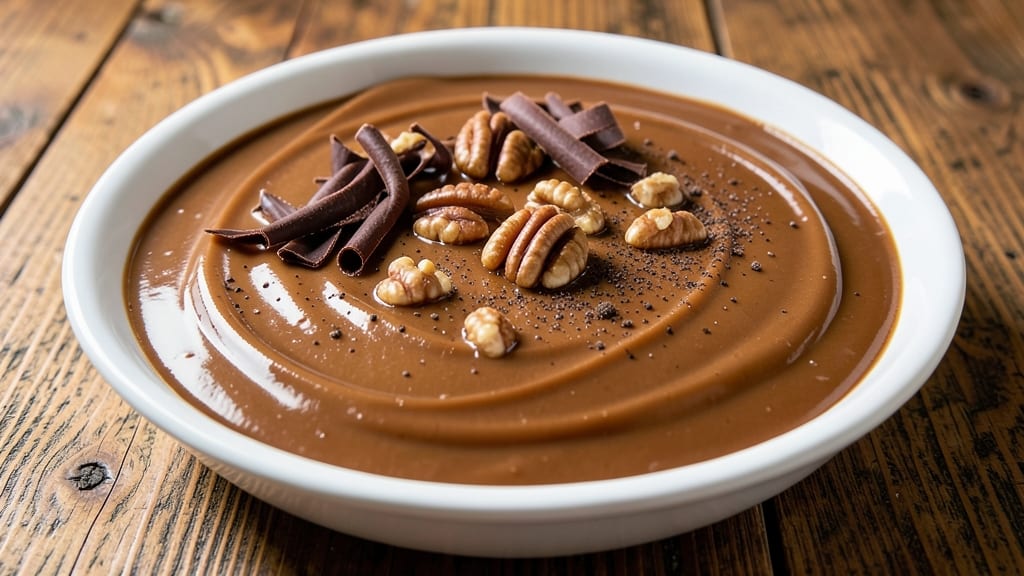
This German chocolate icing recipe with condensed milk delivers the perfect balance of rich, velvety texture and toasted coconut crunch that makes every dessert feel like a bakery masterpiece.
I developed this version after years of testing—it’s the one that finally got the swirls just right, with a consistency that’s smooth enough to pipe but sturdy enough to hold its shape.
The secret lies in tempering the condensed milk gradually to avoid graininess, a lesson I learned the hard way during my college baking experiments (let’s just say the fire alarm was involved).
The beauty of this recipe is its versatility—whether you’re drizzling it over a German chocolate cake, swirling it into cookie dough, or using it as a glaze for brownies, the flavor and texture elevate everything.
The toasted coconut adds a subtle crunch that contrasts beautifully with the silky icing, while the cocoa and coffee notes deepen the chocolate experience. What’s more, it comes together in just 15 minutes with simple ingredients you likely already have on hand.
What you’ll end up with is a luxuriously thick yet spreadable icing that clings perfectly to cakes, drizzles elegantly over cookies, or can even be rolled into fudge for a decadent treat.
The aroma of toasted coconut and warm chocolate will fill your kitchen, making it impossible to resist tasting straight from the bowl. This is the kind of icing that turns good desserts into showstoppers—restaurant-quality without the fuss.
For those who love experimenting, you can adjust the consistency to be thinner for drizzling or thicker for piping, and the recipe scales easily for large batches. Let’s get started—your desserts are about to get an upgrade.
Ingredients for german chocolate icing recipe with condensed milk
Nine simple ingredients transform into velvety German chocolate icing with perfect coconut crunch.
| Ingredient | Amount | Notes |
|---|---|---|
| Sweetened Condensed Milk 🥛 | 14 oz | High-quality brand recommended |
| Unsalted Butter 🧈 | ½ cup | Cold, cubed for easy incorporation |
| All-Purpose Flour 🌾 | 2 tbsp | Sifted for smooth texture |
| Unsweetened Cocoa Powder 🍫 | ¼ cup | Dutch-processed preferred |
| Instant Coffee Granules ☕ | 2 tbsp | Finely ground preferred |
| Vanilla Extract 🌸 | 1 tbsp | Pure, high-quality extract |
| Toasted Coconut Flakes 🥥 | ½ cup | Lightly toasted, finely chopped |
| Heavy Cream 🥛 | ¼ cup | Cold for stability |
| Salt 🧂 | ¼ tsp | Fine sea salt |
The condensed milk is the backbone here—Eagle Brand or Carnation are my go-tos, but any quality brand works. Grab the butter cold from the fridge (not fridge-temperature) and cut it into small cubes for easier blending. The cocoa powder should be Dutch-processed for that smooth, velvety finish—Hershey's Special Dark is my go-to. Toast your coconut flakes in a dry pan over medium heat until golden and fragrant—about 3-4 minutes—then chop them finely with a knife. This adds that signature crunch without overpowering the rich chocolate flavor. If you're in a rush, pre-toasted flakes from the baking aisle work too, but freshly toasted makes all the difference.
No instant coffee granules? 1 tsp finely ground coffee or 1 tsp espresso powder works in a pinch, but the granules dissolve more smoothly. Short on butter? Replace with 0.25 cup coconut oil, though the texture will be slightly lighter. The heavy cream can be swapped for half-and-half, but it won't be as stable for piping. For a dairy-free version, use coconut cream instead—just chill it overnight first to thicken it up. The vanilla extract is non-negotiable here; imitation just won't cut it. If you're feeling fancy, add a pinch of cinnamon to the mix for warmth, but keep it subtle.
This icing keeps beautifully in the fridge for up to 1 week, sealed tightly in an airtight container. For longer storage, portion it into ice cube trays, freeze, then transfer to a bag—perfect for single-use portions. To reheat, microwave in 10-second bursts until smooth, stirring between each. The texture will be slightly thicker after chilling, so let it sit at room temperature for 5-10 minutes before using. Trust me, the first time you taste this straight from the bowl, you'll want to make a double batch—it disappears fast.
Why You'll Love This Recipe
- Four-Ingredient Magic: That’s it—just condensed milk, butter, cocoa, and coffee. No measuring cups, no complicated ratios, no stress. I’ve made this icing blindfolded (okay, maybe not, but you get the idea).
- Coffee-Kissed Richness: The instant coffee granules deepen the chocolate flavor in a way store-bought icing never does. It’s like a warm hug for your taste buds—sweet, creamy, and just a hint of bitterness that makes it ridiculously good.
- Crowd-Pleaser Always: Birthday cake? Check. Dessert bar? Done. Even my picky nephew licks the bowl clean. The condensed milk keeps it lusciously thick, so it’s never too runny or too dry—just perfect for dipping, drizzling, or slathering.
- Zero-Waste Luxury: A single can of condensed milk stretches this recipe far, and the leftovers? They keep for weeks in the fridge. Honestly, I’ve used up scraps to frost forgotten cupcakes months later—still tastes fresh, still tastes like a treat. Budget-friendly and indulgent? Yes, please.
Step-by-step instructions for German chocolate icing with condensed milk
Here's how to create that signature swirled German chocolate icing with perfect texture and flavor.
Melt the Butter and Condensed Milk Together
In a medium saucepan, combine the 0.5 cup unsalted butter and 14 oz sweetened condensed milk over medium-low heat. Stir gently until the butter melts completely and the mixture reaches a gentle simmer. You'll see small bubbles forming around the edges—that's your signal to proceed.
This low-and-slow approach prevents scorching while allowing the condensed milk to fully incorporate. Keep stirring occasionally to ensure even heating. The mixture should thicken slightly as it warms, creating a smooth base for the icing. Remove from heat once it reaches 160°F—it should coat the back of a spoon but still flow freely.
Whisk in Cocoa Powder and Coffee Granules
Transfer the warm mixture to a heatproof bowl and let it cool slightly for 2-3 minutes. Add the 0.25 cup unsweetened cocoa powder and 2 tbsp instant coffee granules, then whisk vigorously until completely dissolved. The cocoa should disappear entirely, leaving a deep brown, velvety liquid.
Here's where the magic happens: the coffee granules dissolve quickly in the warm condensed milk, creating that signature German chocolate depth. If you notice any lumps, strain the mixture through a fine-mesh sieve for a perfectly smooth texture. This step is critical—uneven distribution will affect the final flavor.
Incorporate the Flour and Vanilla
In a separate bowl, whisk together the 2 tbsp all-purpose flour and 0.25 tsp salt until combined. Gradually whisk this dry mixture into the chocolate-cocoa blend, adding it in small increments to prevent lumps. Once fully incorporated, stir in the 1 tbsp vanilla extract until fully blended.
The flour acts as a natural thickener, transforming the liquid into a smooth, spreadable icing. You'll see the mixture transform from thin to thickened as the flour hydrates. If it becomes too stiff, whisk in 1-2 tablespoons of heavy cream to reach your desired consistency—it should be thick enough to hold swirls but still pipeable.
Fold in Coconut and Heavy Cream
Gently fold in the 0.5 cup toasted coconut flakes and 0.25 cup heavy cream using a spatula, being careful not to overmix. The coconut should be evenly distributed throughout the icing, with just a few visible flakes peeking through for texture. The heavy cream adds a luxurious richness and helps create that signature swirled pattern.
For the classic German chocolate look, divide the icing into two bowls. In one bowl, leave the icing as-is. In the other, fold in an extra 1-2 tablespoons of toasted coconut flakes for a more pronounced crunch. This contrast is what makes the swirled presentation so appealing. Cover both bowls with plastic wrap, pressing the wrap directly onto the surface to prevent a skin from forming.
Chill and Swirl to Perfection
Refrigerate the icing for at least 1 hour (or up to 24 hours) to allow the flavors to meld and the texture to set. The longer it chills, the thicker it becomes, making it easier to create those signature swirls. When ready to use, pipe or spread the lighter icing onto your cake layer, then top with the coconut-rich icing.
Using an offset spatula or butter knife, gently drag the spatula through the icing in a swirling motion, starting from the center and working outward. This creates the iconic marbled effect. For extra flair, sprinkle additional toasted coconut flakes on top before serving. The icing should hold its shape at room temperature for 2-3 hours, though it's best enjoyed fresh from the fridge.
Pro Tips For Making German Chocolate Icing Recipe With Condensed Milk
- Warm the condensed milk: DESCRIPTION: Dump that cold can straight into your saucepan and you’re asking for lumps. Heat the condensed milk over low heat for 3-4 minutes first—just until it’s warm to the touch—before mixing it with the butter. I learned this the hard way when my first batch looked like it had been through a blender instead of a stove.
- Whisk the butter first: DESCRIPTION: Melt the butter separately until it’s just liquid, then whisk it into the warm condensed milk. This prevents the butter from seizing up the flour later, which is how you end up with a grainy, sad icing instead of something smooth. (Yes, I’ve made that mistake more times than I’ll admit.)
- Sift the cocoa, don’t dump: DESCRIPTION: Unsweetened cocoa powder is clumpy—no matter what the bag says. Sift it directly into your mixing bowl before adding the flour. Skipping this step means you’ll have to fight lumps later, and nothing ruins a good icing faster than scraping them out with a spatula.
- Dissolve the coffee first: DESCRIPTION: Mix the instant coffee granules with 1 tablespoon of hot water before adding it to the pot. This ensures it fully incorporates instead of floating as gritty specks. (Trust me, you’ll taste the difference—like the difference between a good cup of coffee and a sad one.)
Flavor customization for these flavors
Classic Swirl Variations
For the traditional German chocolate look, divide your icing into two portions. In one bowl, leave it as-is, and in the other, fold in an extra 1-2 tablespoons of toasted coconut flakes.
Use a piping bag with a star tip to pipe the lighter icing onto your cake layer, then spread the coconut-rich icing on top. Drag an offset spatula through the icing in a swirling motion for that iconic marbled effect. 🥥
Fudge Consistency
Want to turn this icing into fudge? Reduce the heavy cream to just 2 tablespoons and increase the toasted coconut to 1 cup. After chilling, roll the mixture into small balls and let them set for 30 minutes before serving.
The result is a rich, crumbly fudge with perfect coconut crunch—ideal for gift-giving or snacking straight from the bowl.
Drizzle and Dip Style
For a thinner, drizzle-friendly icing, add an extra 2 tablespoons of heavy cream and reduce the flour to 1 tablespoon. This version is perfect for drizzling over cookies, brownies, or even pancakes.
It also works beautifully as a dip for fresh fruit like strawberries or bananas. The silky texture coats everything perfectly without being too heavy.
Spiced Variations
Add warmth with a ¼ teaspoon of cinnamon or a pinch of ground nutmeg for a cozy twist. For a tropical vibe, swap the toasted coconut for crushed macadamia nuts or toasted almonds.
These variations keep the same base recipe but introduce exciting new flavors while maintaining that signature richness.
Dairy-Free Adaptation
To make this icing dairy-free, replace the butter with ½ cup coconut oil and the heavy cream with ½ cup full-fat coconut cream (chilled overnight). The texture will be slightly lighter, but it still delivers that velvety finish.
For extra richness, add 1 tablespoon of dairy-free chocolate chips when folding in the coconut. This version works perfectly for vegan diets while keeping the same decadent flavor. 🌱
Nut-Free Option
Skip the coconut entirely and fold in ½ cup crushed graham crackers or finely chopped dates for a nut-free version. The graham crackers add a subtle sweetness and crunch, while the dates provide natural sweetness and a chewy texture.
This adaptation is perfect for those with nut allergies or anyone looking for a different texture contrast.
Nutrition facts
Frequently asked questions
Why does my German chocolate icing turn grainy?
Graininess usually happens when the condensed milk cools too quickly or isn't fully incorporated. Always warm the condensed milk and butter together over medium-low heat until it reaches 160°F—this ensures smooth blending. If lumps appear, strain the mixture through a fine-mesh sieve before adding other ingredients. Chill the icing gradually in the fridge to prevent separation.
Can I make this icing without coffee granules?
Yes! If you don't have instant coffee granules, use 1 teaspoon of finely ground coffee or 1 teaspoon of espresso powder instead. The key is to dissolve it completely in the warm condensed milk mixture. For a non-coffee version, reduce the cocoa powder to 0.2 cup and add 1 teaspoon of cinnamon for warmth. The coffee enhances the chocolate depth, but it's not essential.
How do I fix icing that's too thick or too thin?
For thick icing, whisk in 1-2 tablespoons of heavy cream to loosen it up. If it's too thin, gradually add 1 teaspoon of flour at a time while whisking. The ideal consistency should be thick enough to hold swirls but still pipeable. Let it rest for 10 minutes after adjustments—chilling thickens it further, while room temperature thins it slightly.
Can I use this icing for non-cake desserts?
This versatile icing works beautifully as a dip for fruit slices, a glaze for brownies or blondies, or a drizzle over ice cream. For cookies, spread it between layers or drizzle after baking. The coconut crunch adds texture to any dessert. Just adjust the consistency—thinner for drizzling, thicker for piping or spreading.
What’s the secret to perfect swirls?
Chill the icing for at least 1 hour before swirling to thicken it. Divide it into two bowls—one plain, one with extra coconut—and use contrasting colors for visual appeal. Pipe the lighter icing first, then spread the coconut-rich icing on top. Drag an offset spatula through the center in a circular motion, working outward. A star piping tip creates elegant patterns for cakes.