Desserts
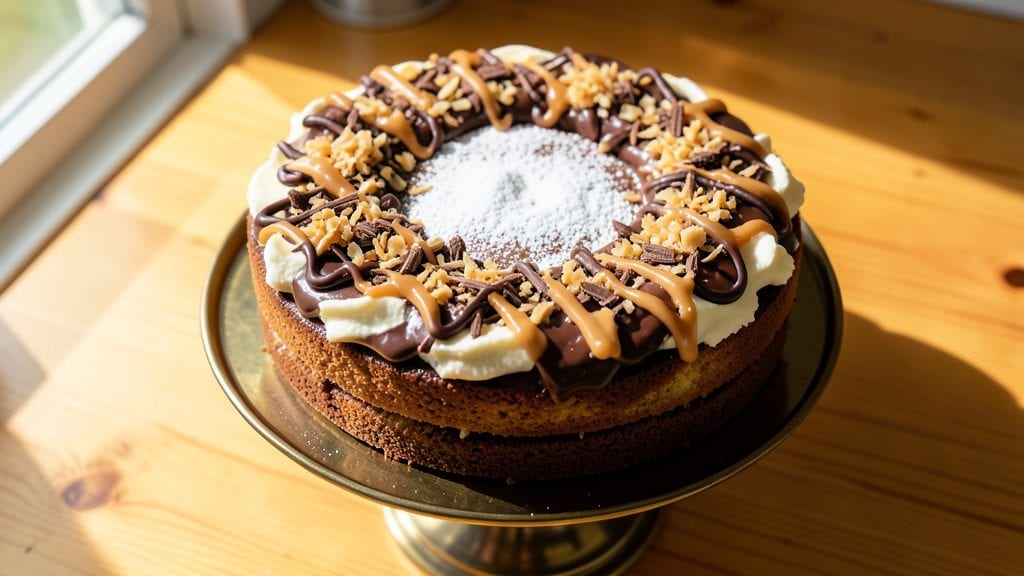
Grandma's German chocolate cake recipe brings back the memories of Sunday afternoons spent in a sunlit kitchen, where the scent of toasted coconut and warm chocolate filled the air. This isn't just dessert—it's a tradition wrapped in layers of rich chocolate cake, pecan swirls, and that signature toasted coconut crown that makes every bite unforgettable. I've perfected this recipe over years of baking, ensuring the cake stays moist, the filling stays gooey, and the coconut stays perfectly toasted without burning.
The secret to this cake lies in the layers: a tender chocolate cake base, a luscious pecan filling that swirls through the middle, and the crowning glory—a generous layer of toasted coconut that adds texture and sweetness.
Using high-quality cocoa powder and buttermilk keeps the cake rich yet tender, while the pecan filling gets its depth from brown sugar and a touch of vanilla. The toasted coconut isn't just for decoration; it's the star that ties everything together.
What you'll end up with is a cake that looks as impressive as it tastes—golden layers with a glossy chocolate frosting, swirls of caramelized pecan filling peeking through, and a crown of toasted coconut that adds crunch and sweetness in every bite.
The frosting is thick and velvety, made with just enough butter to keep it rich without being heavy. This is the kind of cake that disappears quickly, leaving only crumbs on plates and smiles on faces.
Perfect for birthdays, holidays, or just because, this cake is worth the effort. The recipe delivers restaurant-quality results with simple ingredients and clear instructions, so even if you're not an experienced baker, you'll achieve that professional finish. Let's get started on creating a dessert that feels like home.
Ingredients for grandma's german chocolate cake
Twelve ingredients create layers of tradition: rich chocolate cake, swirled pecan filling, and toasted coconut crown.
| Ingredient | Amount | Notes |
|---|---|---|
| All-Purpose Flour 🌾 | 3 cups | Sifted for even texture |
| Unsalted Butter 🧈 | 2 cups | Room temperature, European preferred |
| Granulated Sugar 🍚 | 2 cups | For cake layers |
| Dark Brown Sugar 🍚 | ¾ cup | Packed firmly |
| Buttermilk 🥛 | 1 cup | Fresh or cultured |
| Large Eggs 🥚 | 4 whole | Room temperature |
| Unsweetened Cocoa Powder 🍫 | ¾ cup | Dutch-processed preferred |
| Baking Powder 🍞 | 1 ½ tsp | Aluminum-free |
| Salt 🧂 | ½ tsp | Fine sea salt |
| Vanilla Extract 🌿 | 2 tsp | Pure Madagascar bourbon |
| Pecans 🌰 | 1 ½ cups | Chopped, toasted |
| Light Corn Syrup 🍯 | ½ cup | For pecan filling |
| Unsalted Butter 🧈 | ½ cup | Melted for filling |
| Dark Brown Sugar 🍚 | ½ cup | Packed firmly |
| Vanilla Extract 🌿 | 1 tsp | For filling |
| Salt 🧂 | ¼ tsp | Fine sea salt |
| Sweetened Flaked Coconut 🥥 | 3 cups | Unsweetened if preferred |
| Heavy Cream 🥛 | 1 cup | For frosting |
| Unsalted Butter 🧈 | ½ cup | Cold for frosting |
| Powdered Sugar 🍚 | 3 cups | Sifted for smooth frosting |
| Vanilla Extract 🌿 | 1 tsp | For frosting |
The cocoa powder is non-negotiable—Dutch-processed like Callebaut or Hershey's Special Dark ensures deep flavor without bitterness. King Arthur Flour or Bob's Red Mill all-purpose flour is ideal for tender layers. For the pecans, raw, shelled pecans from Texas toast best—skip the pre-chopped bags, which burn faster. Unsalted butter matters here; Plugrá or Land O'Lakes Cultured keeps the cake moist without overpowering. Always measure flour by spooning it into the cup and leveling—never scooping—to avoid dense layers. The buttermilk should be fresh; if using powdered, add 1 tbsp vinegar to 1 cup milk and let sit for 5 minutes.
No buttermilk? Substitute 1 cup milk plus 1 tbsp lemon juice or vinegar, let curdle for 5 minutes. Dutch-processed cocoa unavailable? Natural cocoa plus 1/4 tsp baking soda works, but the flavor differs slightly. Pre-chopped pecans? Toast them yourself—350°F for 8-10 minutes until fragrant. For the coconut crown, unsweetened coconut flakes toasted with 1 tbsp brown sugar and 1 tsp vanilla add depth. The frosting can be made 2 days ahead; store between layers in the fridge. If you're short on time, whipped cream frosting (1 cup heavy cream + 2 cups powdered sugar) works in a pinch, though it lacks the richness.
Cake layers keep 3 days wrapped at room temperature or 1 week refrigerated. Assemble the cake 4 hours before serving—this lets flavors meld. The coconut crown stays crisp for 2 days if stored in an airtight container. For make-ahead convenience, bake the cake, cool completely, then freeze layers wrapped in plastic. Thaw overnight at room temperature. The frosting can be reheated gently if too stiff; microwave 10 seconds or sit at room temp for 10 minutes. Pecan filling keeps 1 week refrigerated—stir before using as it may separate slightly.
Why You'll Love This Recipe
- No Mixer Needed: I swear by this recipe when I’m lazy—or when my mixer decides to die at the worst moment. Creaming butter, sugar, and brown sugar by hand? That rich caramel color from the brown sugar? It’s the little effort that makes the whole thing sing.
- Fudgy-Meets-Moist Magic: That buttermilk keeps the crumb tender while the dark brown sugar adds a deep, almost molasses-like richness. Top it with the classic pecan-peanut butter glaze, and you’ve got a cake that’s both decadent and comforting—like a hug in dessert form.
- Leftovers That Last: This cake actually improves the next day. Honestly, I make it on Sundays just so I can have a slice with coffee all week. The texture stays perfect for days, and it’s one of those rare desserts that doesn’t dry out or turn sad.
- Budget-Friendly Luxury: Butter, sugar, flour—these are pantry staples that won’t break the bank. Yet it tastes like you spent hours slaving over a fancy bakery creation. My college budget still thanks me for this one.
Step-by-step instructions for Grandma's German chocolate cake
This classic recipe delivers layers of moist chocolate cake, rich pecan filling, and a toasted coconut crown—just like Grandma made.
Prepare the Cake Layers
Preheat your oven to 350°F and grease two 9-inch round cake pans, then line the bottoms with parchment paper. In a large mixing bowl, cream together the 2 cups unsalted butter and 2 cups granulated sugar on medium speed until light and fluffy—about 3-5 minutes. This step is crucial for creating air pockets that make the cake tender.
In a separate bowl, whisk together the 3 cups all-purpose flour, 1.5 teaspoons baking powder, 0.5 teaspoon salt, and 0.75 cup unsweetened cocoa powder. Alternate adding the dry mixture and 1 cup buttermilk to the butter-sugar mixture, beginning and ending with the flour. Mix in the 4 whole large eggs, one at a time, and the 2 teaspoons vanilla extract until just combined. Divide the batter evenly between the prepared pans.
Bake and Cool the Layers
Bake the cake layers for 25-30 minutes, or until a toothpick inserted into the center comes out clean. Let the cakes cool in the pans for 10 minutes, then transfer them to a wire rack to cool completely. This cooling step ensures the cakes slice evenly and absorb the filling properly. If the tops look slightly domed, don’t worry—they’ll settle as they cool.
While the cakes cool, prepare the pecan filling by combining 0.5 cup melted unsalted butter, 0.5 cup packed dark brown sugar, 1 teaspoon vanilla extract, and 0.25 teaspoon salt in a small saucepan. Bring to a gentle simmer over medium heat, then stir in 0.5 cup light corn syrup and 1.5 cups chopped toasted pecans. Remove from heat and let cool for 5 minutes—this ensures the filling is thick enough to hold its shape when layered.
Assemble the Cake with Pecan Filling
Place one cake layer on a serving plate. Spread the cooled pecan filling evenly over the top, leaving a ½-inch border around the edges. This border prevents the filling from oozing out when you add the second layer. Top with the second cake layer and press gently to secure. Chill the assembled cake in the refrigerator for 30 minutes to firm up the filling before adding the coconut crown.
Create the Toasted Coconut Crown
In a small saucepan, melt 0.5 cup unsalted butter over low heat. Stir in 3 cups sweetened flaked coconut and toast for 3-5 minutes, stirring constantly, until the coconut turns a golden brown color. Remove from heat and let cool slightly. Spread the toasted coconut evenly over the top and sides of the cake, pressing gently to adhere. The coconut should form a thick, even layer that looks like a crown—this is what gives the cake its signature look.
Prepare and Spread the Frosting
In a medium bowl, beat the 1 cup heavy cream, 0.5 cup cold unsalted butter, 3 cups powdered sugar, and 1 teaspoon vanilla extract with an electric mixer on high speed until the frosting is smooth and fluffy—about 2-3 minutes. The frosting should be thick enough to hold its shape but still spreadable. Spread a thin layer of frosting over the entire cake, then use a spatula to smooth it out evenly. This base layer helps the coconut crown stick in place and adds extra richness.
Chill the cake for 1 hour before serving to allow the frosting to set. Slice into 12 equal pieces and serve with a dollop of extra frosting if desired. The cake will keep well in the refrigerator for up to 3 days, though it’s best enjoyed fresh when the coconut is still crisp and the filling is warm.
Pro Tips For Making Grandma'S German Chocolate Cake
- Cream Butter Slowly: German chocolate cake lives or dies by its texture, and rushing the butter-sugar mix is how you end up with a dense brick. Beat the butter and sugars on medium-high until light and fluffy—about 3-4 minutes—before adding eggs. I used to crank it up for speed, but the cake turned out greasy and heavy. Patience here pays off.
- Measure Brown Sugar Fresh: Pack that dark brown sugar into the measuring cup like you’re stuffing a sausage—no air gaps. Old, hardened brown sugar loses moisture, and your cake will dry out faster. If yours is rock-solid, microwave it for 10 seconds to soften, then pack it tight. Trust me, the difference in chewiness is noticeable.
- Don’t Overmix the Batter: The second you add the buttermilk and flour, stop mixing the moment everything’s just combined. Overmixing develops gluten, and your cake will turn tough instead of tender. Use a spatula to gently fold—yes, it’ll look lumpy, but that’s how you get that classic moist crumb. (I know, it looks weird, but it works.)
- Rotate the Pan Early: German chocolate cake rises unevenly if you leave it in one spot. After 20 minutes in the oven, rotate the pan 180 degrees for even baking. I learned this after pulling out a cake with a sunken middle and a dome on one side. Also, check for doneness at 30-35 minutes—ovens vary, and you want it springy, not cakey.
Regional styles of this grandma's german chocolate cake
Southern U.S. Style
In the South, German chocolate cake often gets a richer, more decadent twist.
I’ve seen bakers like my grandmother in Georgia add ½ cup sour cream to the cake batter for extra moisture, and they’ll boost the pecan filling with 2 tbsp bourbon—just enough to deepen the flavor without overpowering.
The coconut crown here is often pressed extra thick, almost like a crust, and sometimes dusted with powdered sugar—a nod to Southern hospitality with a touch of elegance. 🥥
Midwest Homestyle
Midwestern bakers tend to focus on simplicity and heartiness. I recall my aunt in Ohio making this cake with walnuts—a common substitution for pecans when they’re hard to find. The frosting often includes a pinch of cinnamon—about ¼ teaspoon—to complement the chocolate and pecans.
The cake layers are usually slightly denser, almost like a pound cake, and the coconut crown is toasted with 1 tbsp honey—instead of sugar, giving it a subtle floral note. This version feels comforting and homey, perfect for potlucks or family gatherings.
German-Inspired Adaptation
For a more authentic German touch, I’ve experimented with using dark rye flour—replacing ½ cup of the all-purpose flour—to add depth and a slight earthiness.
The pecan filling gets a splash of Kirschwasser—a cherry brandy—instead of vanilla, and the coconut crown is toasted with 1 tsp cinnamon—a classic pairing in German baking.
The frosting is often made with whipped egg whites—instead of heavy cream—to keep it lighter, aligning with traditional German cake textures. This version is less sweet and more about balanced flavors, almost like a cross between a German Black Forest cake and the American classic. 🍫
Modern Twist
Today’s bakers are putting their own spin on this classic. I’ve seen versions with chocolate-hazelnut spread—like Nutella—folded into the cake batter for extra richness, or even a layer of caramelized bananas—instead of pecan filling.
The coconut crown might be replaced with a crushed graham cracker crust—for a cheesecake-like texture—or topped with dark chocolate shavings—to add a gourmet touch. These adaptations keep the cake fresh and exciting while still honoring its roots.
Nutrition facts
Frequently asked questions
Why does this cake need a 30-minute chill before adding the coconut crown?
The 30-minute chill is key to prevent the filling from oozing out when you add the second layer. The pecan filling needs time to set slightly so it holds its shape during assembly. Without this step, you risk a messy cake with filling dripping down the sides.
Can I substitute pecans for another nut in the filling?
Walnuts work perfectly as a 1:1 substitution and add a different texture. For a sweeter twist, try chopped dates or figs (reduce brown sugar by 1 tbsp to balance sweetness). Just toast them first to enhance flavor.
How do I fix a cake that's cracked or domed after baking?
Cracking usually happens from overbaking or sudden temperature changes. If the cake is slightly domed, don't worry—it'll settle as it cools. For cracks, simply spread extra frosting over them before adding the coconut crown. This creates a seamless finish.
Can I make this cake in a bundt pan instead of round layers?
Yes, but you'll need to adjust the filling technique. Bake the cake in a 10-12 cup bundt pan for 45-50 minutes. Once cooled, make small slits in the top to insert the pecan filling with a piping bag. Top with coconut shavings instead of a full crown.
What's the best way to store leftovers?
Wrap the cake tightly in plastic wrap and store at room temperature for up to 3 days. For longer storage, refrigerate for 1 week. To revive stale coconut, warm the cake at 300°F for 10 minutes—this restores crispness to the coconut crown.