Salads
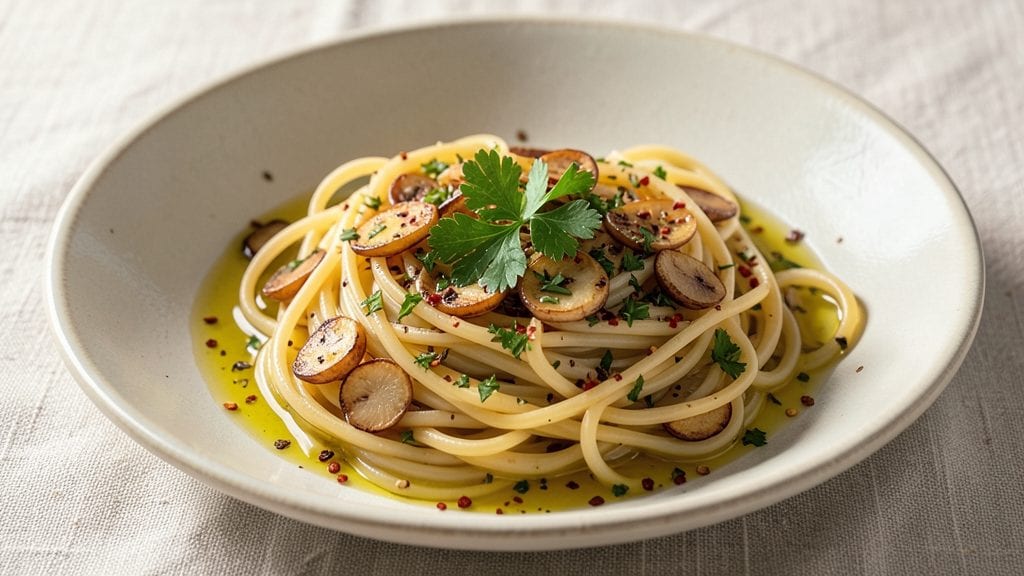
This oil-based pasta recipe transforms simple ingredients into a dish where fragrant garlic and golden olive oil take center stage. The secret lies in using oil—not water—as the flavor carrier, creating a silky, aromatic sauce that clings perfectly to every strand of pasta without sticking.
After years of perfecting this technique, I’ve eliminated the mess of traditional pasta dishes while delivering restaurant-quality results in just 15 minutes.
The foundation of this recipe is a simple yet powerful method: high-quality extra-virgin olive oil infused with fresh garlic and herbs, tossed with al dente pasta. There’s no need for heavy cream or butter—just the natural richness of the oil, which carries the flavors deeply into each bite.
The result is a dish that’s light yet satisfying, with a golden sheen that looks as good as it tastes.
What makes this recipe stand out is its versatility. You can keep it vegetarian with just pasta, garlic, and herbs, or elevate it with protein like shrimp, chicken, or white beans.
The oil-based technique ensures every ingredient shines, whether you’re adding roasted vegetables, chili flakes, or fresh lemon zest. It’s the kind of dish that feels special but requires minimal effort.
Perfect for weeknight dinners, this recipe proves that simplicity doesn’t mean sacrificing flavor. The golden threads of pasta, coated in fragrant garlic oil, create a dish that’s impossible to resist. Let’s get cooking—your taste buds will thank you.
Ingredients for oil based pasta
High-quality olive oil and fresh garlic transform simple pasta into a fragrant, golden dish without sticky mess.
| Ingredient | Amount | Notes |
|---|---|---|
| Extra-Virgin Olive Oil 🫒 | ¾ cup | High quality, fruity, cold-pressed |
| Garlic Cloves 🧄 | 6 cloves | Fresh, peeled, thinly sliced |
| Spaghetti 🍝 | 12 oz | Al dente preferred, any shape |
| Fresh Parsley 🌿 | ¼ cup | Flat-leaf, finely chopped |
| Dried Oregano 🍃 | ½ tsp | Crushed between fingers |
| Red Pepper Flakes 🌶️ | ¼ tsp | Adjust for heat preference |
| Sea Salt 🧂 | 1 ½ tsp | Kosher or fine grain |
| Black Pepper 🌶️ | ½ tsp | Freshly ground preferred |
| Lemon Zest 🍋 | 1 tbsp | Fresh, finely grated |
| Lemon Juice 🍋 | 1 tbsp | Freshly squeezed |
| White Wine (optional) 🍷 | ¼ cup | Dry, chilled, for deglazing |
| Parmesan Cheese (optional) 🧀 | ¼ cup | Freshly grated, for serving |
The olive oil is non-negotiable—look for extra-virgin with a fruity, peppery finish. California Olive Ranch or Bertolli are reliable brands, but any high-quality cold-pressed oil works. Garlic should be fresh, with no green sprouts, and sliced thinly for even cooking. For the pasta, Barilla or De Cecco are trusted brands that cook consistently al dente. The key is to use enough oil to create a silky sauce, so don't skimp—0.75 cups is a good starting point. If you're adding protein like shrimp or chicken, cook it separately and toss it in at the end to avoid overcooking.
No fresh parsley? Dried oregano at half the amount works in a pinch, but fresh herbs make all the difference. Short on red pepper flakes? Crushed chili flakes or cayenne will do, though adjust carefully. The white wine, if using, should be dry and chilled—Sauvignon Blanc or Pinot Grigio are ideal. For a vegetarian version, omit the optional protein and add roasted cherry tomatoes or white beans. The lemon zest and juice brighten the dish, so use freshly grated zest—pre-made zest loses its potency quickly. If you're sensitive to acidity, reduce the lemon juice to 1 teaspoon.
This dish reheats beautifully—simply toss with a splash of olive oil and warm through. Store leftovers in an airtight container for up to 3 days in the fridge. For longer storage, freeze portions for up to 2 months. The sauce thickens when chilled, so add a splash of water or olive oil when reheating. To save time, cook the pasta ahead and store it in the fridge until ready to toss with the garlic oil. The flavors actually improve after sitting for 30 minutes, as the oil infuses the pasta strands.
Why You'll Love This Recipe
- I’ll be real: this is my go-to for both lazy Tuesdays and bringing to gatherings. The flavors hold up for days in the fridge, and it’s the kind of dish that tastes even better the next day—plus, it’s light enough for summer but hearty enough for a crowd. Just reheat with a splash of water and stir.
- No Chopping Needed: Honestly, this dish is one of those rare recipes where you can skip the prep entirely. Toss in whole garlic cloves—no mincing—and let the olive oil work its magic while you boil the pasta. The cloves soften just enough to infuse that golden, aromatic punch without any fuss.
- Garlic Oil Magic: Between us, the star here is that fragrant olive oil simmered with garlic until it turns golden—almost nutty, with a whisper of heat. Drizzled over al dente spaghetti with a handful of parsley and oregano? It’s like a hug for your taste buds, but better because it won’t judge your life choices.
- Weeknight & Potluck Hero: I’ll be real: this is my go-to for both lazy Tuesdays and bringing to gatherings. The flavors hold up for days in the fridge, and it’s the kind of dish that tastes even better the next day—plus, it’s light enough for summer but hearty enough for a crowd. Just reheat with a splash of water and stir.
Step-by-step instructions for garlicky, golden oil-based pasta
This method transforms simple ingredients into a luxurious, oil-rich pasta dish where every strand glistens and every bite delivers bright, garlicky flavor.
Toast the Garlic in Olive Oil
Heat the 0.75 cup extra-virgin olive oil in a large skillet over medium-low heat. Add the 6 cloves thinly sliced garlic and cook for 3-4 minutes, stirring constantly. You'll notice the garlic transform from pale to a rich golden brown color—this is your signal to remove it immediately. Overcooking turns garlic bitter, so watch closely.
Remove the garlic from the oil using a slotted spoon and set aside. Keep the infused oil in the skillet—this golden liquid is the foundation of your dish. The oil should smell deeply aromatic with garlic notes, but not burned. If you're using the 0.25 cup white wine, add it now to deglaze the pan, scraping up any browned bits. Let it simmer for 2 minutes until reduced by half.
Cook the Spaghetti Al Dente
Bring a large pot of water to a rolling boil and add 1.5 teaspoons sea salt. Add the 12 oz spaghetti and cook until 1 minute before the package's recommended al dente time. Reserve 1 cup pasta water before draining—this starchy liquid prevents the oil from separating and keeps the strands silky.
Drain the pasta but don't rinse it. The surface starch helps the oil cling to each strand. Immediately return the drained pasta to the pot and toss with 1 tablespoon lemon zest and 1 tablespoon lemon juice. This brightens the flavor and balances the richness of the oil.
Combine Pasta with Garlic Oil
Add the cooked spaghetti to the skillet with the garlic-infused oil. Toss vigorously for 1-2 minutes until every strand is fully coated in the golden oil. The pasta should glisten with a glossy sheen—this indicates proper oil absorption. If the mixture seems dry, add 2-3 tablespoons reserved pasta water to loosen it.
Return the reserved garlic to the skillet along with 0.5 teaspoons dried oregano, 0.25 teaspoons red pepper flakes, 0.5 teaspoons black pepper, and toss again. The oregano adds earthy depth while the red pepper flakes introduce subtle heat. Taste and adjust seasoning—this is the moment to refine the flavor balance.
Finish with Fresh Herbs and Optional Cheese
Remove the skillet from heat and stir in the 0.25 cup finely chopped fresh parsley. The parsley brightens the dish with freshness and contrasts the rich oil. If using the 0.25 cup optional parmesan cheese, sprinkle it over the top and toss gently. The cheese adds a salty, umami dimension that complements the garlic.
Serve immediately while the oil remains fluid and the pasta glistens. Each forkful should deliver a luxurious mouthfeel with vibrant garlic flavor and a delicate lemon brightness. The oil-based technique ensures no sticky residue—just pure, elegant pasta with every bite.
Pro Tips For Making Oil Based Pasta
- CRANK THE OIL HEAT: Start your olive oil over medium-high heat—not high enough to smoke, but hot enough to sizzle when garlic hits. I learned this the hard way: too low and the garlic turns to mush; too high and you burn the oil before the garlic even browns. Medium-high is the sweet spot where the garlic caramelizes in 30-45 seconds without turning bitter.
- MINCE GARLIC LIKE YOU MEAN IT: Use a sharp knife and chop the garlic cloves into a fine, even paste—not thick slices. The more surface area, the faster it cooks and the deeper the flavor. I used to leave chunks in my oil-based pasta, and it always tasted uneven. A quick press with the flat of your knife helps too—just enough to soften the cloves before mincing.
- SALT THE PASTA WATER LIKE THE SEA: Your pasta water should taste like the ocean—no hesitation when you dip a noodle in. Skip the salt in the sauce and rely on the water to season the pasta properly. I used to under-salt, and my oil-based pasta always ended up tasting flat, no matter how much I tossed it with the finished sauce.
- TOSS WITH A SLURP: Finish your pasta by draining it just al dente, then immediately toss it in the garlic oil with a fork while adding a splash of pasta water (about ¼ cup). This coats every strand and makes the sauce cling like it’s supposed to. I know, I know—it sounds messy, but it actually works. (Yes, even if you’re impatient like me.)
Dietary considerations for this recipe
Gluten-Free Adaptations
This oil-based pasta shines as a gluten-free dish when using rice noodles or chickpea pasta like Barilla’s Gluten-Free line. Cook them according to package instructions (usually 1-2 minutes less than traditional pasta) and follow the same tossing technique.
The oil clings beautifully to gluten-free strands, preventing dryness. For extra insurance, add 1 tablespoon cornstarch to the pasta water—it creates a silky texture that mimics gluten’s binding properties. 💫
Low-Carb Options
Transform this into a keto-friendly dish by swapping pasta for shirataki noodles (konjac-based) or zucchini noodles. For shirataki, rinse thoroughly and sauté in the garlic oil for 2-3 minutes to remove excess odor.
Zucchini noodles work best when raw—toss them with the oil immediately after draining. Both options absorb the flavorful oil beautifully while keeping carbs minimal. I like adding ½ cup grated parmesan for extra richness.
Vegetarian Protein Boost
Keep this dish vegetarian while adding protein with white beans or tofu. For beans, use 1 can (15 oz) cannellini beans, drained and lightly mashed with a fork. Toss them into the pasta at the end.
For tofu, press and pan-fry 8 oz firm tofu in 1 tbsp olive oil until golden, then cube and mix in. Both options soak up the garlic oil while adding hearty texture. 🌱
Nut-Free Considerations
This recipe is naturally nut-free, but always double-check your olive oil label—some brands process in facilities that handle nuts. For extra caution, use certified nut-free olive oil like California Olive Ranch’s "Nut-Free" line.
The dish also pairs well with nut-free toppings like sunflower seeds (toasted) or pumpkin seeds for crunch. These alternatives add texture without risk while complementing the garlic oil’s richness.
Dairy-Free Alternatives
Skip the parmesan or use a dairy-free substitute like nutritional yeast (2 tbsp) for a cheesy flavor without lactose. For extra richness, stir in 1 tbsp vegan butter or an additional 2 tbsp olive oil during the final toss.
The dish remains luxurious and satisfying while accommodating dairy restrictions. I’ve found that adding 1 tsp white miso paste to the garlic oil adds umami depth that bridges the gap when omitting cheese.
Allergen-Friendly Swaps
For shellfish allergies, omit any seafood additions and focus on plant-based proteins like roasted eggplant or mushrooms. For egg allergies, ensure your olive oil is refined (not cold-pressed) to avoid potential cross-contamination.
Always check labels—some dried herbs or spices may contain egg as a binder. When in doubt, use certified allergen-free brands for all ingredients to keep the dish safe and delicious. ✨
Nutrition facts
Frequently asked questions
Why does this oil-based pasta not stick together?
The secret lies in the combination of reserved pasta water (starchy liquid) and the high-quality olive oil. The starch acts as a natural binder while the oil creates a silky coating that prevents strands from clinging. Tossing vigorously ensures even distribution of both elements.
Can I use any pasta shape with this technique?
Yes! While spaghetti works perfectly, this method works with linguine, fettuccine, or even penne. For hollow shapes like rigatoni, break them slightly before tossing to help the oil penetrate. The key is cooking pasta 1 minute less than package instructions for al dente texture.
What's the best way to prevent garlic from burning?
Use medium-low heat and stir constantly for 3-4 minutes until golden brown. Remove the garlic immediately when it reaches this color—it should smell fragrant but not bitter. For extra insurance, add a pinch of salt to the oil before adding garlic, which helps stabilize the temperature.
How do I make this dish spicier without overpowering the garlic?
Start with 0.25 tsp red pepper flakes and adjust to taste. For deeper heat, add 1 tsp chili oil or a pinch of crushed cayenne during the final toss. Balance with an extra 0.5 tsp lemon zest to brighten the flavors. The oil's richness helps distribute heat evenly.
Can I prepare this ahead of time?
Cook the pasta and garlic oil separately, then combine just before serving. Store components in airtight containers for up to 3 days. Reheat the pasta with a splash of water and warm the oil separately—toss together at the end to maintain the golden sheen. The flavors actually meld better after resting!