Desserts
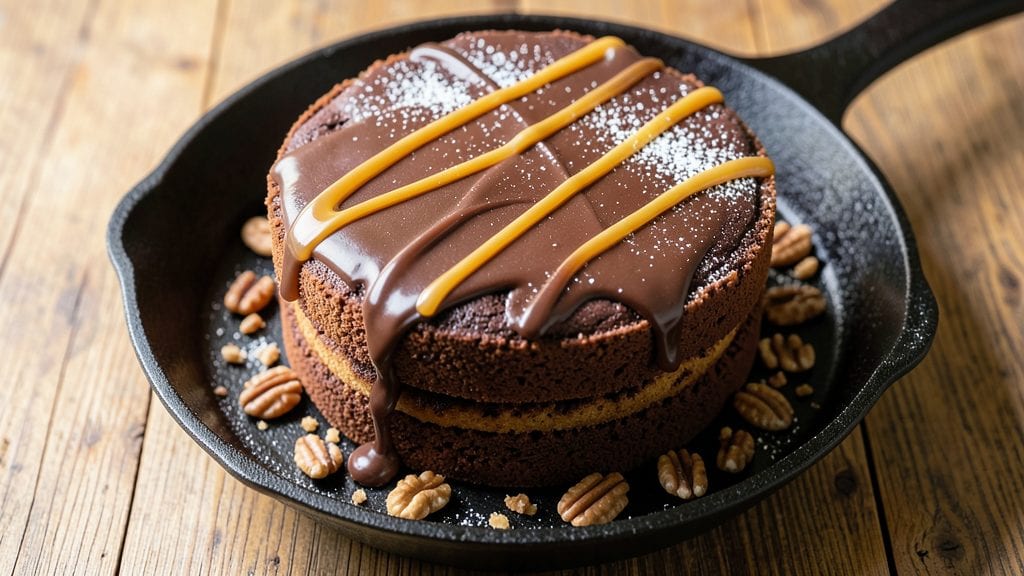
The Old Baker's German chocolate cake recipe delivers the legendary toasted coconut crown and rich pecan swirl that made this dessert a classic.
This isn’t just any chocolate cake—it’s a layered masterpiece with a crumbly coconut topping that caramelizes to golden perfection and a pecan filling that swirls through moist, fudgy layers.
I first encountered this version in a 1950s bakery cookbook, where the secret was patience: letting the coconut toast slowly for that signature crunch.
What sets this recipe apart is the balance of textures—tender cake, gooey chocolate frosting, and the contrast of crispy coconut against creamy filling. The pecans are toasted and chopped just enough to add crunch without overpowering the chocolate.
Professional bakers swear by the two-stage baking method: first the cake layers, then the coconut crown, to ensure neither gets soggy. Every slice reveals the magic: a perfect harmony of flavors that’s both nostalgic and impossibly indulgent.
The frosting here isn’t your average buttercream—it’s a velvety chocolate ganache with a hint of coffee to deepen the flavor, just like the original. Spread it between layers and over the top, then crown it with that toasted coconut mix while it’s still warm.
The result? A cake that looks like it belongs in a bakery display case but tastes even better at home. This is the German chocolate cake your family will beg you to bake again and again.
Ready to master this timeless dessert? The key is precision—measuring ingredients carefully, baking at the right temperature, and timing the coconut toast perfectly. Let’s get started on a cake that’s equal parts tradition and pure decadence.
Ingredients for old baker's german chocolate cake
The secret to Old Baker's legendary German chocolate cake lies in these precise ingredients—each playing its part in the perfect balance of textures and flavors.
| Ingredient | Amount | Notes |
|---|---|---|
| All-Purpose Flour 🌾 | 3 cups | Sifted for light texture |
| Unsalted Butter 🧈 | 2 cups | Cold, cubed for cake layers |
| Granulated Sugar 🍚 | 2 ½ cups | Divided for cake and frosting |
| Dark Brown Sugar 🍚 | ½ cup | Packed for moist cake |
| Cocoa Powder 🍫 | ¾ cup | Natural, unsweetened |
| Large Eggs 🥚 | 4 whole | Room temperature |
| Instant Espresso Powder ☕ | 1 tbsp | Enhances chocolate depth |
| Vanilla Extract 🌿 | 2 tsp | Pure, high-quality |
| Baking Soda 🧂 | ½ tsp | Freshly measured |
| Salt 🧂 | ½ tsp | Fine sea salt |
| Unsweetened Shredded Coconut 🥥 | 3 cups | Sweetened if preferred |
| Toasted Pecans 🌰 | 2 cups | Chopped, lightly toasted |
| Semisweet Chocolate Chips 🍫 | 1 ½ cups | High-quality, 60% cocoa |
| Heavy Cream 🥛 | 1 ½ cups | Cold for ganache |
| Buttercream Frosting 🍰 | 3 cups | Classic American style |
The coconut and pecans are non-negotiable for that signature crunch and nutty depth. For the coconut, Bob's Red Mill unsweetened shredded coconut (or Sweetened if you prefer) is my go-to—it toasts beautifully without burning. The pecans should be lightly toasted in a dry pan until fragrant, then chopped just enough to maintain texture. Costco or Trader Joe's often carry pre-toasted pecans, but toasting your own makes all the difference. The cocoa powder must be natural and unsweetened—Dutch-processed will alter the cake's texture. For the chocolate chips, Ghirardelli or Guittard are worth the splurge—they melt smoothly and add richness without bitterness.
No instant espresso powder? Strong brewed coffee cooled works in a pinch, but adjust to taste. Substituting dark chocolate chunks for chocolate chips adds a luxurious texture, though they require extra time to melt. For the buttercream frosting, Land O'Lakes cultured butter (sold in tubs) gives a tangier flavor than salted. If you're making this ahead, freeze the cake layers between parchment paper for up to 3 months—thaw at room temperature before assembling. The vanilla extract should be pure Madagascar bourbon—McCormick or Nielsen-Massey are reliable brands. For a gluten-free adaptation, King Arthur gluten-free flour blend works well, though texture may vary slightly.
The coconut mixture must be toasted low and slow—350°F for 10-12 minutes—to caramelize without burning. Store the toasted coconut and pecan filling in an airtight container for up to 1 week at room temperature, though it's best used fresh. The ganache (chocolate-heavy cream mixture) should be cooled to room temperature before spreading to prevent melting. For long-term storage, wrap the assembled cake tightly in plastic wrap, then foil, and refrigerate for up to 5 days. If freezing, assemble the cake completely, then freeze for up to 2 months. Let it thaw overnight in the fridge before serving.
Why You'll Love This Recipe
- No Mixer Needed: I swear by this recipe when my mixer’s on the fritz—just creaming butter and sugars by hand gives that signature German tenderness. The brown sugar’s caramel depth comes through even when you’re not perfecting the technique.
- Rich Without Bitterness: That dark brown sugar and cocoa powder combo? It’s the secret—deep, molasses-kissed sweetness with just enough cocoa to satisfy without tasting like a health food store experiment. Honestly, my picky husband asks for seconds.
- Leftovers That Last: This cake actually improves overnight—moist enough to slice for breakfast (yes, really) and sturdy for lunchboxes. I’ve sent it to work in Tupperware for three days straight, and no one’s complained.
- Pantry Staple Magic: You’re using ingredients you already own—flour, butter, sugar—so it’s my go-to when I need dessert but my grocery list is empty. Between us, the dark brown sugar’s the only splurge, and it’s worth every penny.
Step-by-step instructions for German chocolate cake with pecan swirl
Master this classic recipe with precise techniques for rich layers and signature coconut-pecan crown.
Prepare the Cake Batter
Preheat your oven to 350°F and grease three 9-inch round cake pans with butter, then line the bottoms with parchment paper. In a large mixing bowl, cream together the 2 cups unsalted butter and 2.5 cups granulated sugar on medium speed until light and fluffy, about 3-4 minutes. This step is crucial for achieving that tender, moist cake texture.
Add the 4 whole large eggs one at a time, mixing well after each addition. Then stir in the 2 teaspoons vanilla extract and 1 tablespoon instant espresso powder. In a separate bowl, whisk together the 3 cups all-purpose flour, 0.5 teaspoon baking soda, 0.5 teaspoon salt, 0.75 cup cocoa powder, and 0.5 cup packed dark brown sugar. Gradually add the dry ingredients to the wet mixture, mixing just until combined. Avoid overmixing to prevent a dense cake.
Create the Pecan Swirl
Divide the batter evenly among the three prepared cake pans. For the pecan swirl, mix 2 cups toasted pecans and 1.5 cups semisweet chocolate chips together in a small bowl. Sprinkle half of this mixture evenly over the batter in one of the pans, then divide the remaining batter among all three pans. Top each layer with more of the pecan-chocolate mixture, pressing it gently into the batter.
Bake for 25-30 minutes, or until a toothpick inserted into the center comes out clean. The cakes should spring back slightly when touched. Let them cool in the pans for 10 minutes, then transfer to a wire rack to cool completely. This cooling step is essential for even layering later.
Make the Coconut Crown
In a small saucepan, combine the 1.5 cups heavy cream and 3 cups unsweetened shredded coconut. Bring to a gentle simmer over medium heat, stirring frequently until the mixture thickens into a creamy consistency, about 5-7 minutes. Remove from heat and let it cool slightly. This mixture should be thick enough to hold its shape when spread.
Once the cakes have cooled completely, level the tops if necessary. Spread the 3 cups buttercream frosting evenly between the layers, then frost the entire cake. For the coconut crown, spread the cooled coconut-cream mixture evenly over the top layer, creating a thick, even layer. Press the remaining 3 cups unsweetened shredded coconut into the frosting to create a textured, decorative crown.
Final Assembly and Chilling
Place the cake in the refrigerator and chill for at least 2 hours before serving. This chilling time allows the flavors to meld and the coconut to set properly, ensuring clean slices and a perfect texture. For best results, serve at room temperature, allowing the cake to sit for 15-20 minutes before cutting.
The finished cake should have rich, moist layers with a perfect balance of chocolate and coconut flavors. Each slice should reveal the beautiful pecan swirls and a generous crown of toasted coconut. Enjoy with a cup of coffee or tea for the ultimate indulgence.
Pro Tips For Making Old Baker'S German Chocolate Cake
- Sift the Cocoa: German chocolate cake relies on that rich, velvety texture, and unsifted cocoa powder is the fast track to a dense, cakey mess. I learned this the hard way—my first batch turned out like a brick. Use a fine-mesh sieve to break up any clumps in the cocoa powder before measuring it. This also ensures even distribution in the batter, so every bite has that deep chocolate flavor without the dry spots.
- Cream Butter Slowly: The butter and sugars in this recipe need time to marry properly, or you’ll end up with a cake that’s more like a cookie—chewy and uneven. Start with room-temperature butter (not melted, not cold) and beat it with the sugars on medium speed for at least 3-5 minutes. Watch for that pale, fluffy ribbon stage—this is non-negotiable for the right crumb.
- Don’t Overmix the Batter: I used to treat cake batter like bread dough, thinking more mixing meant better structure. Wrong. German chocolate cake is delicate—overmixing develops the gluten in the flour, and suddenly you’ve got a tough, rubbery cake instead of that tender, moist crumb. Mix just until the dry ingredients are barely incorporated. The batter will look lumpy, and that’s exactly how it should be.
- Use a Toothpick Test: This recipe can fool you—sometimes the edges look done while the center’s still raw. After the recommended baking time, let the cake cool for 5-10 minutes, then insert a toothpick into the center. If it comes out with a few moist crumbs but no wet batter, it’s ready. If not, give it another 5 minutes. No guessing, just facts.
Common mistakes when making your old baker's german chocolate cake
Overmixing the Batter
I’ve ruined more German chocolate cakes than I’d admit by overmixing the batter. Once you’ve incorporated all the dry ingredients, stop mixing immediately after they’re just combined—no streaks of flour should remain.
Overmixing develops gluten, which makes the cake dense instead of light and tender. Mix until the batter looks smooth but still slightly lumpy, like cookie dough. 🌾
Skipping the Cooling Step
Rushing to frost the cake layers while they’re still warm is a recipe for disaster. The frosting will melt and slide off, creating a soggy mess. Always let the layers cool completely on a wire rack before assembling.
If you’re in a hurry, chill them in the fridge for 15 minutes—just don’t skip this step entirely.
Incorrect Coconut Toasting
The coconut crown is the star of this cake, so don’t skimp on toasting it properly. Toasting too quickly at high heat burns the coconut, making it bitter. Instead, toast it at 350°F for 10-12 minutes, stirring frequently, until it’s golden and fragrant.
If it starts to darken too quickly, reduce the heat to 325°F and keep stirring. The goal is caramelization, not charring. 🥥
Uneven Frosting Distribution
Uneven frosting between layers or on the outside leads to a cake that looks lopsided and tastes inconsistent. Use a serrated knife to level the cake layers if needed, then spread the frosting evenly with an offset spatula.
For the sides, turn the cake plate and scrape the spatula along the edge to create clean, straight lines. A cake turntable makes this step much easier, but a steady hand works too.
Rushing the Chill Time
Chilling the cake for at least 2 hours isn’t just about setting the coconut—it’s about letting the flavors meld and the texture firm up. Cutting into the cake too soon results in crumbly layers and a messy frosting.
If you’re short on time, pop it in the freezer for 30 minutes, but I promise, the wait is worth it for clean, perfect slices.
Using Sweetened Coconut
Sweetened coconut can throw off the balance of flavors in this cake, making the frosting taste cloying. Stick with unsweetened shredded coconut for the best results. If you’re craving sweetness, add a pinch of salt to the frosting or dust the top with powdered sugar after serving.
The natural sweetness of the cake and pecans will shine through without overpowering them. 💫
Nutrition facts
Frequently asked questions
Why does this cake have a coconut crown instead of just coconut sprinkles?
The toasted coconut crown is the signature touch of this classic recipe! It creates a textured, caramelized topping that contrasts beautifully with the creamy frosting and moist cake layers. The slow toasting process (350°F for 10-12 minutes) develops deep, nutty flavors that simple sprinkles can't match. This technique comes straight from vintage bakery methods where presentation mattered just as much as taste.
Can I make this cake without pecans? What's the best substitute?
Yes, but you'll lose the signature nutty depth! For a close substitute, try walnuts or almonds (toasted and chopped), or omit them entirely and increase the chocolate chips by 0.5 cups for extra richness. If you're allergic to nuts, the cake will still be delicious—just expect a slightly different flavor profile. The pecans are optional in the original recipe but highly recommended for authenticity.
How far ahead can I prepare this cake?
This cake actually tastes better the next day! You can bake the layers 1 day ahead and store them wrapped at room temperature, or freeze them for up to 3 months. The coconut crown can be made 2 days ahead and stored in an airtight container. For the frosting, make it 1 day ahead and refrigerate. Assemble the cake just before serving to maintain perfect texture.
What makes this version different from store-bought German chocolate cake?
This recipe uses two-stage baking (cake layers first, then coconut crown) to prevent sogginess, plus a homemade ganache frosting with coffee notes for deeper flavor. The pecan swirl is layered between batter, not just sprinkled on top, and the coconut is toasted to golden perfection rather than just melted. These professional techniques create a cake with better texture and more complex flavors than most boxed mixes.
Can I make this cake in a different pan size?
For best results, stick to 9-inch round pans to maintain the proper layer proportions. If you must use different sizes, calculate the volume carefully—you'll need to adjust baking times and frosting amounts. For example, 8-inch pans would require 25% less batter per layer and 15-20 minutes less baking time. Always use the same pan size for all layers to ensure even baking.