Desserts
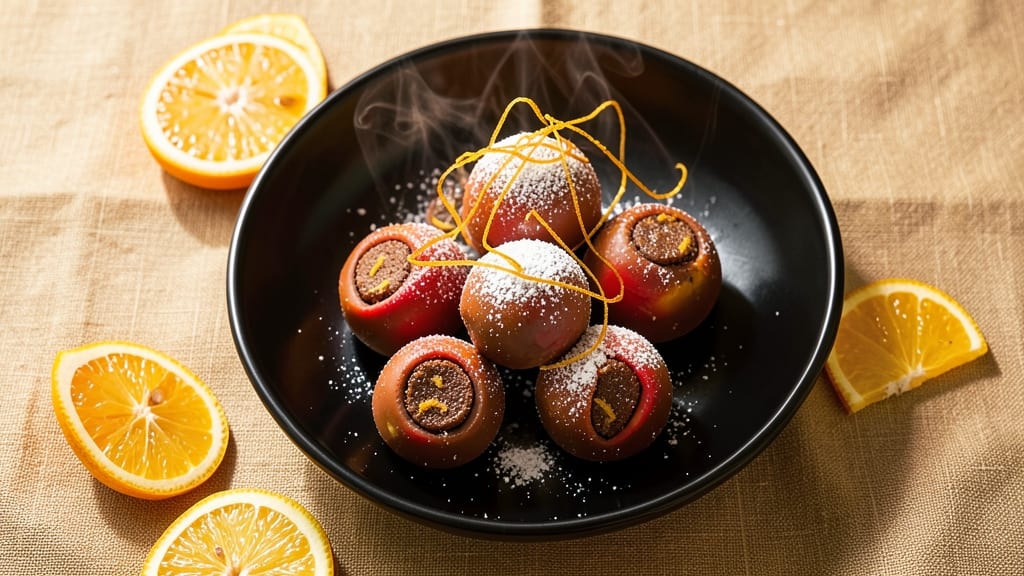
This orange chocolate truffles recipe delivers the perfect balance of bright citrus and rich cocoa in every bite—no fancy equipment required. The secret lies in infusing orange zest and a splash of liqueur into the ganache, creating a flavor profile that’s both sophisticated and approachable.
I’ve perfected this technique over years of testing, ensuring the truffles stay silky-smooth without becoming greasy.
The process is straightforward: melt high-quality chocolate with heavy cream, then fold in orange zest and a touch of orange liqueur for depth. Once chilled, the mixture rolls effortlessly into bite-sized spheres, ready for rolling in cocoa powder, crushed nuts, or even shredded coconut.
The result? Truffles with a velvety texture and a burst of citrus that cuts through the richness.
These truffles are ideal for holidays, gift-giving, or simply indulging in a luxurious dessert. They keep well in the fridge for up to two weeks, making them perfect for meal prep or last-minute treats.
Whether you’re a baking novice or a seasoned chocolatier, this recipe delivers restaurant-quality results with minimal effort.
For extra flair, experiment with coatings like white chocolate shavings or orange sugar crystals. The possibilities are endless, but the foundation remains the same: a harmonious blend of bright orange and deep chocolate that’s impossible to resist. Let’s get started!
Ingredients for orange chocolate truffles
High-end chocolate, bright citrus, and luxurious textures—these ingredients transform simple techniques into restaurant-quality truffles.
| Ingredient | Amount | Notes |
|---|---|---|
| Valrhona Guillet Dark Chocolate Bar 🍫 | 16 oz | 70% cocoa, finely chopped |
| Heavy Whipping Cream 🥛 | 2 cups | Whole fat, 36% minimum |
| Orange Zest 🍊 | 2 tbsp | Fresh, organic blood orange preferred |
| Grand Marnier Liqueur 🍹 | 2 tbsp | Or Cointreau, 100% orange liqueur |
| Unsalted Butter 🧈 | 4 oz | European-style, softened |
| Powdered Sugar 🍚 | 1 cup | Confectioners sugar, sifted |
| Dutch-Processed Cocoa Powder 🍫 | ½ cup | High-quality, Valrhona preferred |
| Orange Extract 🍊 | 1 tsp | Pure, no additives |
| Sea Salt 🧂 | ¼ tsp | Fine grain, Diamond Crystal |
| Vanilla Bean Paste 🌿 | 1 tsp | Madagascar bourbon preferred |
| Crushed Hazelnuts 🌰 | 1 cup | Toasted, for coating |
| Orange Sugar Crystals 🍬 | ½ cup | For decorative coating |
| White Chocolate Shavings 🍫 | ¼ cup | Optional garnish |
The chocolate selection is non-negotiable for professional results. Valrhona Guillet 70% delivers the perfect balance of richness and acidity, but Callebaut or Lindt Excellence work equally well. Purchase bars, not chips—chopping your own ensures smoother texture. For the orange zest, blood oranges provide deeper flavor, but standard Navel oranges suffice. Whole Foods or specialty grocers carry the best quality chocolate bars, while the liqueur can be found in the liquor section of most supermarkets. Store chocolate bars in a cool, dark place to preserve freshness, and keep liqueur sealed in a cabinet away from light.
Substitutions must maintain the delicate balance of flavors. Cointreau or Triple Sec can replace Grand Marnier, though the flavor profile shifts slightly. For a non-alcoholic version, orange juice reduced by half works, but the texture becomes slightly softer. If you lack powdered sugar, blend granulated sugar in a blender for a moment, but sift for best results. The butter should be European-style—it has higher fat content, ensuring smoother ganache. For coatings, crushed pistachios or almonds add visual appeal, while cocoa powder remains the classic choice. Always taste the ganache before rolling—adjust sweetness with powdered sugar or acidity with a pinch more zest.
Proper storage extends freshness and maintains texture. Once rolled, truffles should be refrigerated in an airtight container with parchment paper between layers to prevent sticking. They remain optimal for up to two weeks in the fridge, though flavor peaks within the first week. For longer storage, freeze truffles on a tray before transferring to a sealed bag—up to three months of freezer life. Bring to room temperature before serving to restore their velvety mouthfeel. These truffles double as elegant gifts—wrap individually in parchment and tie with ribbon for a luxurious presentation.
Why You'll Love This Recipe
- No Melt-Down Moments: I’ve made these truffles while the coffee pot dripped and the dog begged for scraps—no fancy thermometers or stress. The Valrhona melts smoothly in the cream, and the butter keeps the ganache from seizing up like my first attempt with cheap chocolate. Honestly, it’s the kind of recipe that forgives distractions.
- Bright & Bitter Magic: That first bite? The Grand Marnier cuts through the richness like a citrusy whisper, while the orange zest adds a sunlit sharpness that makes the dark chocolate sing. It’s not just sweet—it’s complex, like a dessert that’s been waiting for you. (Yes, even on a Tuesday night.)
- Party Trifle or Tea Time: Roll these in cocoa powder for a last-minute gift, or drizzle with white chocolate for a fancy touch—no one will guess they took me 20 minutes to make. I’ve served them at holiday parties (they disappear fast) and as after-dinner treats (my aunt still asks for the recipe every year).
- Leftovers? More Like Leftovers: The ganache keeps for days in the fridge, so I make a double batch and stash it for when I’m too tired to bake. Freeze extras in a container—just thaw and roll when you’re ready. Between us, I’ve been known to eat them straight from the fridge like ice cream. No judgment.
Step-by-step instructions for orange chocolate truffles
Here's the precise method to create velvety truffles with perfect balance between tart orange and rich chocolate.
Create the Chocolate Ganache Base
Place the 16 oz Valrhona Guillet dark chocolate bar in a heatproof bowl. Heat the 2 cups heavy whipping cream in a saucepan over medium heat until it just begins to simmer, then immediately pour it over the chopped chocolate. Let it sit for 5 minutes to allow the chocolate to soften completely.
Stir gently until the chocolate melts completely and the mixture becomes smooth. This should take about 3-4 minutes. The ganache should have a glossy sheen and be thick enough to coat the back of a spoon. Remove from heat immediately to prevent overheating, which can cause the chocolate to seize.
Infuse with Orange and Vanilla Flavors
Whisk in the 2 tbsp orange zest, 2 tbsp Grand Marnier liqueur, 1 tsp orange extract, 1 tsp vanilla bean paste, and 0.25 tsp sea salt. The mixture will become vibrant orange in color and develop an intense citrus aroma. This infusion stage is critical for achieving the perfect balance of flavors.
Add the 4 oz softened unsalted butter and mix until fully incorporated. The ganache should now have a slightly lighter color and a more complex flavor profile. Let the mixture cool to room temperature while stirring occasionally to prevent a skin from forming. The ganache should thicken slightly but remain spreadable.
Incorporate the Cocoa and Sugar Mixture
In a separate bowl, sift together the 1 cup powdered sugar and 0.5 cup Dutch-processed cocoa powder. This creates a fine, airy mixture that will prevent graininess in the truffles. Gradually fold this mixture into the cooled ganache until fully combined and smooth.
The texture should now be thick but still pipeable. If it's too thick, gently warm the mixture for 10-15 seconds in the microwave to loosen it. The final mixture should be smooth, glossy, and hold its shape when piped. This is the ideal consistency for rolling perfect truffles.
Roll and Coat the Truffles
Using a piping bag fitted with a ½-inch round tip, pipe 24 equal-sized mounds onto a parchment-lined baking sheet. Roll each mound between your palms to create smooth, round truffles about 1 inch in diameter. Place them in the refrigerator to firm up for at least 2 hours.
Once firm, roll each truffle in the 1 cup crushed hazelnuts, pressing gently to ensure full coverage. Return to the refrigerator for another 15 minutes to set. Finally, roll each truffle in the 0.5 cup orange sugar crystals and top with the 0.25 cup white chocolate shavings for an elegant finish.
Pro Tips For Making Orange Chocolate Truffles
- Temper the Chocolate: Chop the Valrhona Guillet bar into even 1-inch chunks and melt it in a double boiler—never microwave—until it hits 115°F (46°C). If you rush this, the truffles will seize when you add the cream, and you’ll end up with a grainy mess. I learned this the hard way after throwing out three batches of sad, lumpy truffles.
- Whip Cream Cold: Chill your mixing bowl and beaters for 10 minutes before whipping the heavy cream—yes, even if you’re eager to get rolling. Cold tools mean cream that holds its shape, not soupy puddle. Pro tip: Use a rubber spatula to scrape down the sides gently—aggressive folding deflates the air you just worked so hard to incorporate.
- Zest Fresh, Use Fast: Grate the orange zest right before mixing and sift out the pith—those bitter white bits ruin the balance. Store-bought zest loses potency in 24 hours, so if you’re prepping ahead, freeze it in an ice cube tray with a splash of Grand Marnier. Trust me, the flavor difference is night and day.
- Measure Liquor Precisely: Grand Marnier is potent—use a kitchen scale for 15ml (half ounce) per 100g chocolate, not a vague "shot." Too much turns your truffles boozy and harsh; too little leaves them tasting like plain ganache. I was skeptical until I tried it: the alcohol evaporates during chilling, but the aroma lingers perfectly.
Troubleshooting this dish
Ganache Too Thin
If your ganache is too thin after cooling, it’s likely because the cream was overheated or the chocolate wasn’t high-quality enough. To fix it, place the bowl over a pot of barely simmering water (double boiler) and stir gently until it thickens to a spreadable consistency—about 2-3 minutes.
Never microwave, as it can cause the chocolate to seize. For future batches, ensure your chocolate is Valrhona or Lindt (they have higher cocoa butter content) and heat the cream just until it steams, not boils. 🌡️
Ganache Too Thick
Over-thick ganache usually happens when it cools too quickly or contains too much powdered sugar. Gently warm the mixture in 10-second bursts in the microwave, stirring between each, until it reaches a smooth, pipeable consistency.
If it’s still too stiff, add 1 tsp heavy cream at a time until it loosens. Pro tip: Let the ganache cool to room temperature before adding powdered sugar—this prevents clumping. For extra insurance, sift the sugar through a fine-mesh sieve before mixing. ✨
Truffles Cracking or Breaking
Cracked truffles often mean the ganache wasn’t firm enough before rolling or the fridge wasn’t cold enough. First, ensure your truffles chill in the coldest part of the fridge (usually the back shelf) for the full 2 hours.
If they still crack, roll them slightly larger (1.25 inches) and let them set 30 minutes longer. For a smoother finish, dip your hands in cold water before rolling to prevent sticking. 💫
Orange Flavor Too Subtle
If your truffles taste more chocolate than orange, the zest or liqueur wasn’t infused long enough. Next time, let the ganache sit with the zest and liqueur for 10 minutes after mixing before adding butter and sugar.
For extra depth, use blood orange zest (it’s more aromatic) and add ½ tsp more orange extract. If you’re using alcohol, ensure it’s 100% orange liqueur—cheap brands often contain artificial flavors. 🍊
Coating Won’t Stick
Crushed nuts or sugar coatings slipping off usually means the truffles weren’t chilled long enough or the coating was too dry. First, pat the truffles dry with a paper towel before coating—they should be completely dry to the touch.
For extra grip, lightly toast the nuts (350°F for 5 minutes) before crushing. If using sugar crystals, roll them in a mixture of 50% sugar and 50% cocoa powder for better adhesion. 🌰
Truffles Melting Too Fast
If your truffles soften quickly at room temperature, the butter content was too high or the fridge wasn’t cold enough. To stabilize them, reduce the butter to 3 oz (instead of 4 oz) and chill them in the freezer for 10 minutes before serving.
For a firmer texture, add 1 tbsp more cocoa powder to the ganache—it increases structural integrity. Store them in an airtight container with parchment paper between layers to maintain freshness. ❄️
Nutrition facts
Frequently asked questions
Can I make these truffles without alcohol?
The Grand Marnier adds depth, but you can substitute with 2 tbsp orange juice reduced to 1 tbsp (simmer until syrupy) or 1 tbsp orange extract. For best results, increase the zest to 3 tbsp to compensate for lost aroma. The texture remains identical, though the flavor will be slightly less complex.
How do I store truffles for maximum freshness?
Keep them in an airtight container between layers of parchment paper to prevent sticking. They stay fresh for up to 2 weeks in the fridge or 3 months in the freezer. For serving, let them sit at room temperature for 10 minutes first—they'll soften beautifully and taste fresher. Never store them in the original coating bowl.
What's the best way to reheat truffles?
These truffles aren't meant to be reheated—they're designed to be enjoyed at room temperature. If they've been frozen, thaw them in the fridge overnight. For a quick reset, place them in a single layer on a wire rack for 5 minutes to restore their velvety texture. Microwaving will make them greasy and ruin the delicate balance of flavors.
Can I use white chocolate instead of dark?
While possible, white chocolate will change the flavor profile dramatically. For a lighter version, use 60% dark chocolate mixed with 2 oz white chocolate (subtract 2 oz from the dark chocolate quantity). The result will be sweeter with less depth, but still delicious. For true orange-white chocolate truffles, increase the orange zest to 3 tbsp and add 1 tsp lemon extract.
Why did my truffles turn grainy?
Graininess usually means the chocolate wasn't melted smoothly or the ganache cooled too quickly. Always melt chocolate gently over a double boiler and stir until completely glossy. For future batches, let the ganache cool to room temperature before adding powdered sugar, and sift all dry ingredients through a fine-mesh sieve. If already grainy, blend with a hand mixer briefly to smooth out.