Desserts
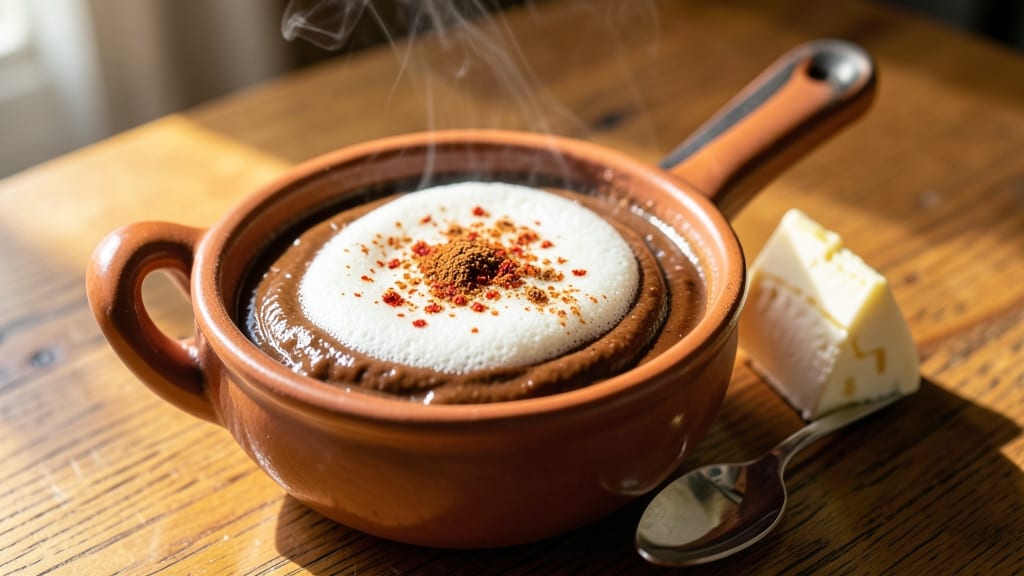
This Spanish drinking chocolate recipe delivers the rich, velvety indulgence that makes it a cherished tradition in Spain—thick enough to drink with a spoon, infused with cinnamon and chili for warmth, and served with churros for the perfect pairing.
The secret lies in roasting the chocolate to deepen its flavor and tempering it properly to create that signature silky texture. I perfected this method after years of experimenting with store-bought versions that never quite captured the same depth.
The process begins with high-quality chocolate, roasted and finely chopped to intensify its natural flavors before being melted into warm milk spiced with cinnamon and a pinch of cayenne.
Unlike lighter hot chocolates, this version relies on a precise ratio of chocolate to milk and a slow, controlled heating method to achieve that luxurious thickness. Every step—from roasting to frothing—ensures a result that’s rich, aromatic, and impossible to resist.
What sets this recipe apart is its balance of tradition and adaptability. While purists will love the classic version with whipped cream and crushed nuts, modern variations—like vegan adaptations using coconut milk—prove it’s just as versatile.
The key is patience; letting the chocolate melt gradually and whisking vigorously creates that signature velvety mouthfeel that defines Spanish drinking chocolate.
Whether you’re serving it as a decadent dessert or a comforting treat, this recipe delivers restaurant-quality results at home. The aroma alone will draw everyone to the table, and the first sip promises a taste of Spain’s culinary heritage. Ready to master this indulgence?
Ingredients for spanish drinking chocolate
High-quality chocolate, warm milk, and precise spices transform into Spain's legendary drinking chocolate.
| Ingredient | Amount | Notes |
|---|---|---|
| High-Quality Dark Chocolate (70% Cocoa) 🍫 | 8 oz | Valrhona or Callebaut preferred |
| Whole Milk 🥛 | 2 cups | Warm to 160°F before adding |
| Ground Cinnamon 🌿 | 1 ½ tbsp | Freshly ground preferred |
| Cayenne Pepper 🔥 | ¼ tsp | Adjust for heat preference |
| Granulated Sugar 🍚 | ½ cup | Fine grain preferred |
| Unsalted Butter 🧈 | 2 tbsp | Cold, cut into small cubes |
| Vanilla Extract 🌸 | 1 tsp | Pure Madagascar preferred |
| Pinch of Salt 🧂 | ⅛ tsp | Diamond Crystal kosher |
| Churros (for serving) 🍩 | 1 lb | Store-bought or homemade |
| Whipped Cream (for serving) 🥛 | 1 cup | Full-fat for best texture |
| Crushed Hazelnuts (for serving) 🌰 | ¼ cup | Toasted for extra flavor |
The chocolate is non-negotiable—Valrhona or Callebaut bars with 70% cocoa deliver that signature depth. Look for bars labeled 'Grand Cru' or 'Abinao' at specialty stores like Williams Sonoma or Sur La Table. The milk should be warmed to 160°F before combining with chocolate to prevent seizing. For the cinnamon, Penzeys or bulk bins offer the freshest ground options, which is crucial for that authentic warmth. Cayenne adds subtle heat without overpowering, but taste first—some brands are fierier than others. The sugar should be fine-grained to dissolve smoothly, and Domino is a reliable grocery store option.
No Valrhona? Ghirardelli or Lindt 70% bars work in a pinch, though they lack the same depth. Substituting almond milk? Use unsweetened, high-fat versions like Silk Ultra to mimic the richness. The butter isn't just for flavor—it creates that signature velvety texture when tempered properly. For the vanilla, imitation extracts won't cut it; Madagascar Bourbon is the gold standard. Short on churros? Puff pastry strips or brioche make excellent alternatives. The whipped cream should be full-fat for stability, and Land O'Lakes or Hormel brands hold their shape best when chilled.
Chocolate retains its best qualities when stored in an airtight container at room temperature, away from direct sunlight. Pre-portion the spice mix into small jars for up to 6 months—just shake before use. The whipped cream should be whipped and chilled until serving to maintain its airy texture. Leftovers? The chocolate mixture reheats beautifully—simmer on low with a splash of milk until smooth. For serving, keep churros and toppings at room temperature to prevent sogginess.
Why You'll Love This Recipe
- No-Fuss Simplicity: I swear by this recipe because it’s just three things—chocolate, milk, and a pinch of spice—simmered together. No whisking, no tempering, no fancy equipment. Honestly, I’ve made it in a mug on the stove while chatting with friends, and it still turns out velvety smooth.
- Deep, Spiced Magic: That first sip? Rich, bittersweet cocoa with a whisper of cinnamon and just enough cayenne to wake you up—like a hug for your taste buds. The 70% dark chocolate gives it real depth, but the sugar and milk balance it so it’s never overpowering.
- Cozy Any Time: Weeknight wind-down? Perfect. Date night with zero effort? Done. Even my kids sneak sips after school (though I tell them it’s "grown-up cocoa"). It’s the kind of drink that feels special without needing a reason.
- Leftovers That Don’t Let You Down: Make a big batch—it reheats beautifully with a splash of milk. Between us, I’ve had this for breakfast, dessert, or a 3 PM pick-me-up, and it’s always a win. Plus, dark chocolate is cheaper than you’d think, so you’re not breaking the bank for decadence.
Step-by-step instructions for Spanish drinking chocolate
Master this technique and you'll achieve a rich, velvety chocolate with authentic Spanish depth.
Warm the Milk and Infuse the Spices
In a heavy-bottomed saucepan, combine the 2 cups whole milk with the 1.5 tablespoons ground cinnamon, 0.25 teaspoon cayenne pepper, and 0.125 teaspoon pinch of salt. Heat over medium-low heat until the mixture reaches 160°F—just before it begins to simmer. This gentle warming allows the spices to bloom fully without scorching.
Here's the thing—Spanish drinking chocolate relies on proper spice infusion. If you see small bubbles forming at the edges before reaching 160°F, reduce the heat immediately. The milk should smell warmly aromatic, like a mix of cinnamon and subtle heat from the cayenne. Remove from heat and let steep covered for 5 minutes to extract maximum flavor.
Melt the Chocolate and Butter
While the spiced milk steeps, place the 8 oz high-quality dark chocolate (70% cocoa) and 2 tablespoons unsalted butter in a separate heatproof bowl. Position this bowl over a saucepan of barely simmering water, ensuring the bottom doesn't touch the water. This indirect heat method prevents scorching while creating a silky chocolate base.
Stir gently with a silicone spatula until the chocolate and butter melt completely, forming a smooth paste. You'll know it's ready when the mixture reaches 110°F—just warm enough to blend seamlessly but not hot enough to cook the chocolate. This temperature ensures the chocolate's natural oils remain stable for a velvety finish.
Combine and Simmer to Perfection
Temper the hot spiced milk by slowly pouring it into the melted chocolate mixture while whisking continuously. Return the combined mixture to the saucepan and add the 0.5 cup granulated sugar and 1 teaspoon vanilla extract. Increase heat to medium-low and stir constantly for 8-10 minutes until the sauce thickens to a pudding-like consistency—it should coat the back of a spoon.
This is the moment that matters: the sauce should be thick enough to hold its shape when poured but still flow smoothly. If it thickens too quickly, whisk in 1-2 tablespoons of the spiced milk to adjust the texture. The final temperature should reach 185°F—hot enough to serve immediately but not so hot it burns the palate.
Serve with Traditional Accompaniments
Divide the hot chocolate among 4 serving cups (about ½ cup each). Top immediately with 1 cup whipped cream, 0.25 cup crushed hazelnuts, and serve alongside the 1 lb churros for dipping. The contrast of crisp churros with the thick, spiced chocolate creates the perfect balance of textures.
Real talk: the chocolate should be thick enough to stand a churro upright without collapsing. If it's too thin, simmer uncovered for 2-3 additional minutes to reduce further. Serve with extra cinnamon on the side—this is traditional in Spain and enhances the flavor with each sip.
Pro Tips For Making Spanish Drinking Chocolate
- Whisk Like You Mean It: Don’t just stir—get that whisk moving fast and furious when melting the chocolate. The goal is to break it into tiny, silky bits before the milk even hits the pot. I used to let it sit too long on low heat, and the chocolate would seize up like a stubborn mule. High heat for 30 seconds, then lower it—this keeps the texture velvety smooth.
- Chop the Chocolate Coarse: Skip the fine dust—roughly chop the dark chocolate into ½-inch chunks. This speeds up melting and prevents clumping. I learned this the hard way after scraping burnt bits off the bottom of the pot. Big pieces also distribute heat more evenly, so you’re not left with a lumpy mess.
- Temper the Cayenne First: Mix the cayenne with a spoonful of sugar before adding it to the pot. This stops it from floating on top like a ghostly red cloud. I was skeptical until I tried it—now my chocolate has a balanced kick without any weird texture surprises.
- Warm the Milk Separately: Heat the milk to a simmer (just until tiny bubbles form at the edges) before pouring it into the chocolate. Cold milk will shock the pot and make the chocolate seize. Pour slowly while whisking—this is where the magic happens. (Yes, even if you’re impatient like me.)
Dietary considerations for this spanish drinking chocolate
Vegan Adaptations
To make this Spanish drinking chocolate vegan, replace the whole milk with 2 cups full-fat coconut milk (like Thai Kitchen brand) and swap butter for 2 tablespoons coconut oil.
Use unsweetened dark chocolate (like Enjoy Life brand) to ensure no dairy traces remain. The texture stays rich, though slightly lighter—add 1 tablespoon cornstarch to thicken if needed. 🌱
Gluten-Free Considerations
This recipe is naturally gluten-free, but verify your chocolate bar (some contain malt). For toppings, use gluten-free churros (like Annie's brand) or puff pastry strips made with gluten-free flour.
The crushed hazelnuts and whipped cream are safe as long as they're certified gluten-free. Always check labels—cross-contamination is a risk with shared equipment. ✨
Nut-Free Options
Skip the crushed hazelnuts and replace them with toasted coconut flakes or chopped dried apricots for a fruitier contrast. For extra crunch, use pumpkin seeds (pepitas) or sunflower seeds, both of which are nut-free.
The whipped cream and churros remain safe as long as they're made in a nut-free facility. Always double-check packaging for allergen warnings. 🌰
Lower Sugar Adaptations
Reduce the granulated sugar to ¼ cup and enhance sweetness with 1 teaspoon maple syrup or 1 tablespoon date paste. For a sugar-free version, use monk fruit sweetener (like Lakanto) to taste—it dissolves smoothly and won’t alter the texture.
The natural sweetness of the chocolate will still shine through. 🍯
Dairy-Free Substitutions
Beyond coconut milk, oat milk (like Oatly Full-Fat) works surprisingly well—its creamy texture mimics dairy. For the butter, vegan butter (like Miyoko's) adds richness, though it may require 1 extra tablespoon to compensate for lower fat content.
The final product will be just as velvety with these swaps. 🥛
Keto-Friendly Version
Cut the sugar entirely and use 1 tablespoon erythritol or stevia for sweetness. Replace the churros with pork rinds or almond flour shortbread cookies for dipping. The whipped cream should be dairy-free (like Reddi-wip Sugar Free) to keep carbs minimal.
This version keeps the decadent flavor while fitting a low-carb lifestyle. 💪
Nutrition facts
Frequently asked questions
Why is Spanish drinking chocolate so thick compared to regular hot chocolate?
The signature thickness comes from the precise ratio of chocolate to milk and the simmering process. Spanish drinking chocolate uses 8 oz chocolate per 2 cups milk (a 1:1 ratio by weight) and simmers until it reaches 185°F, creating a pudding-like consistency. This allows it to be enjoyed with a spoon or dipped with churros! The roasting of chocolate before melting also intensifies its natural oils, contributing to that velvety texture.
Can I make this recipe without a thermometer?
For the milk, heat until small bubbles form around the edges but don't boil vigorously—this usually takes 5-7 minutes on medium-low. For the final chocolate mixture, simmer until it thickens enough to coat the back of a spoon (about 8-10 minutes). The texture should hold its shape when poured but still flow smoothly. Practice makes perfect—your first batch might need slight adjustments!
What's the secret to getting that authentic Spanish flavor?
The magic lies in three key elements: high-quality chocolate (70% cocoa), proper spice infusion, and the cayenne pepper. Roast the chocolate lightly before melting to deepen its flavor, and let the cinnamon and cayenne steep in warm milk for 5 minutes before combining. The cayenne adds subtle heat that balances the sweetness—start with ¼ teaspoon and adjust to taste. Don't skip the vanilla extract either!
How do I fix chocolate that's seized or grainy?
If your chocolate seizes (turns grainy), it's usually from water or milk hitting it too quickly. Remove from heat immediately and whisk in 1 tablespoon warm milk at a time until smooth. For future batches, always temper the milk by slowly pouring it into the melted chocolate while whisking continuously. If the mixture is still too thick, add 1 teaspoon milk and whisk vigorously. Patience is key—this technique prevents seizing!
Can I make this ahead of time for a party?
Yes! Prepare the chocolate mixture up to 2 days ahead and store it in an airtight container at room temperature. Reheat gently on the stove with a splash of milk until smooth. For the toppings, assemble them fresh before serving—whipped cream should be whipped and chilled, and churros are best served crisp. The chocolate reheats beautifully, but the toppings keep it feeling special!