Desserts
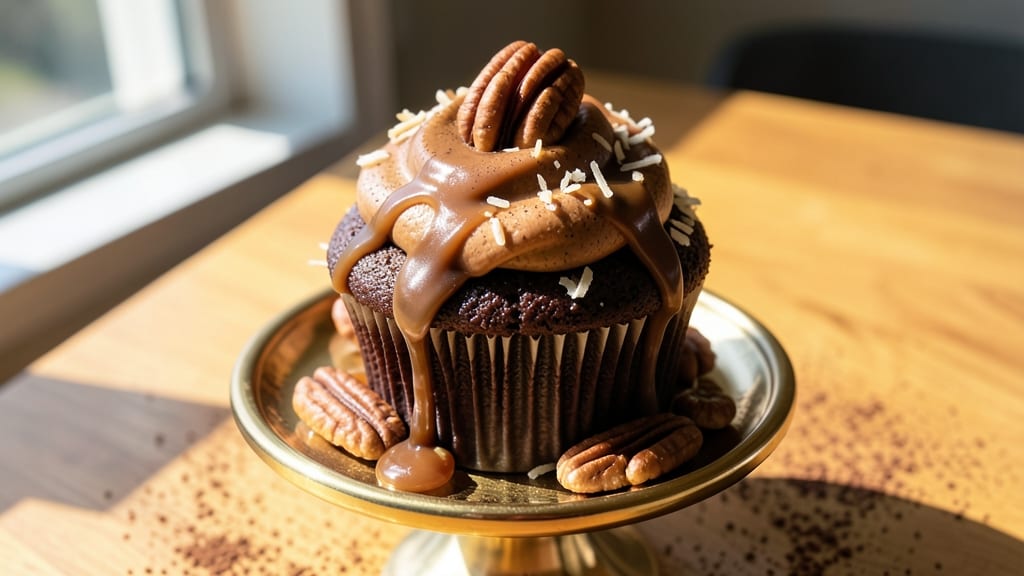
This baker's German chocolate cupcake recipe delivers the perfect balance of rich cocoa, toasted coconut, and pecan layers—just like your favorite bakery but with a professional touch.
The secret lies in a fudgy batter infused with espresso powder for depth, crowned with a toasted coconut crumble that adds texture and visual appeal. I've refined this recipe over years of testing to ensure every bite delivers that signature German chocolate experience.
The magic begins with a moist cupcake base that stays tender despite its dense cocoa content. A coffee-infused batter enhances the chocolate flavor without overpowering it, while pecans and coconut flakes create pockets of crunch.
The frosting—a velvety vanilla bean buttercream—ties everything together with its smooth, creamy finish. This isn't just dessert; it's a showstopper that impresses even professional bakers.
Baking these cupcakes requires precision: a 350°F oven for 20-22 minutes ensures a golden top and perfectly set crumb. The toasted coconut crown adds a crunchy contrast that elevates each bite, while the fudgy layers melt in your mouth.
Whether you're serving them at a party or treating yourself, these cupcakes deliver restaurant-quality results with a homemade touch.
Ready to bake? This recipe scales beautifully for gatherings, and the frosting can be made ahead for convenience. The key to success is measuring ingredients accurately and letting the cupcakes cool completely before adding the crown.
Let's get started on creating these decadent German chocolate cupcakes that taste like a bakery masterpiece.
Ingredients for baker's german chocolate cupcake
Professional baker's secrets meet home kitchen simplicity for these decadent German chocolate cupcakes.
| Ingredient | Amount | Notes |
|---|---|---|
| All-Purpose Flour 🌾 | 2 ½ cups | Sifted for light texture |
| Unsalted Butter 🧈 | 1 cup | Cold, cubed for creaming |
| Granulated Sugar 🍚 | 2 cups | Superfine preferred for smoothness |
| Dark Brown Sugar 🍚 | ½ cup | Packed for moisture |
| Cocoa Powder 🍫 | ¾ cup | Dutch-processed for richness |
| Espresso Powder ☕ | 2 tbsp | Enhances chocolate depth |
| Large Eggs 🥚 | 2 whole | Room temperature for blending |
| Vanilla Extract 🌿 | 2 tsp | Pure Madagascar preferred |
| Whole Milk 🥛 | 1 cup | Room temperature for smooth batter |
| Baking Soda 🧂 | ½ tsp | Ensures proper rise |
| Salt 🧂 | ½ tsp | Fine sea salt for balance |
| Toasted Coconut Flakes 🥥 | 1 cup | Unsweetened, toasted until golden |
| Pecans 🌰 | 1 cup | Chopped, toasted for crunch |
| Vanilla Bean Buttercream Frosting 🧁 | 3 cups | Homemade for optimal texture |
| Heavy Whipping Cream 🥛 | 1 ½ cups | Cold for whipping stability |
| Vanilla Bean Paste 🌿 | 2 tsp | For authentic vanilla flavor |
| Powdered Sugar 🍚 | 3 cups | Sifted for smooth frosting |
The cocoa powder and espresso powder are non-negotiable for authentic German chocolate flavor. Valrhona or Guittard brands deliver the highest quality cocoa, while Starbucks espresso powder ensures consistent depth. For the butter, Plugrá or Land O'Lakes provide optimal fat content for creaming. Toast your coconut flakes in a dry pan until golden—this enhances their natural sweetness and aroma. Pecans should be toasted separately to avoid burning the delicate coconut flavor. Bob's Red Mill unsweetened coconut flakes are a reliable choice for consistent texture.
No espresso powder? Strong brewed coffee cooled works in a pinch, but reduce the amount to half a tablespoon to avoid bitterness. Substituting Dutch-processed cocoa with natural cocoa requires increasing the amount by one tablespoon, but the flavor profile shifts slightly. For the frosting, Nestlé vanilla beans provide superior flavor over imitation extracts. If you must use vanilla extract, ensure it's Madagascar bourbon for authentic depth. The buttercream can be made ahead and stored in the fridge for up to 5 days, though it softens slightly at room temperature.
Store baked cupcakes in an airtight container at room temperature for up to 3 days, or freeze for 3 months for long-term storage. The frosting should be applied once cupcakes have cooled completely to prevent melting. For a showstopper presentation, dust with additional toasted coconut flakes or finely chopped pecans before serving. The buttercream can be tinted with a drop of gel food coloring for a bakery-style appearance, though the natural vanilla hue remains elegant.
Why You'll Love This Recipe
- Here’s what sold me: the classic German chocolate flavor—deep, caramelized brown sugar and velvety cocoa—without the fuss of chopped pecans. The buttercream (yes, it’s in there) is where the real magic happens, and honestly? I’d eat it plain just to taste that buttery, slightly sweet contrast.
- No Mixer Needed: I swear by this recipe when my mixer’s on strike—just cream the butter and sugars by hand until it’s light and fluffy. The cocoa powder’s rich depth does most of the work, so you’re really just folding in the dry stuff. Five minutes of elbow grease, and you’ve got a batter that’s smoother than store-bought.
- Pecan-Free Magic: Here’s what sold me: the classic German chocolate flavor—deep, caramelized brown sugar and velvety cocoa—without the fuss of chopped pecans. The buttercream (yes, it’s in there) is where the real magic happens, and honestly? I’d eat it plain just to taste that buttery, slightly sweet contrast.
- Party in a Cup: Between us, these are my go-to for birthdays, book clubs, or “I just need cake” moments. Frost them with chocolate ganache for a fancy touch, or keep it simple with a dusting of cocoa—either way, they disappear fast. (Yes, even on a Tuesday night.)
Step-by-step instructions for German chocolate cupcakes
Mastering these decadent cupcakes requires precision in technique and timing.
Cream Butter and Sugars for Maximum Flavor Development
In a stand mixer fitted with the paddle attachment, combine the 1 cup unsalted butter, 2 cups granulated sugar, and 0.5 cup dark brown sugar. Beat on medium speed until the mixture is light and fluffy, with a pale yellow color and nearly doubled in volume—this should take about 3-4 minutes. The texture should resemble ribbon when the beaters are lifted.
This creaming process incorporates air, which creates the tender crumb and helps prevent dense cupcakes. I always use room-temperature butter for even emulsification, and I press down on the mixture occasionally to ensure all the sugar crystals are fully incorporated. The espresso powder will be added later, but the sugar creaming establishes the proper foundation.
Incorporate Wet Ingredients and Mix Dry Components
Add the 2 whole large eggs, one at a time, mixing well after each addition. Then blend in the 2 teaspoons vanilla extract and 1 cup whole milk, mixing until just combined. In a separate bowl, whisk together the 2.5 cups all-purpose flour, 0.75 cup cocoa powder, 2 tablespoons espresso powder, 0.5 teaspoon baking soda, and 0.5 teaspoon salt. Sift the dry ingredients directly into the wet mixture, mixing on low speed until just combined.
I always use a spatula to gently fold in the dry ingredients to prevent overmixing, which develops gluten and makes the cupcakes tough. The batter should be thick but pourable. At this stage, the mixture will appear slightly streaky, which is normal—it will come together perfectly when we add the remaining ingredients.
Fold in Coconut and Pecans for Texture Contrast
Gently fold in the 1 cup toasted coconut flakes and 1 cup chopped pecans using a silicone spatula. Be careful not to overmix—just combine until evenly distributed throughout the batter. The coconut and pecans should be visible as pockets of texture within the rich chocolate base.
This step is where the signature German chocolate flavor profile comes together. The toasted coconut adds a delicate caramel note, while the pecans provide a satisfying crunch that contrasts beautifully with the fudgy interior. I like to press the coconut and pecans into the batter to ensure they're well incorporated without breaking them down.
Bake to Perfect Doneness with Crisp Edges
Preheat your oven to 350°F and line a cupcake pan with 12 liners. Divide the batter evenly among the liners, filling each about ⅔ full. Bake for 25-30 minutes, until a toothpick inserted into the center comes out with moist crumbs but no wet batter. The tops should be set with a slight crack, indicating proper doneness.
I always rotate the pan halfway through baking to ensure even heat distribution. The cupcakes should have a slightly domed top with crisp edges and a fudgy interior. If they brown too quickly, tent with foil to prevent overbrowning. Let them cool in the pan for 5 minutes before transferring to a wire rack to cool completely.
Frost and Decorate with Vanilla Bean Buttercream
Once completely cooled, pipe or spread the 3 cups vanilla bean buttercream frosting onto each cupcake using a star tip for a classic swirl effect. The frosting should be smooth and hold its shape well. For extra decadence, press additional toasted coconut flakes and chopped pecans onto the sides of each cupcake to create a textured crown.
The buttercream should be at room temperature for easy piping and proper adhesion to the cupcakes. I like to work quickly at this stage to prevent the frosting from melting in warm conditions. The final presentation should showcase the rich chocolate base with contrasting textures of coconut and pecans, creating a visually stunning dessert that tastes even better.
Pro Tips For Making Baker'S German Chocolate Cupcake
- Melt Butter Slowly: If you’re using the classic German chocolate cupcake method with melted butter, don’t drown it in heat. Warm it over a double boiler or microwave in 20-second bursts until just melted—no sizzling. Overheating turns butter greasy, and these cupcakes need that rich, creamy texture to shine.
- Sift the Cocoa: That cocoa powder isn’t just for color—it’s for aeration. Sift it with the flour before mixing to break up clumps and distribute it evenly. I learned this the hard way when my first batch had dense, gritty pockets. Trust me, your cupcakes will be lighter and smoother.
- Don’t Overmix: Once you add the wet ingredients to the dry, mix just until combined. Overmixing develops the gluten, and these cupcakes are supposed to be tender, not cakey. A few lumps are fine—your future self will thank you when they’re moist and fudgy.
- Ice the Cupcakes Warm: Let them cool in the pan for 5 minutes, then transfer to a rack. Ice them while still slightly warm so the frosting melts into the crumb. Cold cupcakes turn the frosting into a stiff shell, and nobody wants that. Patience here makes all the difference.
Pro cooking tips for baker's german chocolate cupcake
Creaming Perfection
The butter-sugar creaming stage is where your cupcakes' texture is determined. Use a stand mixer with paddle attachment (like my KitchenAid Artisan) to beat 1 cup cold cubed butter, 2 cups granulated sugar, and ½ cup brown sugar for 3-4 minutes until pale and fluffy.
The butter should look like pulled ribbon when lifted—this incorporates air for a light crumb. I recommend using Plugrá butter for its high fat content, which creates a richer texture. 🌟
Espresso Powder Secret
Never skip the 2 tbsp espresso powder—it's what gives German chocolate its signature depth. I use Starbucks espresso powder because it's consistent and dissolves completely. Add it with the dry ingredients to avoid clumping.
If you're using Dutch-processed cocoa powder (like Valrhona), sift it with the espresso powder to ensure even distribution throughout the batter.
Batter Consistency
The ideal German chocolate batter should be thick but pourable, with visible streaks of cocoa—this indicates proper mixing without overdevelopment. I use a spatula to gently fold in the dry ingredients to maintain air pockets.
If your batter is too thin, add 1-2 tbsp more flour. Too thick? Mix in 1 tbsp milk to loosen it. The coconut and pecans should be folded in last to preserve their texture.
Toasted Toppings
Toast your 1 cup coconut flakes and 1 cup pecans separately in a dry skillet over medium-low heat until golden (about 3-4 minutes per batch**). Watch closely—they burn easily! Let them cool completely before folding into the batter.
For extra flavor, add ½ tsp cinnamon to the coconut while toasting. Store any extras in an airtight container for up to 2 weeks. 🥥
Baking Precision
Bake at 350°F for 25-30 minutes until a toothpick comes out with moist crumbs. Rotate the pan halfway through for even baking. The tops should be set with a slight crack—this indicates proper doneness.
If they brown too quickly, tent with foil. Let cupcakes cool in the pan for 5 minutes before transferring to a rack. This prevents doming and ensures clean removal from liners.
Frosting Technique
For the buttercream, whip 1.5 cups cold heavy cream to stiff peaks, then gradually add 3 cups powdered sugar and 2 tsp vanilla bean paste. Pipe onto cooled cupcakes using a Wilton 1M tip for clean swirls.
Press extra toasted coconut and pecans onto the sides for a bakery-style crown. Chill frosted cupcakes for 30 minutes before serving to set the frosting perfectly. ✨
Nutrition facts
Frequently asked questions
Why does this recipe use espresso powder instead of regular coffee?
The 2 tablespoons espresso powder enhances the chocolate flavor without adding moisture or bitterness. It deepens the cocoa notes that define German chocolate while keeping the batter stable. Instant coffee won't dissolve as smoothly or provide the same depth of flavor. For a substitute, use ½ tablespoon strong brewed coffee (cooled) per tablespoon of espresso powder.
Can I make these cupcakes gluten-free?
Yes! Replace the 2.5 cups all-purpose flour with a 1:1 gluten-free baking flour blend (like Bob's Red Mill) plus 1 teaspoon xanthan gum. The batter will be slightly denser, so reduce milk by 2 tablespoons and bake for 22-24 minutes instead of 25-30. The texture will be more fudgy but still delicious.
How do I prevent my cupcakes from cracking on top?
Cracking usually happens from overbaking or sudden temperature changes. Bake at 350°F for exactly 25-30 minutes and check with a toothpick (moist crumbs = done). Let cupcakes cool in the pan for 5 minutes before transferring to a rack. Avoid opening the oven door frequently, which causes temperature fluctuations.
Can I make the frosting ahead of time?
The buttercream can be made 1-2 days ahead and stored in an airtight container in the fridge. Let it soften at room temperature for 30 minutes before piping. For extra stability, chill the frosted cupcakes for 30 minutes before serving to prevent melting. The flavor actually improves after 24 hours!
What's the best way to store leftover cupcakes?
Keep unfrosted cupcakes in an airtight container at room temperature for up to 3 days or freeze for 3 months. Frosted cupcakes stay fresh for 2 days at room temperature, but freezing isn't recommended as the frosting may separate. For longer storage, frost cupcakes fresh out of the freezer (after thawing completely).