Desserts
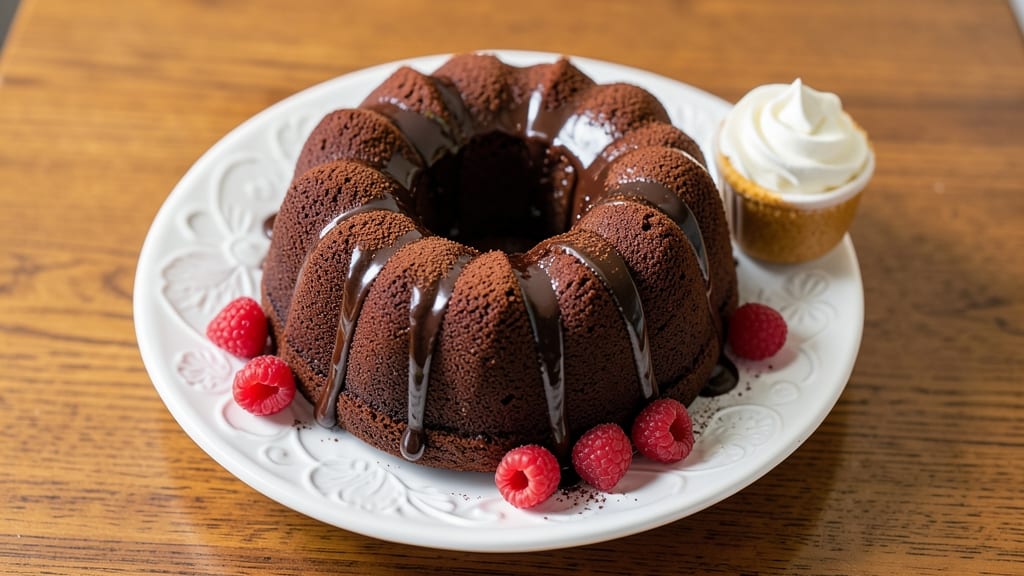
This moist chocolate bundt cake recipe delivers on every promise—deep cocoa flavor, a perfect rise, and that coveted tender crumb that disappears on the first bite. The secret lies in buttermilk and sour cream, which create a velvety texture while keeping the cake rich and moist for days.
I developed this recipe after years of testing, and it never fails to impress even the most critical dessert lovers.
What sets this bundt cake apart is the balance of ingredients: high-quality cocoa powder for intense flavor, espresso powder to deepen the chocolate notes, and a precise mix of leavening agents for that ideal rise.
The cake bakes at 350°F for 50-60 minutes, ensuring a golden exterior while keeping the interior perfectly moist. The bundt pan creates beautiful ridges and a stunning presentation that makes it perfect for special occasions.
By the time it emerges from the oven, you'll have a cake that's moist without being dense, with a rich chocolate flavor that lingers on your palate. The texture is light yet substantial, and the aroma alone will have everyone gathering in the kitchen.
Top it with powdered sugar, chocolate shavings, or a dusting of cocoa powder for an elegant finish.
This recipe works equally well for family dinners, holiday gatherings, or as a showstopping dessert when you have guests over. The key is patience—letting the cake cool completely before serving ensures clean slices every time. Here's everything you need to create the perfect moist chocolate bundt cake.
Ingredients for moist chocolate bundt cake
Twelve ingredients, twelve slices of pure chocolate heaven—this bundt cake is your new go-to dessert.
| Ingredient | Amount | Notes |
|---|---|---|
| All-Purpose Flour 🌾 | 2 ½ cups | Sifted for light texture |
| Unsalted Butter 🧈 | 1 ½ cups | Room temperature, full-fat |
| Granulated Sugar 🍚 | 2 cups | White or light brown |
| High-Quality Cocoa Powder 🍫 | ¾ cup | Natural or Dutch-processed |
| Espresso Powder ☕ | 1 tbsp | Deepens chocolate flavor |
| Buttermilk 🥛 | 1 cup | Fresh for best results |
| Sour Cream 🥛 | ½ cup | Full-fat for moisture |
| Large Eggs 🥚 | 2 whole | Room temperature |
| Vanilla Extract 🌿 | 2 tsp | Pure, high-quality |
| Baking Soda 🧂 | 1 tsp | Not baking powder |
| Salt 🧂 | ½ tsp | Fine sea salt |
| Vegetable Oil 🫒 | ½ cup | Light, neutral flavor |
| Powdered Sugar 🍚 | ¼ cup | For dusting, optional |
The cocoa powder here is non-negotiable. Hershey's Special Dark or Dutch-processed from Ghirardelli will give you that rich, velvety flavor. Skip the cheap stuff—it tastes like dust. For the butter, Land O'Lakes or Plugrá are my top picks, but any full-fat works. Room temperature is key—no one wants to deal with lumps. The espresso powder? Grab it at the coffee shop or Starbucks—it's worth the extra punch. And buttermilk? If you don't have it, mix 1 tbsp vinegar or lemon juice with 1 cup milk and let it sit for 5 minutes.
No buttermilk? Plain yogurt works too—just use the same amount. Sour cream can be swapped for Greek yogurt if you're in a pinch, but full-fat is best. Running low on vanilla? Almond extract at half the amount adds depth. The baking soda and salt are simple, but don't skip them—they balance the richness. For the oil, vegetable or canola keeps things neutral. And that powdered sugar? Only if you're feeling fancy—it's totally optional but adds that restaurant-worthy finish.
This cake keeps beautifully—3-4 days at room temperature, 1 week in the fridge, or 3 months frozen. Double-wrap slices in plastic wrap and foil for freezing. The bundt pan is your best friend here—nonstick or well-seasoned prevents sticking. Let it cool completely before removing, or you'll end up with a crumbled mess. Trust me on this one—patience pays off.
Why You'll Love This Recipe
- No-Fuss Mixing: I swear by the creamy butter-and-sugar combo first—no need to sift or whisk like crazy. Just melt the butter, toss in the sugar and cocoa, then fold in the dry stuff. The espresso powder does the work for you, deepening the flavor without extra effort.
- Rich Without Bitterness: That high-quality cocoa powder makes all the difference—smooth, not gritty, with just the right depth. A pinch of espresso powder cuts through the sweetness while keeping it luscious, not dry. Honestly, it’s the kind of chocolate cake that makes you close your eyes and sigh.
- Weeknight Dessert Hero: Slice it warm with vanilla ice cream for dinner guests or pack it for lunches—no one will guess it’s not homemade. The bundt shape means every bite has that perfect rise, and it stays moist for days. (Yes, even on a Tuesday night.)
- Budget-Friendly Luxury: Butter and sugar are the stars, but you’re not breaking the bank—this cake feels fancy without the price tag. A single batch feeds six, and leftovers reheat beautifully. Between us, it’s my go-to for birthdays, holidays, or just because.
Step-by-step instructions for moist chocolate bundt cake
Here's how to create a rich, moist chocolate cake that rises beautifully in its signature shape.
Cream Butter, Sugar, and Chocolate for Maximum Moisture
In a stand mixer fitted with the paddle attachment, beat the 1.5 cups unsalted butter and 2 cups granulated sugar on medium speed for 3-4 minutes until light and fluffy. This step is crucial—it incorporates air that will create that perfect rise. Scrape down the sides of the bowl with a spatula to ensure even mixing.
Reduce speed to low and gradually add the 0.75 cup high-quality cocoa powder and 1 tablespoon espresso powder, mixing just until combined. The espresso powder might seem odd, but it deepens the chocolate flavor without adding bitterness. Mix in the 2 teaspoons vanilla extract and 0.5 teaspoon salt until fully incorporated. This rich base is what will give your cake that deep, satisfying chocolate taste.
Add Wet Ingredients for Extra Tenderness
In a separate bowl, whisk together the 1 cup buttermilk, 0.5 cup sour cream, and 2 whole large eggs until smooth. The buttermilk and sour cream add moisture and richness, while the eggs provide structure. This combination is the secret to that melt-in-your-mouth texture.
With the mixer on low speed, gradually add the wet ingredients to the butter mixture. Mix just until combined—overmixing can develop gluten and make the cake dense. The batter should be thick but smooth. Scrape down the sides of the bowl one last time to ensure everything is evenly incorporated. This step ensures your cake will be tender rather than dry.
Combine Dry Ingredients and Fold Gently
In a medium bowl, whisk together the 2.5 cups all-purpose flour and 1 teaspoon baking soda. Sift the mixture directly into the wet ingredients, folding gently with a spatula until just combined. Be careful not to overmix—you should still see some flour streaks. This step is where the magic happens: the baking soda helps create that perfect rise while keeping the texture light.
Add the 0.5 cup vegetable oil and mix on low speed for 10-15 seconds until fully incorporated. The oil adds extra moisture and ensures a tender crumb. The batter should be thick but pourable. If it seems too thick, you can add 1-2 tablespoons of buttermilk to loosen it slightly. This is the final step before baking—your cake is now ready to rise beautifully.
Bake to Golden Perfection
Preheat your oven to 350°F and generously grease a 10-12 cup Bundt pan with butter or baking spray. Dust the pan with 0.25 cup powdered sugar (optional) and tap out any excess. Pour the batter into the prepared pan and smooth the top with a spatula. Place the pan on a baking sheet to catch any drips.
Bake for 50-60 minutes, or until a toothpick inserted into the center comes out clean. The cake is done when the edges are set but the center still has a slight bounce. Here's the thing—your oven might run hot, so start checking at the 50-minute mark. Overbaking can dry out the cake, so remove it as soon as it passes the toothpick test. Let it cool in the pan for 10 minutes before transferring to a wire rack to cool completely.
Pro Tips For Making Moist Chocolate Bundt Cake
- Sift That Cocoa: Don’t just dump the cocoa powder—sift it with the flour first. Clumps in cocoa powder make dense pockets in the cake, and this recipe relies on even distribution for that perfect moist crumb. I learned this the hard way after a cake that was almost good but had weird dry spots.
- Cream Butter Cold: Use butter straight from the fridge—no need to soften it first. Cold butter creates tiny air pockets when you cream it with sugar, which translates to a lighter, more tender bundt cake. (Yes, even if you’re impatient like me, resist the urge to nuke it.)
- Check Doneness Early: Pull the cake from the oven when the edges look set but the center still jiggles slightly—it’ll firm up as it cools. Overbaking turns chocolate cake dry, and this one’s forgiving enough that a few seconds early won’t ruin it. (Your future self will thank you.)
- Brush With Simple Syrup: While the cake is still warm, brush the sides with a mix of equal parts hot water and granulated sugar. This step locks in moisture and gives the bundt that professional, glossy finish without needing extra syrup later. (Does it look weird? Yes. Does it work? Every single time.)
Pro cooking tips for this dish
Butter and Sugar Whipping
The key to a light, airy bundt cake starts with creaming the 1.5 cups unsalted butter and 2 cups sugar until truly fluffy—about 3-4 minutes on medium speed. I use a KitchenAid stand mixer with the paddle attachment for consistent results.
Scrape the bowl often to prevent butter buildup on the sides. This step aerates the mixture, creating pockets that will expand during baking for that perfect rise. 🌡️
Cocoa and Espresso Magic
After adding the 0.75 cup cocoa powder and 1 tbsp espresso powder, mix just until combined—don't overdo it or you'll develop lumps. The espresso powder might seem unusual, but it enhances the chocolate flavor without adding bitterness.
I recommend Starbucks espresso powder for consistent results. This combination gives the cake its signature deep, rich chocolate taste that lingers on the palate.
Buttermilk and Sour Cream Secret
The buttermilk and sour cream are non-negotiable for moisture. Whisk them together with the 2 eggs in a separate bowl first to prevent curdling when added to the butter mixture. When combining, use low speed and mix just until smooth—overmixing develops gluten, leading to a dense cake.
The fat content in these ingredients keeps the cake tender and moist for days. Honestly, this is where most bundt cakes fail—skimp here at your peril.
Flour and Baking Soda Technique
Sift the 2.5 cups flour and 1 tsp baking soda together before folding into the wet ingredients. This prevents lumps and ensures even distribution. When combining, use a spatula to gently fold—just until no dry spots remain.
Overmixing here will toughen the cake. The baking soda reacts with the buttermilk to create lift, while the flour provides structure. This is where the magic of a perfect rise happens.
Oil for Extra Moisture
Add the 0.5 cup vegetable oil last to bind everything together. The oil coats the flour proteins, preventing them from absorbing too much moisture and creating a tender crumb. Mix on low speed for just 10-15 seconds—any longer risks developing gluten.
If the batter seems too thick, add 1-2 tbsp buttermilk to loosen it slightly. The batter should be thick but pourable at this stage.
Bundt Pan Prep Essentials
Grease your 10-12 cup bundt pan generously with butter or baking spray, then dust with 0.25 cup powdered sugar (optional) and tap out excess. I use Wilton nonstick bundt pans for reliable results. The powdered sugar creates a barrier that prevents sticking without needing excessive greasing.
Place the pan on a baking sheet to catch any potential drips during baking. This prep work makes all the difference when removing the cake later. ✨
Nutrition facts
Frequently asked questions
Why does this recipe use both buttermilk and sour cream?
The combination creates the perfect texture—buttermilk adds tang and moisture while sour cream provides richness and a tender crumb. Together, they prevent dryness and keep the cake moist for days. Think of them as your secret weapons against dense bundt cakes.
Can I substitute buttermilk if I don't have any?
Mix 1 tbsp vinegar or lemon juice with 1 cup milk and let it sit for 5 minutes to curdle. For sour cream, Greek yogurt works in a pinch, though full-fat yields the best results. These swaps keep the moisture intact without sacrificing flavor.
How do I know when the cake is fully baked?
Insert a toothpick into the center—it should come out clean or with a few moist crumbs. The edges should be set while the center still has a slight bounce. Overbaking by even 5 minutes can dry out the cake, so remove it promptly.
Can I make this cake ahead of time?
Yes! Store it at room temperature for 3-4 days, refrigerated for 1 week, or frozen for 3 months. Double-wrap slices in plastic and foil to preserve moisture. Let it sit at room temperature for 30 minutes before serving for perfect slices.
What's the best way to serve this bundt cake?
Dust with powdered sugar or chocolate shavings for a showstopping finish. Pair with vanilla ice cream or whipped cream for extra indulgence. Slice with a serrated knife for clean cuts—this cake is worth the effort!