Desserts
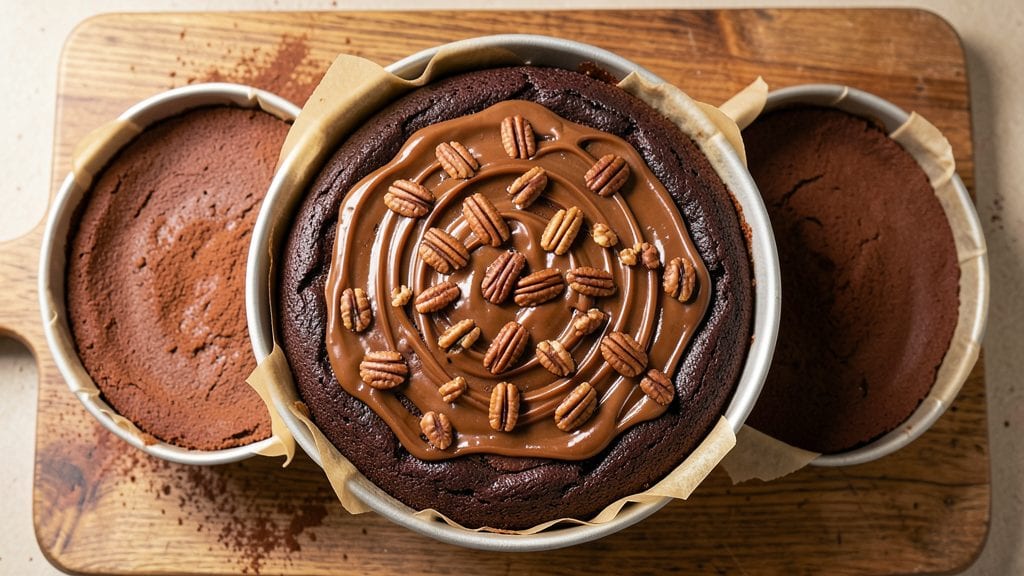
The old-fashioned baker's German chocolate cake delivers layers of rich, moist chocolate cake studded with pecans and crowned with toasted coconut frosting—just like your grandmother used to make. This recipe captures the nostalgia of classic baking techniques while ensuring foolproof results for home bakers.
The secret lies in precise ingredient ratios and a slow baking process that creates tender layers without drying out.
The cake itself is a masterpiece of texture: dense yet tender, with warm pecans baked right into the batter for bursts of flavor in every bite. The toasted coconut frosting adds a satisfying crunch that contrasts beautifully with the soft cake.
What makes this version special is the balance of tradition and simplicity—no complicated steps, just reliable techniques that yield a showstopping dessert.
By the time you assemble the cake with its velvety chocolate filling, you’ll have a dessert that looks as impressive as it tastes—golden layers, glossy frosting, and those signature pecan studs that make it instantly recognizable.
This is the kind of cake that disappears quickly, leaving only crumbs and happy memories behind.
Perfect for special occasions, holiday gatherings, or when you simply crave a taste of home, this recipe delivers restaurant-quality results with minimal fuss. Let’s get baking!
Ingredients for old fashioned baker's german chocolate cake
Classic baking staples meet nostalgic flavors in this German chocolate cake—rich, moist layers and crunchy coconut frosting.
| Ingredient | Amount | Notes |
|---|---|---|
| All-Purpose Flour 🌾 | 3 cups | Sifted for even texture |
| Unsalted Butter 🧈 | 2 cups | Room temperature, full-fat |
| Granulated Sugar 🍚 | 2 ½ cups | White sugar preferred |
| Dark Brown Sugar 🍚 | 1 cup | Packed firmly |
| Cocoa Powder 🍫 | ¾ cup | Dutch-processed preferred |
| Baking Powder 🍞 | 1 ½ tsp | Freshly opened package |
| Salt 🧂 | ½ tsp | Diamond Crystal preferred |
| Vanilla Extract 🍯 | 2 tsp | Pure, high-quality |
| Whole Milk 🥛 | 1 ½ cups | Room temperature |
| Large Eggs 🥚 | 4 whole | Room temperature |
| Pecans 🌰 | 2 cups | Chopped, toasted |
| Semisweet Chocolate Chips 🍫 | 1 ½ cups | High-quality, 60% cocoa |
| Unsalted Butter (for frosting) 🧈 | 1 cup | Room temperature, full-fat |
| Powdered Sugar 🍚 | 4 cups | Sifted for smooth frosting |
| Toasted Coconut Flakes 🥥 | 2 cups | Unsweetened, lightly toasted |
| Heavy Cream 🥛 | ½ cup | Chilled for whipping |
| Chocolate Filling 🍫 | 1 ½ cups | Store-bought or homemade |
The butter and sugars are the foundation—use high-quality, unsalted butter like Land O'Lakes or Plugrá for richness. King Arthur flour is my go-to for baking, but any all-purpose will work. For the cocoa, Dutch-processed from Ghirardelli gives that smooth, velvety texture. Pecans should be toasted in a dry pan until fragrant—Costco or Trader Joe's sell them pre-toasted, but toasting at home makes all the difference. The chocolate chips? Ghirardelli or Guittard are worth the splurge for that melt-in-your-mouth quality. Don’t skip sifting the flour and powdered sugar—it’s the secret to that light, airy crumb.
No pecans? Walnuts or macadamias work in a pinch, though they’ll change the flavor profile. Substituting cocoa powder? Melted dark chocolate at 1:1 ratio keeps the richness, but it’ll be denser. Running low on vanilla? Vanilla bean paste adds depth, or a splash of bourbon for warmth. For the frosting, unsweetened coconut flakes are a must—they toast beautifully and add that signature crunch. No heavy cream? Whipped topping works, but it won’t be as stable. The chocolate filling can be store-bought (like Hershey’s), but homemade with powdered sugar, cocoa, and butter is game-changing.
This cake keeps beautifully—3 days at room temperature covered loosely, or 1 week refrigerated in layers separated by parchment. The frosting? 3 days refrigerated, but add a bit of milk to soften before re-whipping if it stiffens. For make-ahead baking, assemble the cake 1 day ahead—flavors meld overnight, and it’s perfect for holiday prep. Store leftover frosting between layers of parchment to prevent drying. Freeze the whole cake up to 2 months—thaw at room temperature before serving.
Why You'll Love This Recipe
- You already own everything: flour, butter, sugar, cocoa. No specialty ingredients, no last-minute grocery runs. It’s my go-to when I’m broke or lazy—either way, it’s a win.
- No Mixer Needed: I swear by this cake—just a bowl, a whisk, and 10 minutes of stirring. That rich cocoa-butter combo melts into a velvety batter without a single lump, and honestly? My stand mixer stays put for this one.
- Crowd-Pleasing Crunch: Between us, the pecans and that molasses-kissed brown sugar? Chef’s kiss. It’s the kind of cake where even my "I don’t like chocolate cake" cousin asks for seconds—no pressure, just pure satisfaction.
- Weeknight Magic: Slice it warm for dinner, pack it for lunch, or freeze half for when you’re too tired to bake. The frosting (peanut butter, duh) keeps it fresh for days, and I’ve fed a brunch crowd with just two pans.
Step-by-step instructions for German chocolate cake
Here's the method for creating layers of rich chocolate cake studded with pecans, crowned with toasted coconut crunch.
Prepare the Cake Batter
Preheat your oven to 350°F and grease three 9-inch round cake pans, then line the bottoms with parchment paper. In a large mixing bowl, combine the 3 cups all-purpose flour, 1.5 teaspoons baking powder, and 0.5 teaspoon salt. Sift the mixture to remove any lumps and ensure even distribution throughout the batter.
In a separate large bowl, cream together the 2 cups unsalted butter, 2.5 cups granulated sugar, and 1 cup dark brown sugar on medium speed until light and fluffy, about 3-5 minutes. This step is crucial for achieving that tender, moist texture that defines German chocolate cake. Add the 4 whole large eggs, one at a time, mixing well after each addition. Stir in the 2 teaspoons vanilla extract and the 0.75 cup cocoa powder until fully combined.
Combine Wet Ingredients and Fold in Add-Ins
Gradually add the 1.5 cups whole milk to the creamed mixture while mixing on low speed. Then, gently fold in the 2 cups chopped toasted pecans and 1.5 cups semisweet chocolate chips using a spatula. Be careful not to overmix—just until the dry ingredients are evenly distributed. The batter should be thick but pourable.
Divide the batter evenly among the prepared cake pans. Tap each pan gently on the counter to release any air bubbles. Bake for 25-30 minutes, or until a toothpick inserted into the center comes out clean. The edges should be set, but the top should still have a slight bounce to it. Let the cakes cool in the pans for 10 minutes before transferring them to a wire rack to cool completely.
Prepare the Frosting
While the cakes are cooling, prepare the frosting by beating the 1 cup unsalted butter (for frosting) and 4 cups powdered sugar together until smooth and creamy. Add the 0.5 cup heavy cream and mix until fully incorporated. The frosting should be thick enough to hold its shape but still spreadable. Fold in the 2 cups toasted coconut flakes and 1.5 cups chocolate filling, reserving a small amount of the chocolate filling for garnish. Set the frosting aside.
Once the cakes are completely cool, level the tops if necessary. Spread a layer of the frosting between each cake layer, pressing down gently to ensure even coverage. This step is where the magic happens—each layer should be fully coated with frosting to create that signature German chocolate cake texture.
Assemble and Decorate
Place the first cake layer on a serving plate and spread a generous amount of frosting on top. Add the second cake layer and repeat the process with another layer of frosting. Top with the final cake layer and cover the entire cake with the remaining frosting, spreading it evenly with a spatula. For a classic finish, pipe any reserved chocolate filling in a zigzag pattern over the top of the cake and sprinkle with additional toasted coconut flakes.
Let the cake rest in the refrigerator for at least 1 hour before serving to allow the frosting to set. The cake will keep in the fridge for up to 5 days, though it’s best enjoyed fresh. Each slice should reveal layers of moist chocolate cake, crunchy pecans, and the signature toasted coconut crunch, all bound together by the rich, creamy frosting.
Pro Tips For Making Old Fashioned Baker'S German Chocolate Cake
- Melt Butter Slowly: I learned this the hard way—dumping cold butter into hot sugar makes a greasy mess. Instead, cut the butter into small cubes and melt it just until it turns liquid, then pour it over the sugar while stirring. This keeps the texture light and prevents a dense, oily cake.
- Sift the Cocoa: German chocolate cake relies on cocoa for its rich flavor, but unsifted powder packs unevenly and can leave lumps. Sift it with the flour before mixing—this also aerates the batter for a smoother finish. (Yes, even if you’re impatient like me.)
- Don’t Overmix the Batter: The moment the flour hits the wet ingredients, stop stirring. Overmixing develops gluten, which turns your cake tough instead of tender. Fold just until combined—about 10 strokes max. Your future self will thank you for the moist crumb.
- Use a Toothpick Test: The cake’s done when a toothpick comes out with moist crumbs, not wet batter. If it’s still sticky after the recommended time, tent with foil and bake 5 more minutes—underbaking is the fastest way to ruin the texture. (And no, "almost done" isn’t good enough.)
Troubleshooting perfect results
Cake Too Dense
Overmixing the batter is the #1 culprit for dense cake. Mix just until the dry ingredients disappear—about 20-30 strokes with a spatula. I’ve learned the hard way that overmixing develops gluten, making the cake tough.
Also, ensure your butter and eggs are room temperature—cold fats create dense pockets in the batter. 🥚
Cracked Top
Cracks often appear when the oven temperature fluctuates. Preheat your oven for at least 20 minutes before baking, and avoid opening the door during the first 15 minutes of baking. If cracks form, don’t panic—just level the top after cooling and frost as usual. The texture won’t be affected!
Dry Frosting
Powdered sugar frosting can dry out if overmixed or exposed to air. Beat the butter and sugar on medium speed for 3-5 minutes until fully emulsified, then add cream gradually.
For extra insurance, cover the frosting with plastic wrap (touching the surface) and refrigerate for no more than 2 hours before using. 🥥
Pecans Sink
If pecans sink to the bottom, they’re too heavy for the batter. Lightly toast them first in a dry skillet until fragrant (3-5 minutes on medium heat), then chop them coarsely.
Fold them in at the very end, right before pouring the batter into pans. This keeps them suspended in the cake layers.
Frosting Slides Off
Uneven cooling causes frosting to slide. Let the cakes cool completely (at least 2 hours) before frosting. If the frosting still slides, chill the cake in the fridge for 30 minutes to firm it up.
For extra grip, dust the cake layers with powdered sugar before adding frosting—it acts like glue!
Burnt Edges
Hot spots in your oven cause burnt edges while the center stays underdone. Rotate the cake pans halfway through baking (after 15 minutes) and use an oven thermometer to confirm your oven’s actual temperature—many run 25°F hotter than set. A 350°F oven should read 325°F for accurate baking. 🌡️
Nutrition facts
Frequently asked questions
Why does this cake need three layers instead of two?
The third layer creates that signature tall, impressive presentation while keeping each slice manageable. Traditional German chocolate cake relies on generous frosting between layers for the signature toasted coconut crunch in every bite. Three layers also distribute the weight better, preventing the cake from collapsing under its own weight when frosted.
Can I make this cake without pecans?
Yes, but you’ll lose the signature nutty flavor and texture. Substitute with walnuts or macadamias if you must, but toast them first for that same crunch. For a nut-free version, simply omit them—the cake will still be delicious, though less traditional. The chocolate chips provide enough texture contrast on their own.
How do I know when the cake is fully baked?
The cake is done when a toothpick inserted in the center comes out clean (no wet batter clinging to it) and the edges pull away slightly from the pan. The top should spring back gently when touched—don’t overbake, or the cake will dry out. For extra accuracy, use an instant-read thermometer; the internal temperature should reach 205-210°F.
Can I use a boxed German chocolate cake mix?
Technically yes, but you’ll miss the homemade magic. Boxed mixes often contain stabilizers that make the cake denser and the frosting more artificial. This recipe’s secret lies in the creamed butter method and precise ingredient ratios—like the Dutch-processed cocoa and toasted coconut frosting—that boxed mixes can’t replicate. For best results, stick with the traditional approach.
How far ahead can I prepare this cake?
Assemble the cake 1 day ahead—the flavors meld beautifully overnight. Store it in the fridge, covered loosely with plastic wrap. The frosting stays fresh for 3 days refrigerated if kept airtight. For long-term storage, freeze the unfrosted layers for up to 2 months—thaw at room temperature before frosting and serving.